Visiting Tbilisi in Spring: 33 Special Things to Do + Seasonal Travel Tips
27 min readTbilisi in spring is a wonderful thing! Here is my guide to spring travel in Georgia’s capital, including the best springtime activities, festivals, seasonal foods and wines.
No matter where you are in the world, the passing of winter and coming of spring has a way of lifting your spirits. If you’ve been to Tbilisi in any other season and wondered if this city could get any more enchanting, the answer is yes – Tbilisi in spring is next level.
Springtime is all about clear blue skies, warm days and brisk evenings. While March is notoriously moody, by April, the city is wreathed in green foliage and brilliant wisteria flowers.


Easter brings beautiful Orthodox rituals, and an upbeat atmosphere to the city. Much of Georgia’s best local produce comes into season, the grape vines start bearing fruit, and lots of different cultural events and festivals appear on the calendar.
Along with autumn, spring shoulder season is my favourite time of year to visit Georgia and Tbilisi.
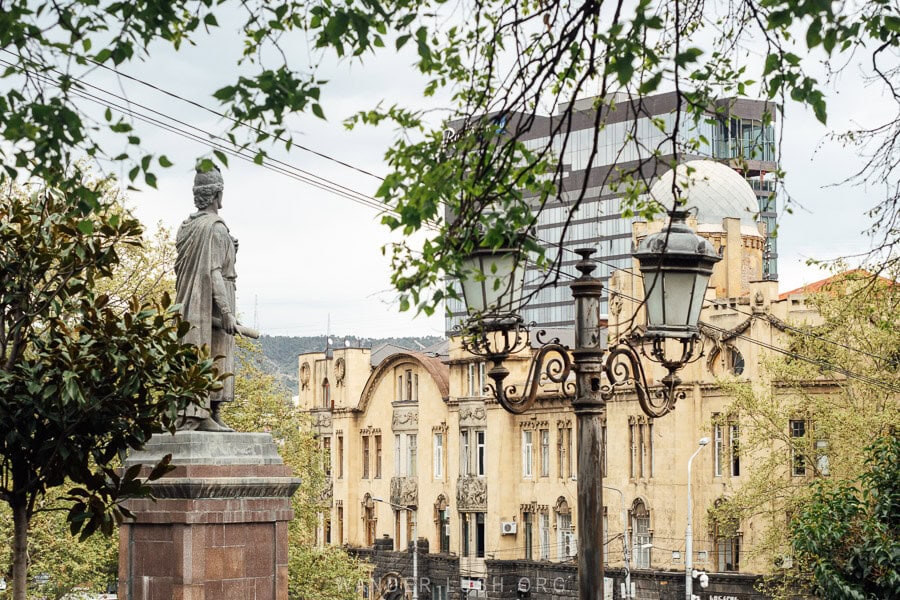
Having said that, spring in Georgia can be quite volatile weather-wise, especially in ‘Moody March’. Temperatures are unpredictable, so you never really know what you’re going to get.
The only certainty is rain!
May is the wettest month of the year in Tbilisi, so it’s essential to pack the right gear (see my tips below) and incorporate a few indoor activities into your itinerary.
- If you’re travelling beyond Tbilisi, here are more ideas for what to do in Georgia in spring, including wildflower hikes, open-air forest hot springs, and more cultural festivals.
Please note: This post contains affiliate links, meaning I may earn a commission if you make a purchase by clicking a link (at no extra cost to you). Learn more.
Are you planning a spring trip to Tbilisi?
Here are a few quick links to my favourite accommodations, tours & services.
Where to Stay in Tbilisi in Spring:
- The Blue Fox Hotel – wake up in your own typical Tbilisi courtyard.
- Communal Hotel Plekhanovi – my favourite boutique hotel has a wine bar & gift shop.
- Vagabond B&B – budget-friendly option for solo & social travellers.
- Unfound Door Design Hotel – luxe rooms set inside a historic mansion in Chugureti.
- Fabrika Hostel & Suites – popular creative space & co-working hangout.
Best Day Trips from Tbilisi for Spring:
- Day Trip to Kazbegi – with plenty of stops along the Georgian Military Highway.
- Off-road Adventure to David Gareja & Udabno – use WANDERLUSH for 10% off.
- Kakheti Wine Experience with Eat This! Tours – mention WANDERLUSH for 5% off.
Last-minute Private Transfers in Georgia:
Plan the perfect mini spring road trip & easily find a professional driver on GoTrip.ge. The price is locked in when you book, and you can stop wherever you want along the way.
Go Your Own Way:
Car hire in Georgia doesn’t have to be expensive – I regularly use Local Rent to find great deals. Pick-up & drop-off from any address in the country for complete flexibility.
What is the best month to visit Tbilisi in spring?
Georgia is in the Northern Hemisphere, meaning spring falls in March/April/May.
Also read: The best time to visit Georgia – month by month breakdown.
Tbilisi in March
- Average daytime high: 13 °C
- Average nighttime low: 4 °C
- Average rainy days: 8
Winter’s cold temperatures and grey skies linger on before the March Equinox – the official start of astronomical spring – is marked around the third week of the month. You can usually feel spring in the air in Tbilisi from mid-March onwards, but it’s not until the end of the month that the magnolia flowers and almond/peach/plum blossoms start to emerge around the Old Town.
Often referred to as ‘Moody March’, this month brings heavy rain one day, roaring winds the next, then unexpected snowfall – and just when you’re least expecting it, brilliant sunshine! In other words, you should come prepared for anything.
There are no notable festivals or regular events in Tbilisi in March, but there are two national holidays:
March 3 – Mother’s Day: Mother’s Day is a national holiday in Georgia so you’ll find that museums, malls, banks and government offices are closed. Most shops and restaurants in Tbilisi trade as normal.
March 8 – International Women’s Day: Similar to Mother’s Day, museums, malls and banks are closed on this public holiday, but small businesses remain open. It’s traditional to gift flowers to the women in your life, so you’ll see lots of men toting bouquets on the bus!

Tbilisi in April
- Average daytime high: 19 °C
- Average nighttime low: 8 °C
- Average rainy days: 11
Early April is my favourite spring period in Tbilisi. April is the peak period for flowers, especially wisteria. The hills around the city turn green, and the many outdoor cafes start to open their courtyards. In 2026, Orthodox Easter will fall on April 12 – meaning you can also catch the beautiful Easter traditions happening around the city. In 2025, I spent 10 days in Tbilisi at the start of April. Many of the photos in this guide were taken during this period.
April has more rainy days, so you should plan a mix of indoor and outdoor activities. Events including book fairs, jazz festivals and open-air markets start to appear in the middle of April. There are also two major holidays this month:
April 9 – National Day of Unity: This public holiday commemorates the Tbilisi Massacre of 1989 when 21 people died protesting for Georgian sovereignty. You will see flowers and photos placed on the memorial statue in front of Parliament on Rustaveli Avenue.
April 10-13 (2026): Orthodox Easter: The most important religious holiday in Georgia. As with Christmas and New Year, it is normally later than in other countries. Good Friday, Holy Saturday, Easter Sunday and Easter Monday are all public holidays in Georgia. Read more about celebrating Easter in Georgia in the next section.
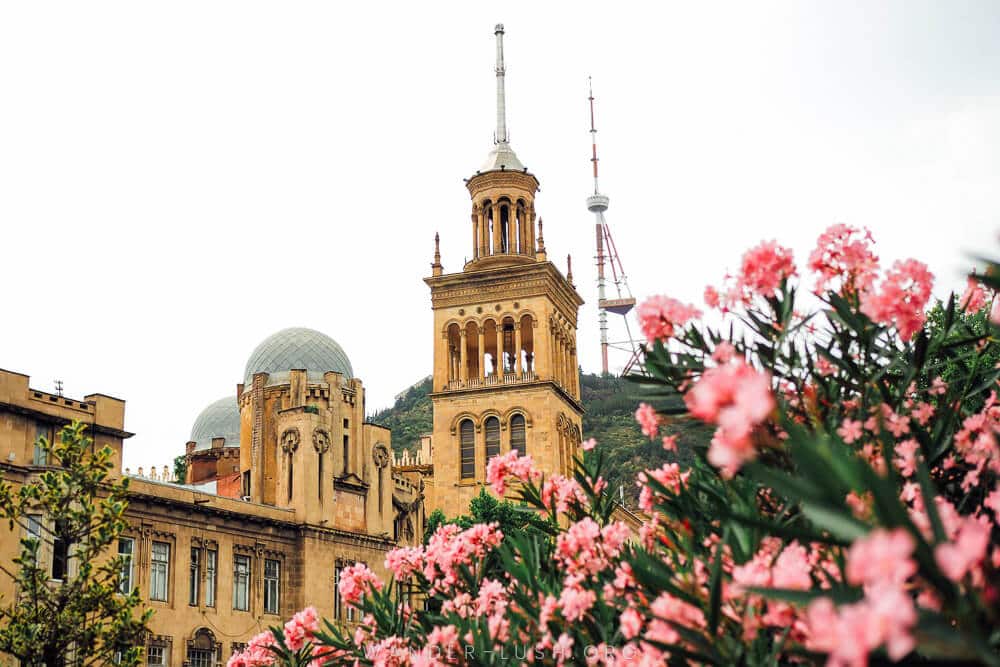
Tbilisi in May
- Average daytime high: 25 °C
- Average nighttime low: 14 °C
- Average rainy days: 12
By mid-May, spring has well and truly sprung. Temperatures are noticeably warmer and with the extra bit of rain, the city’s green spaces come into their own. The days are nice and long (14-15 hours of sunlight), so you can fit a lot more in. The wisteria and fruit blossoms are already gone, but poppies start to bloom on Sololaki Ridge and in the hills around the city (more below).
However, May is technically the wettest month of the year. On the plus side, the rain does clear the valley of pollution and dust, giving you nice bright skies and clean air (poor air quality is an issue in Tbilisi in summer).
Several wine festivals take place in Tbilisi at the start of the month, followed by the Independence Day street fair at the end of May. In addition, there are three more national holidays this month:
May 9 – Victory Day: This public holiday marks the surrender of Germany in 1945. It is commemorated in all former Soviet Republics, including Georgia, where a memorial is held at the Tomb of the Unknown Soldier in Vake Park.
May 12 – St. Andrew the First Called Day: This public holiday and religious celebration is held in honour of the Apostle Andrew, one of the first proponents of Christianity in the country.
May 17 – Day of Family Purity and Respect for Parents: This is a brand new national holiday that will be marked for the first time in 2025. It is an official day off.
May 26 – Independence Day: This public holiday commemorates the adoption of the Act of Independence in 1918, which ushered in the short-lived Democratic Republic of Georgia. Events are held around the country in celebration. In Tbilisi, part of Rustaveli Avenue is closed off for a market. More details below.

Things to do in Tbilisi in spring: Blossoms & wildflowers
First up, here are my favourite spots for seeing wildflowers and urban blooms in Tbilisi.
1. Wisteria vines & plum blossoms in Old Tbilisi


There are peach, plum and even cherry trees scattered all over downtown Tbilisi – often in places you wouldn’t expect (including alongside some highways). In the third and fourth week of March, look out for the delicate white and rose-coloured blossoms that burst into flower almost overnight.
One popular photo spot is Cafe Leila in Kala, where the resident trees’ ivory blooms look spectacular against the pumpkin-coloured facade. Grab a table outside – it’s a great spot for people-watching, especially in the morning when people are coming and going from Anchiskhati Basilica, directly opposite.
Later in the season, the fruits of these trees will be used to make the jams, sauces and preserves that are so popular in Georgia.


By April, the fruit trees are fully green. But the best is yet to come! Wisteria vines twist over fences, wind around drainpipes and drape over tin roofs in every corner of Old Tbilisi. Some of the best places to see wisteria include:
- The convent garden at Queen Darejan’s Palace
- Outside the Geoland shop on Telegraph Dead End
- Behind the McDonalds on Zandukeli Street (off Rustaveli Avenue)
2. Sakuras & wisteria in the National Botanical Garden


Around the same period (late March to mid-April), the National Botanical Garden is plastered with all kinds of flowers – from wisteria (this very impressive vine, pictured above, is at the main entrance), to tulips.
The small Japanese Garden within the parkland was refurbished in 2025. It features a cluster of sakura trees arranged around an ornamental pond and a torii gate. A Japanese festival is sometimes held here at the start of April, and features a pop-up market plus Shodo demonstrations.
The garden extends all along the valley behind Narikala Fortress (also see #3 below), covering more than 160 hectares and 4,500 species of flora in total. Established in 1845, it is second only to Batumi’s Botanical Garden in terms of national importance.
Further on from the Japanese Garden, there are a number of trails that you can use to explore the lesser-visited reaches of the gorge. If you hike from east to west, you will emerge out the other side near Sololaki, where you can continue your spring stroll through one of the city’s oldest neighbourhoods.
3. Poppies on Sololaki Ridge

Tbilisi’s hilltop castle, Narikala Fortress is the most popular tourist destination in the city. At the time of writing, it is currently closed for renovations, and is set to reopen at the end of summer 2025.
Even so, you can still ride the cable car from Rike Park to the top of the ridge and take a walk along the elevated pathways that wrap around the fortress base. In May, you will see beautiful red poppy flowers amongst the tall grass, waving in the breeze along with dandelions and other wildflowers.
With poppy seeds being illegal in Georgia (even for culinary use), it’s rare to see poppies. Kvemo Kartli region south of Tbilisi is famous for its wild poppy fields – see #33 below.
4. Magnolias in Rike Park

Before you jump on the cable car to Narikala, be sure to have a walk around Rike Park, where the bottom station is located. This contemporary, landscaped green space features a few dozen magnolia trees that explode with pink flowers in March/April. Some of the trees frame the Bridge of Peace.
Another place where you can find magnolias is 9 April Park, near Bazari Orbeliani.
5. Judas trees in Saburtalo


Another striking spring species you’ll see around Tbilisi is the Judas tree (or arghavani in Georgian). Endemic to parts of Europe, it takes its name from the legend that Judas Iscariot was hanged from one of its branches, turning the white flowers red.
You can spot these trees from a mile away because their magenta-coloured flowers extend all the way along the branches. Two spots where I’ve seen them recently are at the Vedzisi Cemetery in Saburtalo, near Lisi Lake (pictured above left), and inside the historic Kukia Cemetery behind Chugureti district (above right).
Street markets & outdoor pursuits
When the weather is on your side, here are a selection of outdoor activities and seasonal markets that are perfect for sunny spring days.
6. Spot colourful dyes & Easter supplies at the local markets


There are some things you can only do in Tbilisi in spring. Celebrating Orthodox Easter is one of them. More than 85% of Georgians identify as Orthodox Christian, thus Easter – which usually falls a week or so after Roman Catholic Easter – is a big deal.
In the lead-up to Holy Week, you will see colourful dyes, bundles of madder root and wheatgrass being sold at street markets and bazaars around the city. These items are all part of Georgia’s Easter tradition.
The dyes are used to colour eggs, which are displayed with the wheatgrass to symbolise the Blood of Christ and new life. On Easter Sunday, family members and friends play a game by tapping the eggs together to see whose has the strongest shell.
7. Smell the lilacs at the Orbeliani Flower Pavillion

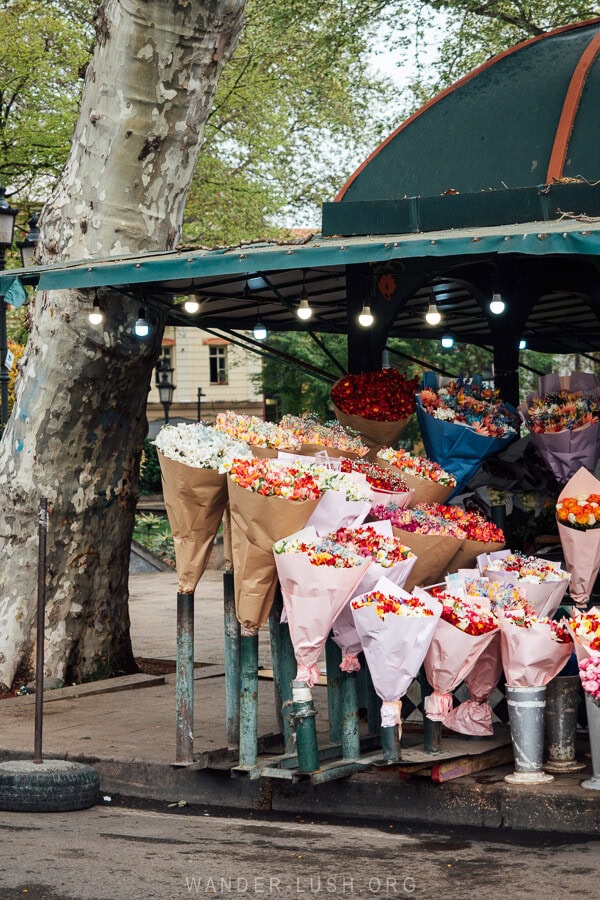
Lilacs are another harbinger of spring and Easter in Tbilisi. I can’t recall ever seeing them grow in the city, but every spring I see clusters of the pretty pastel cut flowers being sold on street corners.
One of Tbilisi’s most photogenic flower markets, the Flower Pavilion on Orbeliani Square, operates year-round, but it is particularly fragrant in spring. Vendors set up inside the Parisian-style pavilions and sell daffodils, lilacs, white lilies, and other blooms.
While you’re here, wander around the pedestrianised Atoneli Street and admire the 13 restored heritage facades.
8. Visit Tbilisi’s only nursery-cafe at Gardenia Shevardnadze


Nurseries and garden centre cafes are quite popular in my home city of Brisbane, so going to Gardenia Shevardnadze always evokes a sense of nostalgia for me.
The only plant nursery of its kind in the city, Gardenia is located behind Central Station, on the way to the Tbilisi Sea (get there on city bus #360). Founded and designed by Bonn-trained botanist Zura Shevardnadze, the sprawling German-style garden features perfectly manicured beds and greenhouses, plus functions rooms, a guesthouse, and a charming tea house called The Little Cafe.
Frolic beneath the arbours, watch the groundskeepers at work, and admire the vintage accoutrements that decorate the gardens. Packets of seeds, seedlings, pots and other accessories are available to purchase.
The garden centre closes over winter and normally reopens in the first week of March, just in time for spring. Entrance costs 5 GEL.
9. Find your next novel at an open-air book market


You can tell when spring is approaching in Tbilisi when book vendors start setting up their stalls along Rustaveli Avenue. Some wheel in wooden bookshelves, while others spread out their tomes over benches and the fountain. Parts of the avenue feel like an open-air library.
Browse the stacks of novels and historical volumes in Georgian, Russian and English language while absorbing some soul-nourishing sunshine. You can often find some very curious titles (and cool vintage covers) in the mix.
A second book market operates outside the Marjanishvili Metro Station on the opposite side of the river.
10. Browse the Barakholka on a Sunday
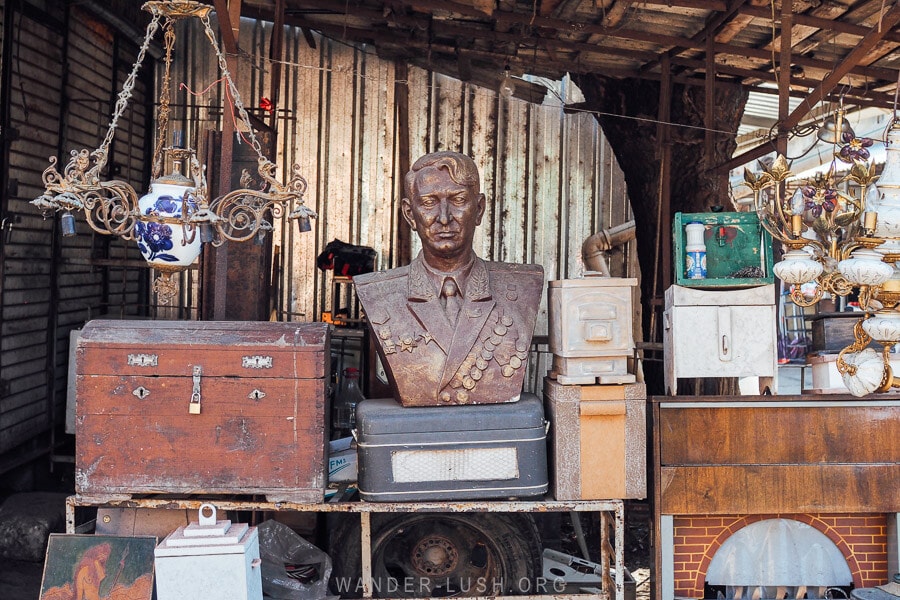
Tbilisi’s sprawling outdoor flea market, the Dry Bridge Market, is another must-do when you’re in town. I love visiting the outdoor market on fine spring weekends when the sunshine lights up the vintage carpets and bounces off the vintage silverware.
If you’re looking for something more raw and off the beaten track, the Navtlughi Bazaar is a great alternative. Between the farmers’ market, flower market and antiques market, you can find just about anything your heart desires here – from spices to vintage pottery.
The highlight is the Barakholka second-hand market, found along Mevele Dead End, where shops such as Odyssey sell enamel street signs and pressed metal platters. The more ad-hoc flea stalls have all manner of weird and wonderful items. Visit on a weekend for the best assortment.
11. Admire Tbilisi’s courtyards & wooden balconies

There are few things more quintessentially ‘Tbilisi’ than a communal courtyard strung with washing lines. Sheets and smalls billowing in the wind look beautiful to my eye – I could spend hours wandering the back streets and taking photographs of other people’s laundry!
As well as being extremely photogenic, courtyard culture tells you a lot about the city’s history and the way of life here.


Sololaki and Chugureti both have their fair share of picturesque yards to explore. And in spring, their wooden balconies are decked out with verdant creeping vines and colourful flowers. And you can bet the laundry is laid on extra thick on a sunny spring day.
Many courtyards around the city house open-air cafes and charming restaurants – see #18 below for my suggestions.
12. Take a walk in the park

Apart from the National Botanical Garden mentioned above, Tbilisi has a dozen other parks and greenspaces that are extra peaceful and picturesque in the middle of green spring. Vake Park is the largest, and was recently renovated to include all-new walking paths and recreation areas. The WWII Memorial here is very impressive, and you can easily access the Turtle Lake cable car from this location (see #13 below).
Also in Vake district, Mziuri Park is a vast area dotted with sculptures. Look for the metallic monument Begi by Erekle Tsuladze, which is dedicated to the hippo who escaped from Tbilisi Zoo during the Tbilisi flood in 2015. Cube in Context is a repurposed cable car station turned gallery.
The brand new installation Fragments of Memory was created by the Tbilisi Public Art Fund, and uses beautiful stained-glass panels by Vakhtang Kokiashvili, made during the Soviet era for the Tbilisi Funicular Station. The scenes capture Berikaoba, a sacred spring festival (see #26 below).
13. Spend an afternoon at the Open Air Museum of Ethnography
Georgia’s ethnic and cultural diversity is one of its biggest assets. Along with the dramatic landscape, its the mountain culture that makes the Caucasus so enthralling. Before you head into the mountains, you can get a little taste of the region’s diversity at Tbilisi’s Open Air Museum of Ethnography.
This is an incredible project – a passion project led by a couple of individuals no less – to preserve Caucasus mountain culture and bring it to the city. The museum is located at an elevation above Vake Park. As the name suggests, it’s completely outdoors and immersive as a result. No dusty exhibits here – instead, you learn by wandering between traditional dwellings, each one plucked from its mountain village and transplanted to Tbilisi.
There’s no better way to spend a spring afternoon. To get there, take the cable car to Turtle Lake then walk downhill, stopping at the lake on the way and at nearby Rachis Ubani – one of my favourite restaurants in Tbilisi – for lunch afterwards.
The museum is open from 10am until 6pm Tuesday to Sunday (closed Mondays) and runs a program of events, performances and workshops in the warmer months – one more reason to visit in spring.
14. Hike in the hills above the city

One of the most popular urban day hikes in Tbilisi starts from Turtle Lake (near the Museum of Ethnography mentioned above) and goes all the way to Mtatsminda (see #16 below).
Other popular day trails such as Kojori to the city are available from April onwards. Along the way, you can see poppies, chamomiles, wild pasque flowers, orchids, and many other varieties of wildflowers.
Spring is also the start of the mushrooming season (forage with caution!), and in Mtatsminda you can even find wild asparagus growing in the grass.
15. Go birdwatching in Ponichala Reserve
Located just 30 minutes by road south of Freedom Square on the way to Rustavi (use bus #345 or #346 to get there), Ponichala Reserve is a protected forest and woodland where you can find a multitude of bird species. Specifically, six kinds of woodpeckers – including the Syrian, Middle Spotted, and Black Woodpecker – reside here, along with the majestic Eurasian Scops Owl. Migratory birds return here to nest in March and April, making the spring months an ideal time to visit.
The reserve is mostly flat, with pathways and information boards scattered throughout. As you move further into the wilderness, away from the highway and towards the Mtkvari River, the terrain turns to swamps and wetlands. It’s a good idea to wear waterproof shoes just in case you find the paths are muddy.
16. Ride the cable car to Mtatsminda

Spring skies over Tbilisi are often clearer than in summer (provided it’s not raining!), offering beautiful views of the city and mountains beyond. There are viewpoints all over the city, but the best views in my opinion are from Mtatsminda Park, atop the city centre’s highest peak.
Take the newly relaunched cable car from the station off Rustaveli Avenue, and enjoy sailing over the rooftops of Tbilisi. Or walk up the hill via the Mtatsminda Pantheon, pausing to admire the enigmatic gravestones that commemorate important writers, artists and politicians.
While you’re there, grab a plate of ponchiki (filled donuts) from the Cafe Funicular, located inside the historic station building.
Spring food & wine
Here are my favourite things to do for foodies and wine connoisseurs.
17. Shop for tarragon & alucha at the Dezerter Bazaar


Tbilisi’s Dezerter Bazaar is the inner city’s main produce hub. Every morning, wholesalers, homemakers and restaurateurs alike descend on the maze of open-air and undercover stalls to buy up rounds of farm cheese, piles of pickles, and fresh fruit and veg by the boxful. It is a cacophony of colour, commerce and food culture, and one of the coolest places to visit in Tbilisi at any time of year.
There are a few special things to keep an eye out for in spring. Alucha, tiny sour green plums, start to come into season in April. Herbs, particularly tarragon, are available in abundance from April onwards – this particular ingredient is used to prepare a special Easter dish, see #19 below.
Miniature and super-sweet malina martskvi or ‘raspberry strawberries’ steal the spotlight in spring, and are sold by the bucketload for a couple of GEL.
18. Dine al-fresco in a Tbilisi courtyard

Not only is spring prime time for walking outdoors, it’s also the best time of year for sitting outdoors. Courtyard cafes start to open their outdoor areas from mid-April onwards, and many adjust their hours simultaneously to offer al-fresco breakfast and brunch.
Mova Maisi (literally ‘May Will Come’), Sophia Melnakova’s, Cafe Littera, Giorgobistve and Ninia’s Garden are just a few of my favourite cafe-restaurants where you can dine or drink in the shade of blossoming trees and budding grape vines. For more recommendations, check out my guide to Tbilisi’s best restaurants.
19. Eat chakapuli stew & paska cake

I often say that Georgian cuisine is perfect for winter: many dishes are rich, and protein and carb-heavy. Equally, there are plenty of lighter option on the menu that are made for warmer weather, and particularly scrumptious when prepared with spring-fresh produce.
A good example is chakapuli, a bright, aromatic stew made with tarragon, white wine and sour plums. You can order it year-round but traditionally it’s made at Easter time. Tkemali (a very sharp sour plum sauce) is a spring and summer staple on every dining table.
Similarly, pkhali and pickled jonjoli (bladdernut) are perennial staples, but particularly vibrant when prepared with fresh spring veggies and herbs. Ekala pkhali is a special version that uses sarsaparilla vine, which grows in Georgia’s eastern Kakheti region in spring.
Paska, a special Easter cake that has a similar texture to panettone and is flecked with raisins or dried fruit, starts appearing in shops in the weeks leading up to Holy Week. The miniature version is the perfect size for an on-the-go snack.
20. Drink new-harvest amber wine
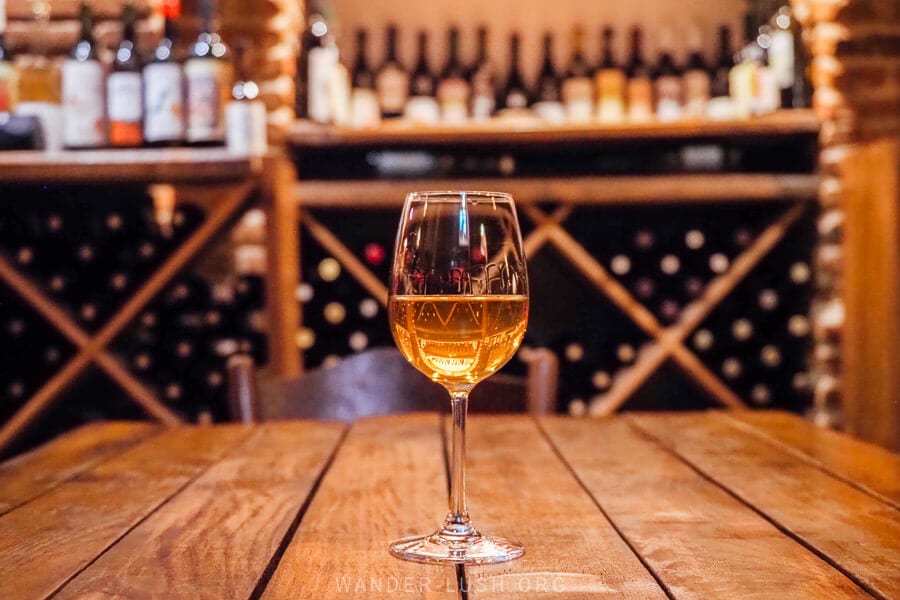
Spring is an auspicious time for Georgia’s vintners, as their clay qvevri are cracked open for the first time to taste the fruits of the last harvest’s labour. Amber whites are Georgia’s calling card. Spring weather gives you ample opportunity to try the full oeuvre – sip a chilled amber with lunch, then cosy up with a bottle of red in the evening.
There are wine bars all over Tbilisi where you can sample European-style wines and traditional qvevri wines by the glass. My favourites include 8000 Vintages, where you can order a full sit-down degustation, and Nino Meris Wine Selection, where you can do a more casual three-flight tasting.
Half a dozen wine festivals take place in Tbilisi at the start of May – see #28 below.
If you’re a die-hard oenophile, consider coming back to Tbilisi in early autumn when the annual wine harvest, the Rtveli, takes place across the country.
If you’re not a huge fan of wine, there are other springtime specialty drinks you can try, including ‘spring flush’ teas from Western Georgia’s tea region, and homemade lemonade prepared with fresh strawberries.
21. Try a gourmet Georgian ice cream

As the weather starts to warm up, it’s the perfect time to cool off with a gourmet cone. There are a number of artisanal ice cream makers in Tbilisi – my all-time favourite parlour is The Cone Culture, which now has three branches around the city. Their signature Ajika-Vanilla ice cream is a spicy-cool revelation!
Located close to Stamba Hotel, Udabno Shop makes vegan-friendly, almond-based soft serve using ingredients from their regenerative farm in Kakheti.
22. Enjoy a spring sunset at one of Tbilisi’s rooftop bars


There is nothing quite like a colourful sunset on spring eve, particularly when the sky has just cleared after a spring storm, and the low clouds light up with hues of pink and purple.
By April, the sun already set fairly late (8pm or later). My favourite bar for watching the sunset is 144 Stairs, which overlooks the Old Town. King Parnavaz Garden in Avlabari is another excellent spot, with views of the river and TV tower.
Rainy day activities
With spring showers and the occasional afternoon storm a given, it is essential to have a few indoor activities up your sleeve. Here are three ideas.
23. Sign up for a spring clean at the sulfur baths
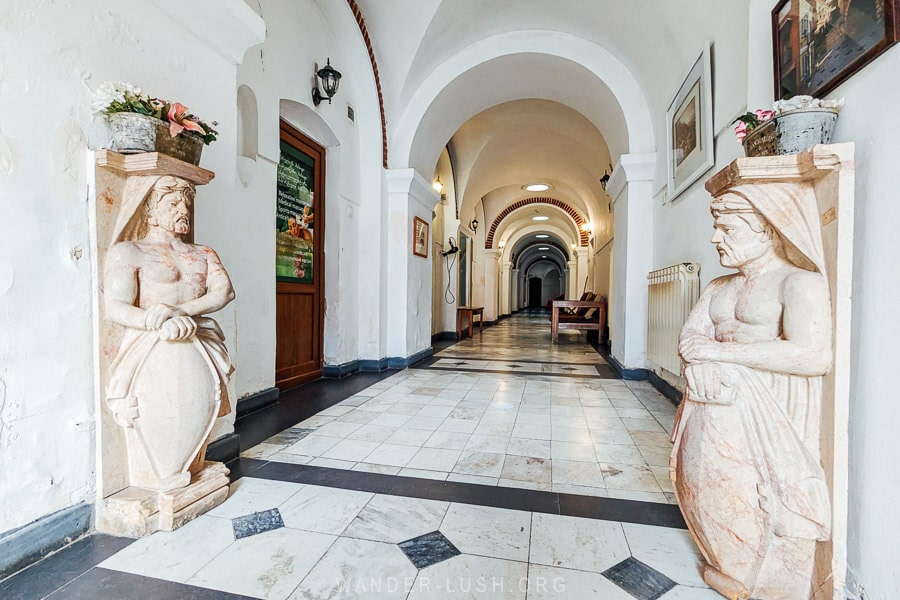
The sulfur baths are traditionally a winter activity – the hot waters and steamy saunas really do warm you up, body and soul – but it’s equally nice to go for a treatment in spring, especially in the evening.
Tbilisi’s baths are quite different to the ones in Budapest, Marrakesh or even Istanbul. But there are some familiar elements. A traditional kisi scrub – a vigorous rub down with a rough-textured mitt – is your ticket to letting go of unwanted dead skin (and depending on the upper body strength of your therapist, maybe a few layers of skin you did need as well). It’s the ultimate deep spring clean!
Most bathhouses are located in Abanotubani district, but I think the best spot for a spring soak is Lisi Bath on the shore of Lisi Lake. This is a contemporary Scandi-style facility, with both private and public rooms.
For more bathhouse suggestions and essential etiquette, read my complete guide to the Tbilisi sulfur baths.
24. Tour the city’s best museums & galleries

Tbilisi has a slew of museums and galleries (including kid-friendly and no-fee options) where you can while away a rainy day. The Georgian National Museum and MFA, both on Rustaveli Avenue, are two of the best institutions for history and art respectively.
For something different, my favourite alternative museums include the State Silk Museum, the Art Palace, and the Museum of Georgian Medicine, all located in Chugureti.
25. Go cafe-hopping

Cafe hopping is another rainy day favourite. Tbilisi’s coffee scene has come a long way since I first visited, and there are now lots of specialty coffee shops (and a few roasters) to visit around town. If the weather is fine, Coffee LAB at Lisi Lake, Slink inside Roses Park, and Cafe Mziuri on the edge of Mziuri Park all have lovely outdoor spaces.
Eari Books of Spring in Sololaki is very cosy and perfect for a rainy spring day. It doubles as a magazine and book shop, with plenty of English novels on the shelf.
Spring holidays & traditions
Here are four major spring events that might coincide with your travel dates.
26. Join an ancient pre-Christian Festival near Tbilisi

Berikaoba is an early spring festival with pre-Christian roots, where people dress in elaborate costumes and don masks to parade down village streets. The biggest and most colourful events are held in Patara Chailuri, 65 km east of Tbilisi. In 2025, Berikaoba took place on March 2.
The Soviet-era mosaic pictured above represents the Berikaoba tradition. You can also see the ritual immortalised in statue form in Tbilisi Old Town, close to the Clock Tower.
27. Attend Litonioba on Orthodox Easter Eve


Holy Week and the period leading up to Orthodox Easter is an interesting period in Tbilisi for those who are keen to experience Georgian culture (particularly through the market displays and food traditions already mentioned above).
Easter is mostly a quite, subdued, family affair – there are no parades, for example. An easy way for visitors to participate in Easter celebrations is by joining Litonioba, held from 11pm on Saturday night until the early hours of Easter Sunday morning. During the service, the Patriarch gives an address and the Holy Fire, brought all the way from Jerusalem, is ceremoniously presented.
If you want to attend the city’s biggest mass, head to the city’s biggest church, Sameba Cathedral, to join with thousands of other worshippers. Otherwise, quieter services at small neighbourhood churches are just as moving. There are special rituals involved, including holding votive candles, and walking laps around the church exterior.
Many people leave the city from Good Friday through to Bright Monday in order to visit family in the villages. The city centre can be extremely quiet (no traffic!), giving Tbilisi a very unique atmosphere. Some restaurants and shops may close over the weekend as a result, but all essential businesses remain open.
For something truly special, head to Lanchkhuti municipality in Guria for Lelo Burti. This full-contact ball game is an Easter Sunday tradition.
28. Raise your glass at Tbilisi’s all-you-can-drink spring wine festivals
Spring is the season for wine festivals in Tbilisi, when you can get your first taste of the new vintages on the scene. All are casual industry events that are open to the public (most are ticketed, with bottomless wine included in the entry price). As well as tasting wines from a diversity of makers, participants can dine on street food, listen to live music, and join in other festivities.
In early May, the two biggest events – the Zero Compromise Natural Wine Festival (May 2-3, 2025) and the New Wine Festival (May 10, 2025) – are both held at outdoor venues. In 2025, there are several more festivals taking place around this time: Wine Ambassadors (May 1, 2025), Sherekilebi (May 4, 2025), and the Tbilisi Whiskey Festival (May 17-18, 2025).
29. Revel in the Independence Day street fair

Georgia’s national day is marked on May 26, the date when, in 1918, the state adopted the Act of Independence, signifying its break from Imperialist Russia. Seventy-three years later, on April 9, 1991, Georgia declared its independence again, this time from the Soviet Union. On May 26 of that year, citizens elected their first President.
Twice the independence, twice the celebration! Tbilisi marks Georgian Independence Day with an all-day street party on Rustaveli Avenue that features market stalls, food and live entertainment. The weather is usually perfect by the end of May (except in 2024 when I took the photo above – note the umbrellas!), so there’s no excuse not to join in.
In 2025, the fair will take place at an alternative venue in Orbeliani Square.
The best day trips from Tbilisi in spring
Many of Georgia’s mountain roads and valleys remain closed throughout spring, only reopening in mid-June. The months of March, April and May are much better suited to day trips in the lowlands – and there are plenty of options close to Tbilisi. Here are four of my personal favourites.
30. Off-road in the Udabno Rainbow Mountains

An easy day trip from Tbilisi, Udabno is home to the Davit Gareji Complex and other clandestine monasteries established by the Thirteen Assyrian Fathers in the 6th century. This semi-desert landscape comes alive in early spring, as almond, plum, and cherry blossoms light up the sand-coloured valleys.
By summer, this area is far too hot and exposed (so much so that it’s actually unsafe to visit in July/August). Spring is the best time for exploring the monasteries and hiking in the Rainbow Hills.
This small group off-roading tour with Friendly.ge is my top pick for exploring this corner of Georgia. Use the code wanderlush at checkout for 10% off.
See my Udabno Guide for more tips and tour recommendations.
31. Crack a qvevri in the Alazani River Valley

Spring is the perfect time to experience Sighnaghi without the summer crowds and admire the blooming gardens at Bodbe Convent. If you’re lucky, you might even witness the ceremonial cracking of the clay qvevri at a vineyard in Kakheti and be among the first to taste new-season wine!
My partners at Eat This! Tours organise guided expeditions to Telavi and Sighnaghi from April onwards, including a special Easter program where you can drink from the qvevri and enjoy a supra with the family. See here for all the details, and remember to use the code wanderlush for 5% off your booking.
32. Frolic amongst the peach orchards in Kakheti

Gurjaani is an underrated corner of Kakheti where urbexers and photographers can get their fill of Soviet-era architecture, mosaics and monuments. Between late March and the first week of April, there is another attraction to see in this area: the incredible peach orchards.
Several farms open to the public for photoshoots and pop-up lunches beneath the flowers. You have to have perfect timing to see the trees in full bloom – the flowers come and go in a matter of days!
33. Find the poppy fields in Marneuli
The town of Marneuli, an hour’s drive south of Tbilisi towards the Azerbaijan border, is famous for its wild poppy fields. The brilliant red flowers normally bloom in late April and plaster the fields throughout May. Marneuli is an easy stop on the way to Bolnisi and Dmanisi, another fun day trip idea for wine and archaeology.
I am off to find the poppy fields myself in a few weeks – stay tuned for updates and a full travel guide.
Further afield, more poppy fields can be found in Samtskhe-Javakheti region, around Vardzia, and over the border in Armenia.
Where to stay in Tbilisi in spring
What to pack for Tbilisi in spring
Wet weather gear is essential – I recommend a fold-up travel umbrella and a lightweight travel raincoat that you can carry in your day pack at all times.
Waterproof shoes aren’t necessary if you’re staying in the city, but if you plan on trekking in the national parks or mountains around Tbilisi, then you should also bring quick-dry clothing and proper waterproof boots.
Note that the climate in other parts of Georgia differs considerably to Tbilisi, and you’ll get vastly different conditions in Kutaisi, Batumi, and especially in the mountainous regions. Spring tends to arrive a bit earlier in Western Georgia and later in the mountains. Keep this in mind when planning your Georgia itinerary.
Also read: My Georgia packing guide for all seasons.
What to wear in Tbilisi in spring
Spring is jeans-and-a-jacket weather. It does warm up during the day, especially if you’re out in the sun or on the metro, so I recommend layering.
As an example, I might wear jeans, a t-shirt, a light jumper plus a denim jacket in Tbilisi in mid to late-spring. Bring a warm layer for the evenings and if you’re travelling in early spring, you’ll need a warmer shell jacket. It’s always good to have a lightweight scarf with you as well.
There’s usually one last cold spell in March or early April, when everyone reverts to thermals and gloves for a day or two. You don’t want to get caught out, so I recommend checking the forecast before you travel and adjusting your pack accordingly.
Are you thinking of visiting Tbilisi this spring?
Georgia essentials
Here are the websites and services I personally use and recommend for Georgia. Check out my full list of travel resources for more tips.
FLIGHTS: Search for affordable flights to Tbilisi, Batumi or Kutaisi on Skyscanner.
TRAVEL INSURANCE: Insure your trip with HeyMondo, my preferred provider for single-trip and annual travel insurance (get 5% off when you book with my link).
SIM CARD: Magti is my preferred provider, with prices starting from 9 GEL/week for unlimited data. See this guide for all the details about buying a Georgian SIM card.
AIRPORT TRANSFERS: Most flights into Georgia arrive in the early hours. For ease, pre-book a private transfer from Tbilisi Airport to your hotel (from $19) or from Kutaisi Airport to Tbilisi (from $90) with my partners at GoTrip.ge.
ACCOMMODATION: Booking.com is the most widely used platform in Georgia. Use it to find family guesthouses, private apartments, hostels and hotels around the country.
CAR HIRE: Find a great deal on a rental car in Georgia – use the Local Rent website to book through a local agent (prices start from $20/day).
DAY TRIPS & CITY TOURS: Use Viator or Get Your Guide to browse a range of day trips and city tours. For off-beat programs, I recommend Friendly.ge (use the promocode wanderlush for 10% off). For in-depth day trips to Georgia’s wine regions, I recommend Eat This! Tours (use the promo code wanderlush for 5% off).
PRIVATE TRANSFERS: GoTrip.ge is a terrific service for booking a private professional driver and car for the day. Use it for A-to-B transfers, a customised round-trip itinerary, or a multi-day trip. You can stop wherever you like for as long as you like without the fixed price going up.
NEED SOME HELP?: Need feedback on your itinerary or personalised travel tips? I offer a one-on-one consultation call service for Tbilisi and Georgia. More information and bookings here.


