Why Women Travelers are Embracing International Solo Adventures
6 min readWriggling free of my heavy scuba-diving drysuit, I rush out of the mudroom aboard Aurora Expeditions’ Sylvia Earle, a small, purpose-built ship named after one of science’s most legendary oceanographers/explorers. Just moments ago, I was submerged beneath the ice, poking around Antarctic waters in search of alien life forms. It’s an adventure I never dreamed possible. Here, I set out to meet the expedition’s other solo travelers who — appropriately enough — are all women. We might not be marine biologists, but, like Earle, we share a passion for better understanding the planet and seeing it in a meaningful way.
We are far from the only ones; more women than ever are discovering the world on their own terms. Nearly 40% of female travelers have expressed interest in a solo vacation in 2025 (up 8% from the previous year), according to tourism market research firm Future Partners. And solo travel has become one of the industry’s fastest-growing segments, as reported by TripAdvisor.
Why the shift? As females gain greater socioeconomic independence and record-breaking numbers choose to remain single, an increasing amount are opting to travel alone (regardless of marital status). Women — who make 82% of travel decisions and are projected to control 75% of discretionary spending by 2028, according to Skift Research — have traditionally planned the majority of vacations and prioritize experiences over material possessions at nearly twice the rate of men. Like so many of today’s trends, the boom occurred post-pandemic, particularly among older travelers. Free from the responsibilities of raising a family, encouraged by social media (which shows how easy it is to jet set safely) and flush with disposable income, they dare to ask: If not now, when?

Illustration by Meagan Morrison @travelwritedraw
“Solo travel is a form of self-care,” says Aurora Expeditions’ Kris Endreson, who serves as vice president of sales for North America. “Many of these women are seeking meaningful, transformative experiences that connect them to nature, purpose and like-minded explorers.” The company has seen a 22% year-over-year increase in solo travelers, with a notable portion being females aged 40 and above.
Curious and independent, these individuals who enjoy traveling alone tend to naturally gravitate to adventure-focused trips that push them out of their comfort zone and offer a sense of accomplishment, whether they’re climbing the Matterhorn in the Alps or learning to surf in Fiji. “For many women, these moments are not only exhilarating but deeply empowering,” says Endreson.
Paulette Gramse, a recent retiree who has been planning individual vacations for nearly 30 years, can relate. “When I’m looking for purpose or need to process something, I go on a river-rafting trip by myself,” she says. “These adventures can really push you physically and mentally, and you get to see all of this beauty in the world.”
Women embarking on these adventures may be navigating personal milestones like career changes, retirement or a new chapter and realize, like Gramse, that time on the road helps them clear their minds. This can even lead to life-altering journeys of self-discovery, as Karla Walsh, a former fitness instructor and editor, found during a 2018 vacation to Costa Rica.
“I was in a relationship that was crumbling but had always said that I would wait to pursue a freelance career until I got married because I wanted a safety net,” recalls Walsh. “I remember sitting on the beach the night before I was supposed to fly home, thinking: ‘I traveled internationally by myself, so what would my life look like if I stopped putting an asterisk on my other dreams?’” As soon as she returned to the United States, Walsh cut things off with her boyfriend, spoke to a financial advisor and took the leap to embark on a freelance career. She has never looked back.
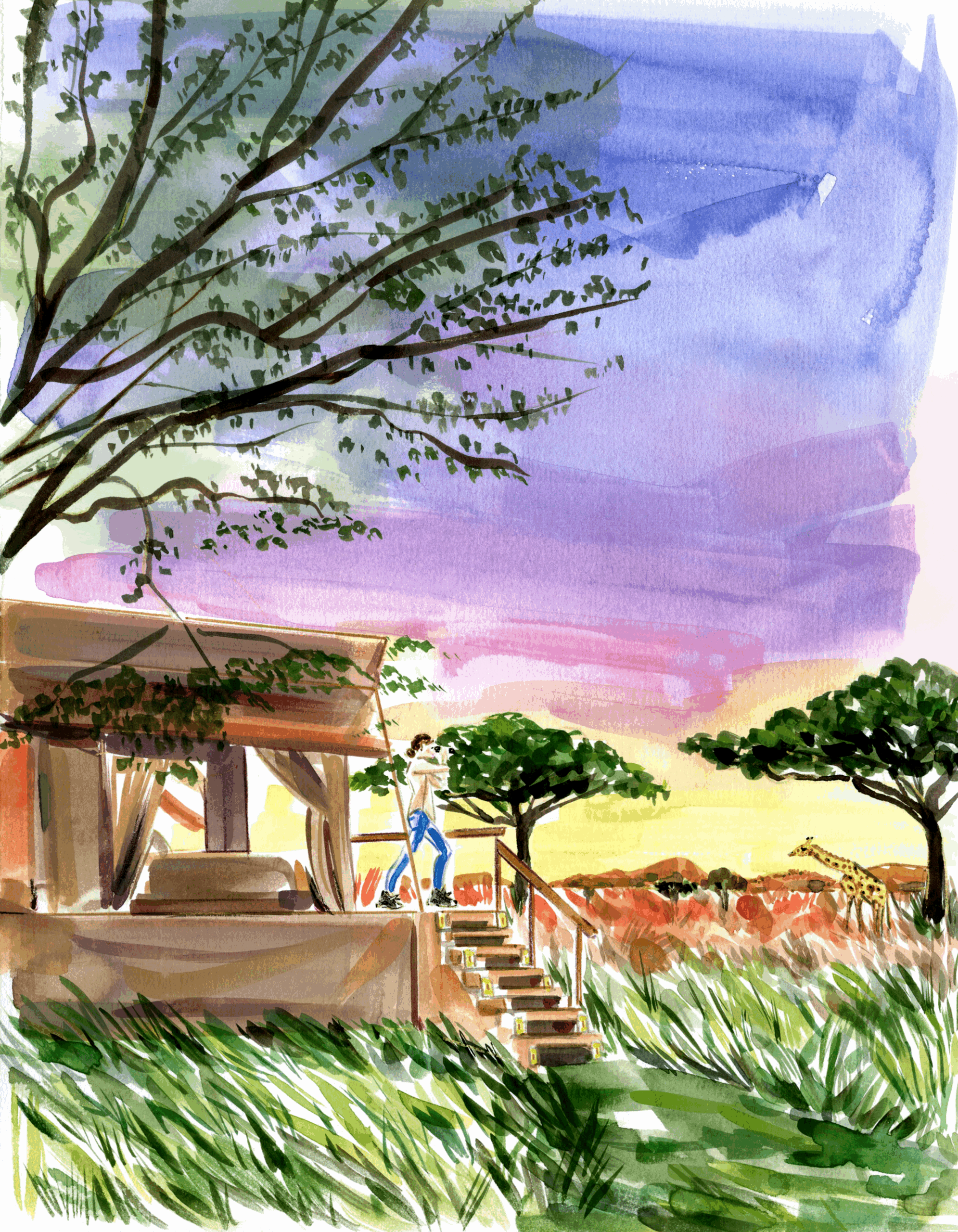
Some women initially restrict their solo travel to vacations that friends and significant others won’t sign onto because they’re too niche, expensive or intrepid — think scuba diving, safaris and heliskiing — and later notice that they appreciate the spontaneity and freedom that being alone affords. “When I’m around other people, I like to make sure everyone is taken care of,” says Walsh. “And when I travel alone, it’s nice to be completely self-indulgent and have the time to explore what brings me joy.”
Jetting off by yourself doesn’t mean you can’t socialize on the road. After all, many solo explorers cite connecting with similar people as a top benefit of traveling alone. Case in point: Gramse met her best friend during a rafting expedition 22 years ago. “That trip opened up a part of me and her and led us to discover a very strong commonality, which is supporting each other as women,” she reflects.
Meanwhile, Patty Randall — a retiree who travels by herself to Namibia on trips custom-designed by Go2Africa for at least two months every year — relishes in the connections she makes with locals and camp staff. “Traveling alone is about attitude,” she says. “I have never been lonely. Others seem to gravitate to you because you are on your own.” While people might hesitate to disturb a couple or family, individuals automatically appear more approachable and open to conversation, she notes.
As what was once considered niche becomes mainstream, more companies are recognizing the value of catering to solo women. So much so that Bank of America reports a 230% increase in female-only tours over the past few years.
One of the biggest barriers facing individual travelers (female and otherwise) is the dreaded single supplement, which penalizes those not sharing a room. Research by JourneyWoman shows 78% of women view this cost as a deterrent, and many understandably prefer privacy over being assigned roommates. Now the industry is listening, as top brands such as Delfin Amazon Cruises and Wilderness in Africa either waive the fee entirely or provide discounts, particularly during shoulder and off-seasons. Aurora Expeditions has even included dedicated single cabins on their newest ship, the Douglas Mawson, and will add them to their other vessels in 2026.

Tour operators around the world such as Rabbie’s in Scotland are also designing their programs to be more welcoming toward solo women. “We’re proud to have an increasing number of female driver-guides and leaders across the business,” says CEO Hazel Rickett. “Representation matters, and it helps create a more inclusive, empowering experience.” Similarly, Go2Africa safari expert Monique Lange recommends that these female travelers consider staying at an all-female-run property such as Dunia Camp in Tanzania’s Serengeti and Chobe Game Lodge in Botswana.
For logistically challenging destinations, there’s a growing movement of women-only experiences geared toward solo travelers, including Natural Selection’s Kalahari Desert Woman’s Safari & Expedition, Aurora Expeditions’ trips to Greenland and Antarctica with an all-female expedition team, and G Adventures’ newly launched Solo-ish Adventures. Led by female “chief experience officers,” their tours to off-the-grid locations like Cambodia and Uzbekistan aim to turn strangers into a close-knit group of friends while promising “me” time, private rooms and the immersive activities that independent travelers value.
Solo travel looks and means something different for every woman depending on their personal journey. But ultimately, says Rickett, “It’s about seeking connection — with new places, different cultures and sometimes with ourselves.”
Whenever I talk about my trip to Antarctica, I rave about the teeming penguin colonies, the prehistoric-looking leopard seals and the sea full of sapphire icebergs. But the moment I hold closest is a bit less romantic: It’s when I successfully surfaced from the frigid water after my first dive — numb, physically shaking and with a stupid grin on my face. All I could think was, I did it.
Read this article as it appears in the magazine.


