Kintsugi Workshop in Tokyo: Repairing Broken Pottery with Gold
5 min readI always find that one of the best ways to experience a culture is through its arts and crafts. So, during our three-month house sit in Tokyo, I searched for a kintsugi workshop! Kintsugi is a Japanese art form that involves repairing broken ceramics or pottery using gold lacquer. The word is composed of kin...
The post Kintsugi Workshop in Tokyo: Repairing Broken Pottery with Gold appeared first on Bucketlist Bri.
Disclosure: This blog is reader-supported, and some posts contain affiliate links. If you make a booking, I may earn a small commission—at no extra cost to you. Thank you for keeping me writing and doing what I love!
I always find that one of the best ways to experience a culture is through its arts and crafts. So, during our three-month house sit in Tokyo, I searched for a kintsugi workshop!
Kintsugi is a Japanese art form that involves repairing broken ceramics or pottery using gold lacquer. The word is composed of kin (meaning gold) and tsugi (meaning to join or joinery).
Underlying kintsugi is another Japanese concept: wabi-sabi.
Wabi sabi is the underlying aesthetic philosophy of kintsugi. And while you can experience wabi-sabi, which is mainly about finding and embracing the beauty in imperfection, in kintsugi, you can also find it elsewhere in Japan’s cultural depth: at shrines and temples, in zen gardens, or just as an adopted daily practice.
While Tokyo may not be the “cultural heart of Japan” like Kyoto, there are still numerous opportunities to experience Japan’s rich and deep culture and history through hands-on workshops.
In Tokyo, you can find everything, and, in my opinion, it’s usually the best of everything. While Kyoto and Uji may be more renowned for kimono tea ceremonies, you’ll find Tokyo has those, too. The same principle applies here for handicrafts.
Likely, if you can think of it, there’s a workshop or related experience to try while in Tokyo.
But I digress, let me tell you more about my kintsugi workshop in Tokyo. I really enjoyed this experience, compared to other “guided tours,” and in this post, I’ll show you why.
Here’s what you need to know about the workshop to decide if this experience would be fun and worthwhile for you and your friends or family group!
How to Experience a Kintsugi Workshop in Tokyo (Review)
A kintsugi workshop in Tokyo is ideal for travelers who want to immerse themselves in Japanese arts, culture, and handicrafts.
What Is Kintsugi?
The exact definition of kintsugi, per JNTO’s website, is:
“Kintsugi is the traditional Japanese art of repairing broken and chipped pottery using lacquer mixed with gold powder.”
It’s a centuries-old tradition and practice that is reported to date back to the Muromachi period in Japan (1336-1573), which is famous for its significant influence on Japanese culture that we know and love today, including Zen Buddhism and tea ceremonies.
However, some sources say that the gold painting technique, applied to urushi lacquer, was developed as early as the 8th century, during the Heian period.
Later on, with the progression of Zen Buddhism and Japanese spirituality, art practices such as kintsugi became deeply intertwined with aesthetic philosophies, including the mottainai spirit (refusing to discard precious objects) and wabi-sabi (embracing, even emphasizing, beauty in imperfection).
Kintsugi is now gaining worldwide attention rapidly, and you can try it yourself in Tokyo!
Why Take a Kintsugi Workshop in Tokyo
Tokyo, like Kyoto and Osaka, is a city full of diverse and talented artists and artisans.
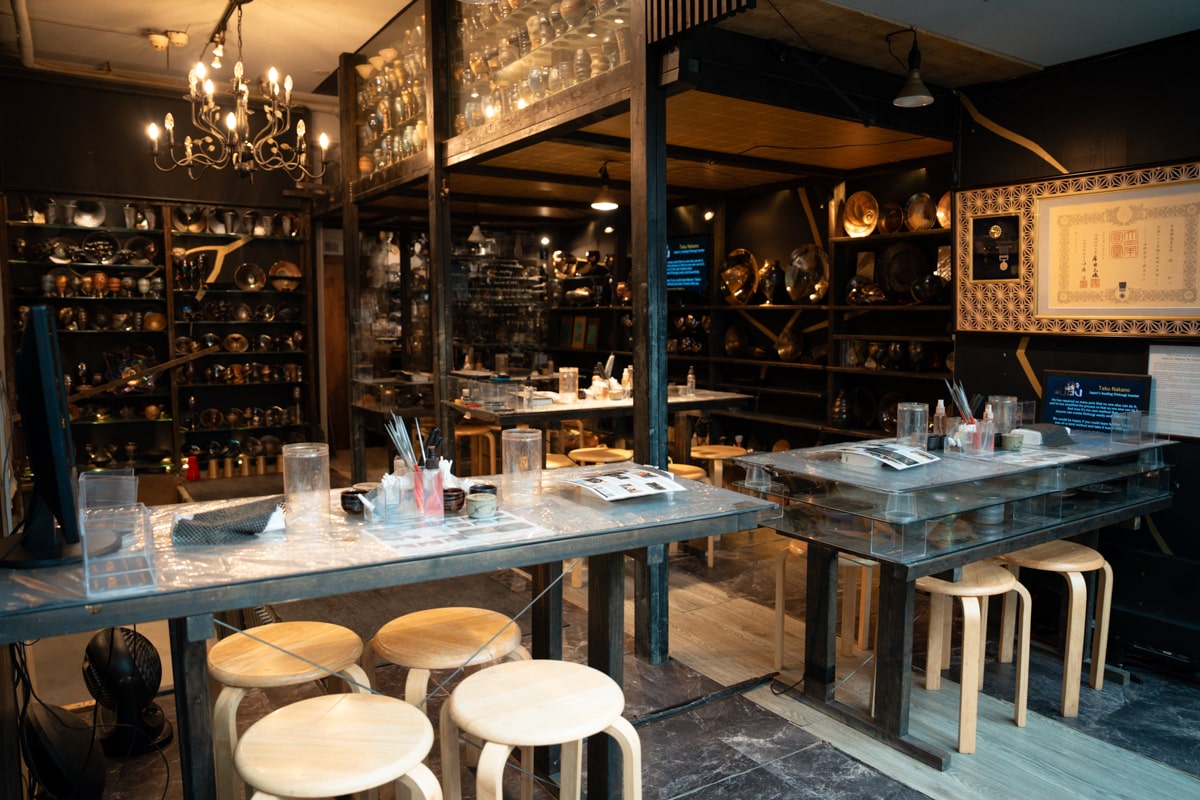
In Tokyo, there is a famous ceramist, Taku Nakano, who hosts small-group kintsugi workshops in his personal studio located in Omotesando, near Harajuku.
Not only will you learn more about the traditions and philosophies behind kintsugi and wabi-sabi, but you’ll also get to have a whole hands-on experience repairing a broken Japanese dish using kintsugi gold powder and lacquer.
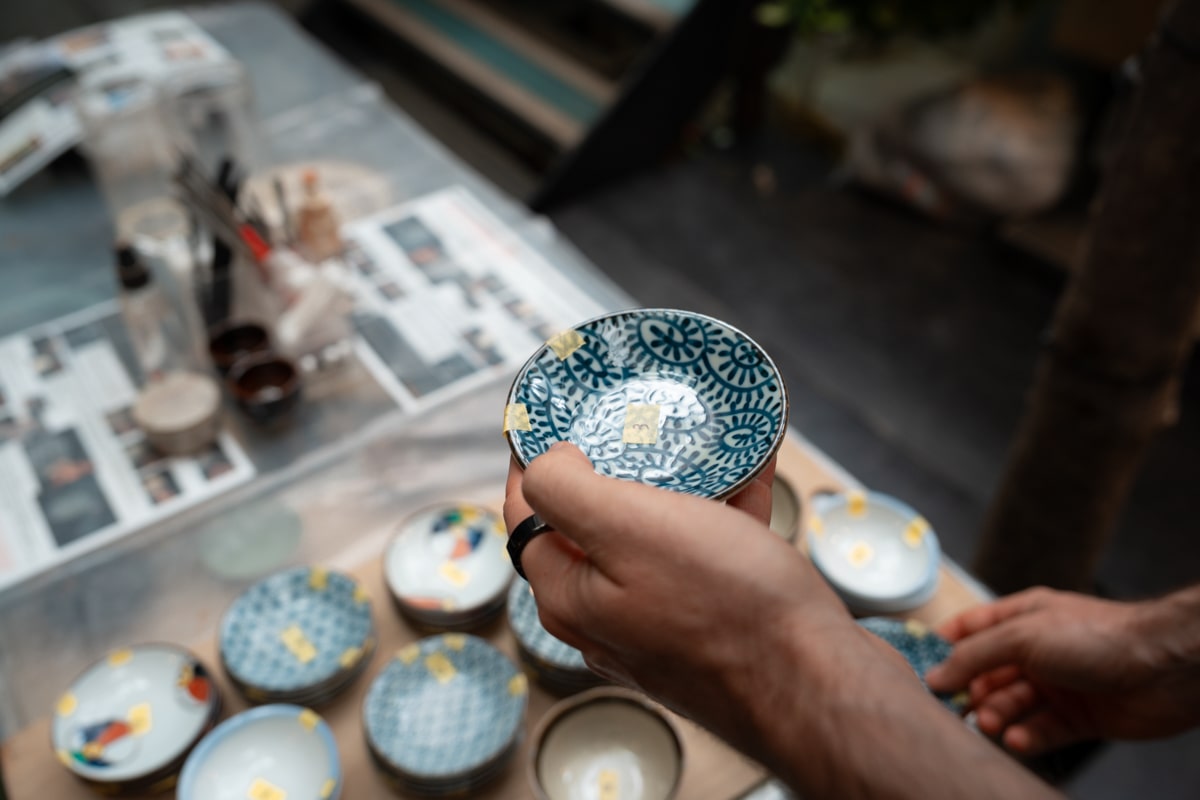
The studio is small and intimate, and filled from floor to ceiling with pottery handmade by Taku-san.
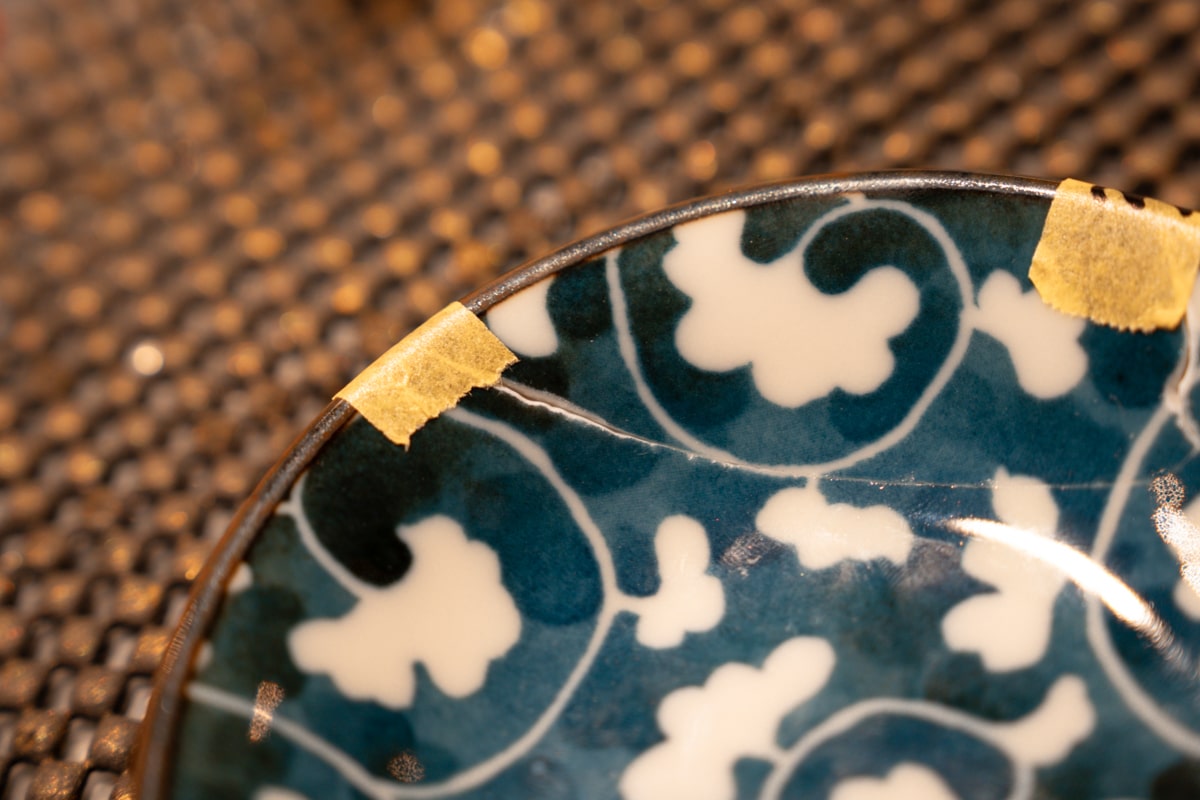
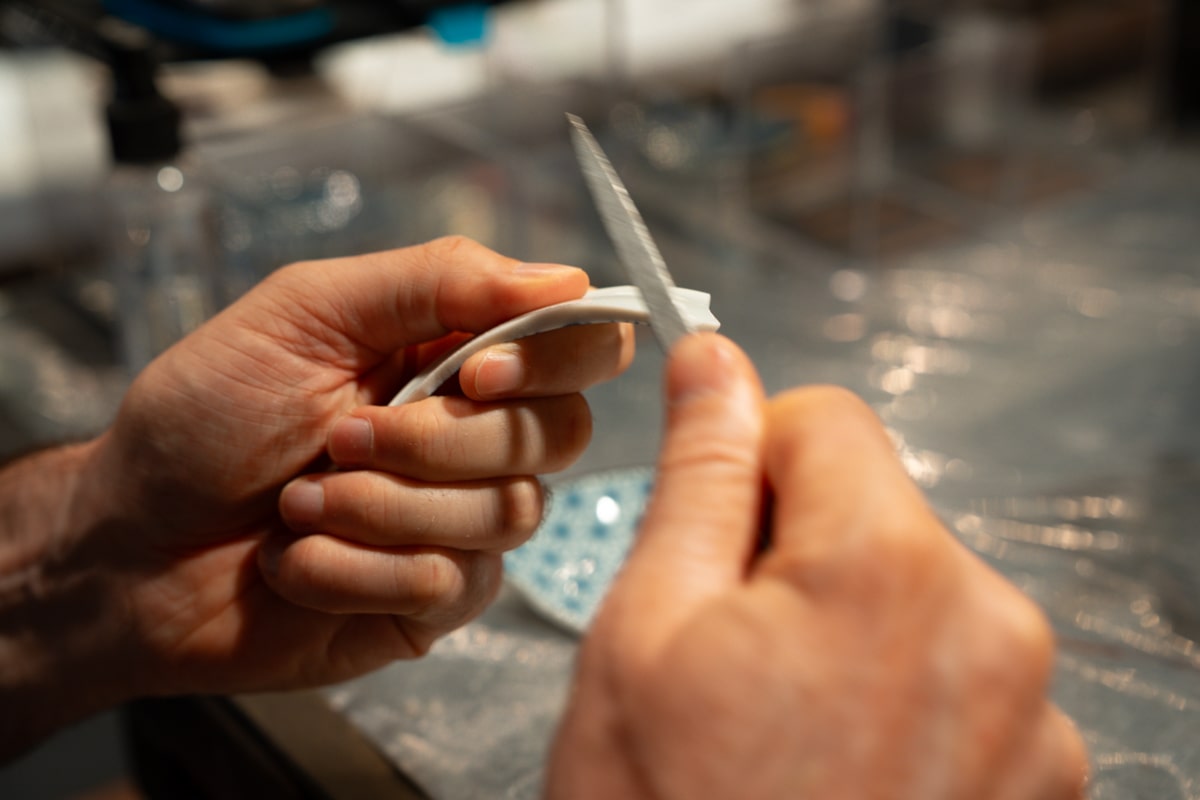
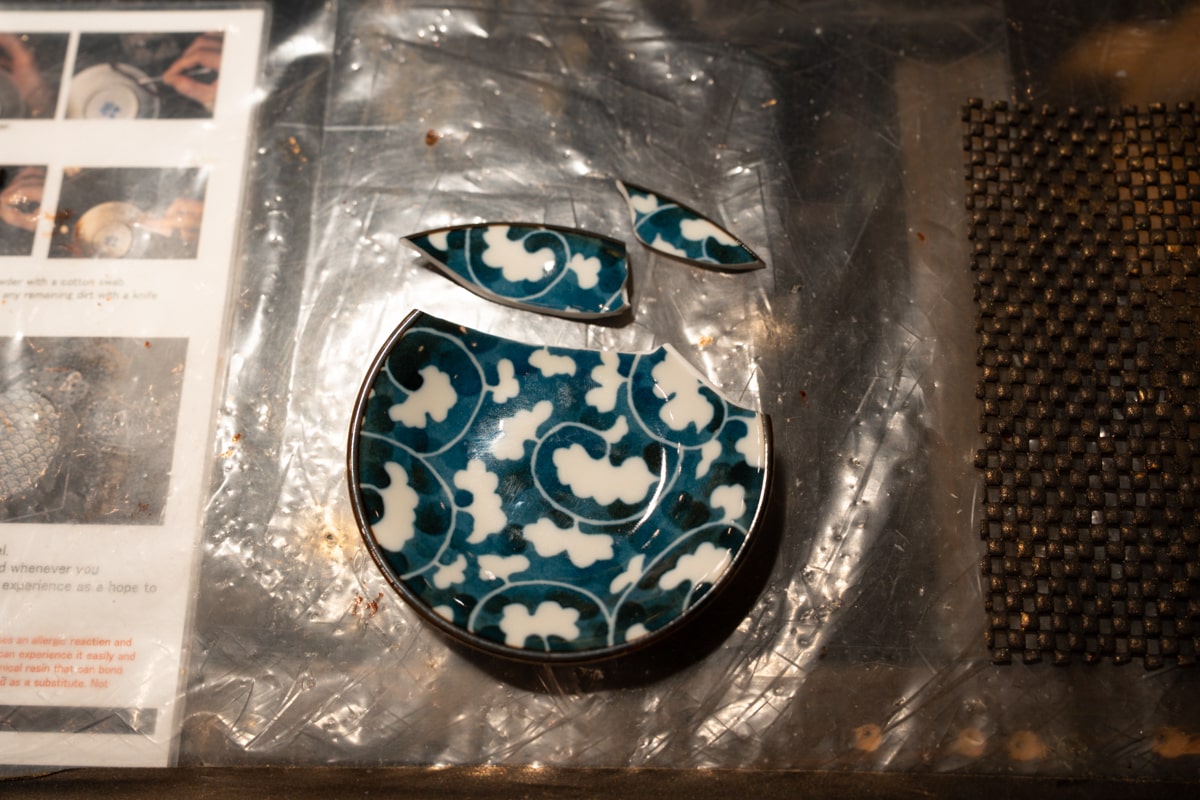
After you arrive and select your dishes (you can choose the color/pattern), you will watch a short video introducing kintsugi and wabi-sabi, before your instructor teaches you how to use the tools to grind and create even larger fissures.
During the workshop, you’ll learn how to:
- Understand the philosophy behind Kintsugi and why the Japanese art of “golden joinery” celebrates flaws instead of hiding them!
- Handle the tools and materials (lacquer, gold powder, brushes, pottery fragments) with guidance from a master or instructor.
- Repair a broken ceramic piece step by step, from preparing the surface to carefully applying the lacquer.
- Sprinkle or paint with gold to highlight the cracks and create shimmering lines that highlight and embrace the philosophy of wabi-sabi!
- Finish and polish your piece, leaving with a repaired bowl, plate, or cup as a unique keepsake!
What I most enjoyed was appreciating the symbolism of kintsugi as a practice that embodies patience, mindfulness, and creativity, which feels very much aligned with my travel style.
You can check availability and reserve your kintsugi workshop in Tokyo here:
My Kintsugi Workshop Experience
I booked a workshop slot mid-week at Taku-san’s studio in Omotesando and expected to be with a small group. However, when we arrived, it was just my partner and me!
Our “private” experience was very meditative.
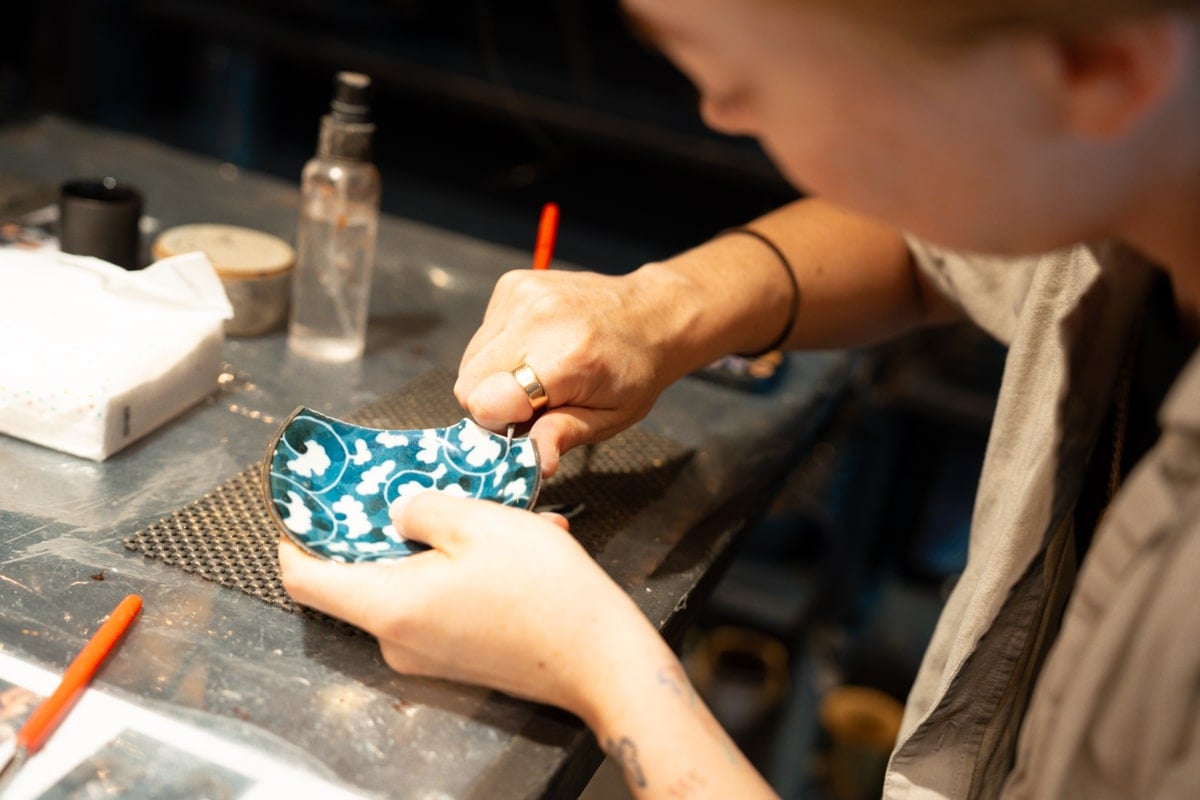
We were able to take our time, ask questions of our instructor (who speaks fluent English and has been practicing kintsugi for over a decade), and enjoy the quiet process of filing the dish as we enhanced its flaws to make it even more beautiful than before it was broken.
Don’t be fooled… kintsugi requires technique and a strong hand! It’s much tougher to create beautiful grooves and fractures than I expected. But that was a part of the fun.
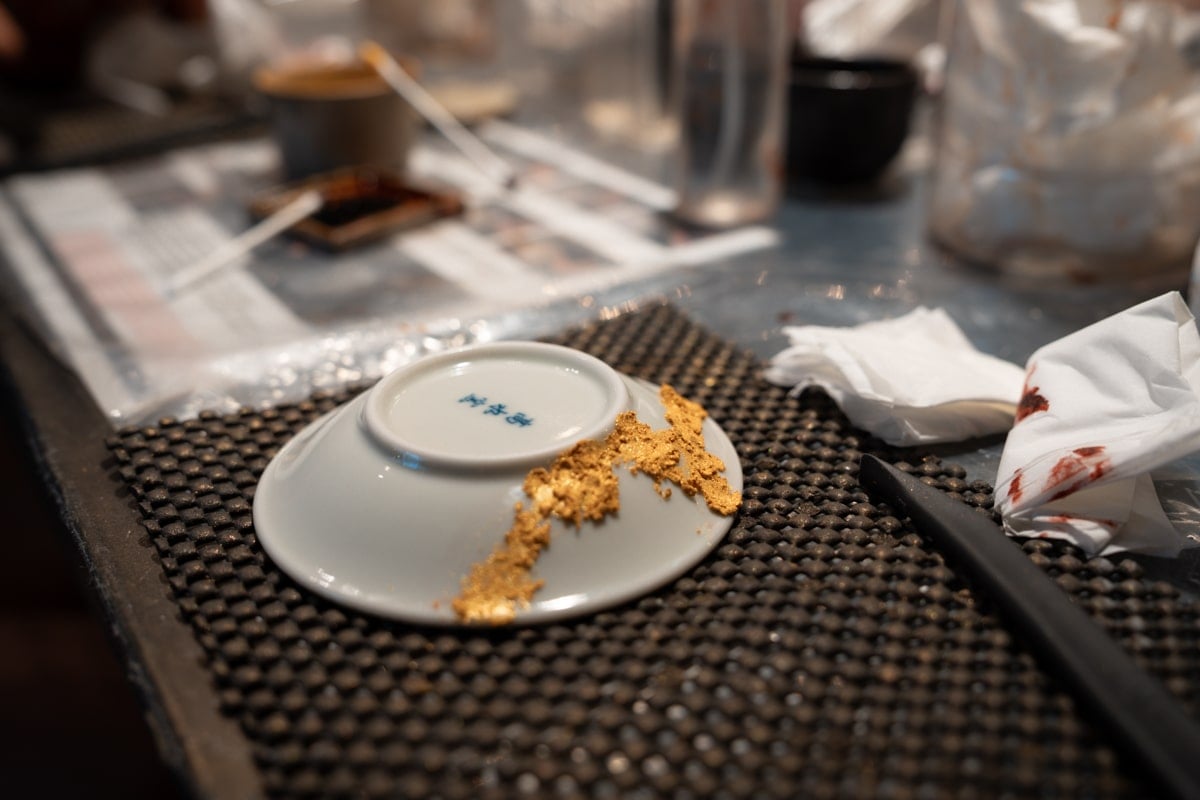
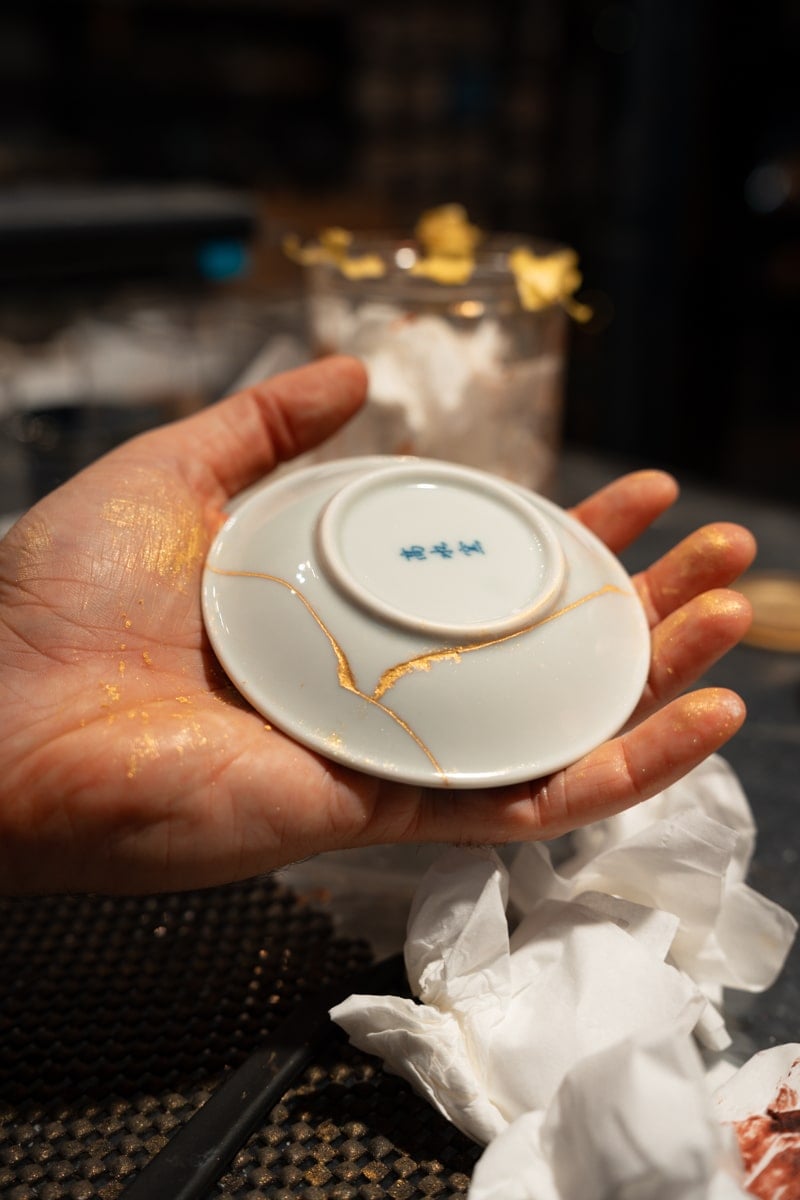
In the end, both Paul and I ended up with beautiful cracks with gold power inlay.
At the end, we got to clean off our dishes and pack them to take home as a unique souvenir, which definitely adds to the value of the workshop.
If you wish to replicate this experience, I recommend booking in advance on Viator.
The cost ranges from $60 to $115 per person, depending on the season and whether you select a weekday or weekend (we highly recommend signing up for a weekday, as it’s cheaper and less crowded).
Tips for Booking a Kintsugi Workshop
Before you step into your first kintsugi workshop, here’s what to know!
- Wear casual clothes
The gold power can get everywhere (🙈), so avoid wearing white or your fanciest clothes! - Reserve in advance
Popular studios and classes like Taku-san’s fill up fast. - Best for:
Awesome for couples and solo travelers. While this is kid-friendly, note that the pottery grinders and files can be sharp (I scraped myself a wee bit!) - Ship or pack home!
All pieces can be shipped onward, but packaging peanuts are available for you to pack your new dish snugly for transport in your luggage.
Check out my Japanese culture blog to learn more and discover even more ways to experience kintsugi and wabi-sabi in Japan!
Have any questions about trying your hand at kintsugi in Japan? Let me know in the comments!


