Taking It Slow: Island-Hopping in Croatia
With about 1,200 islands, Croatia’s Adriatic coast each with its own story, history, personality and rhythm.
The post Taking It Slow: Island-Hopping in Croatia appeared first on JourneyWoman.
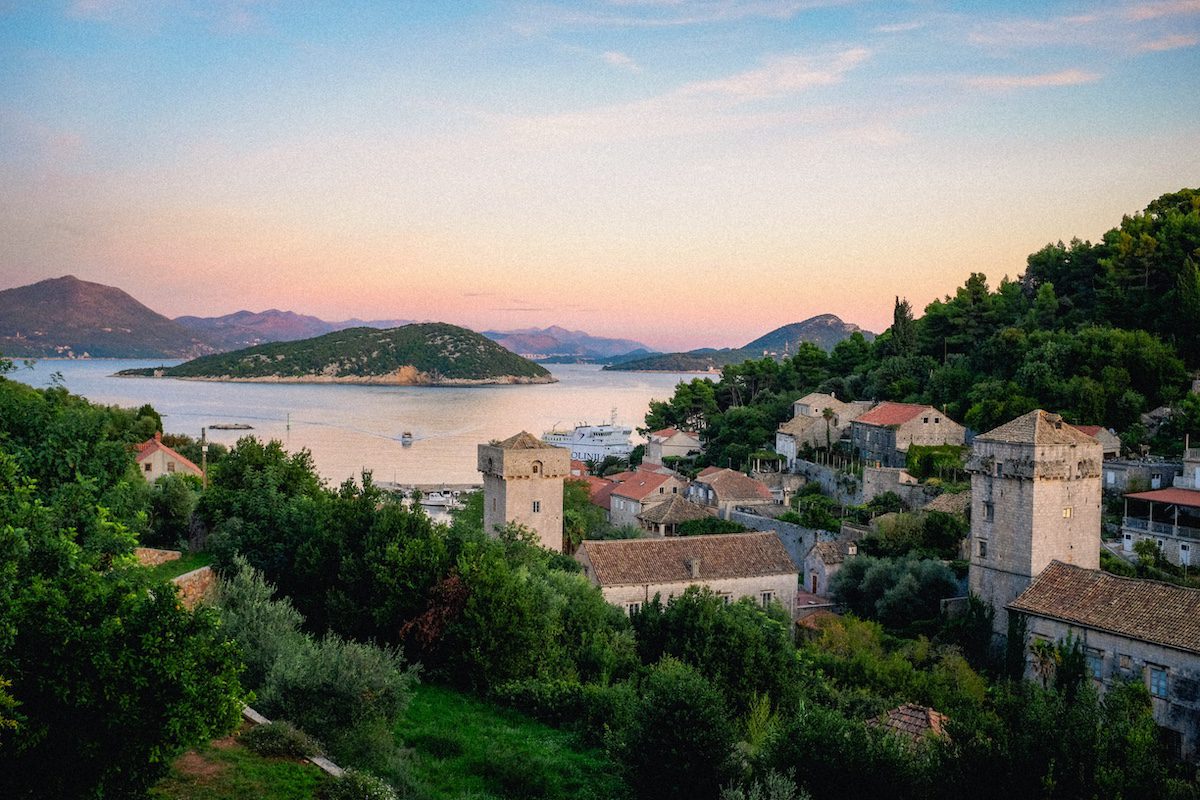
Recurring patterns along the Dalmatian coast
Many Croatian islands share distinct features. Rugged limestone cliffs soar dramatically into the sea. Craggy rocks carve out hidden coves, forming private little pebble beaches perfect for swimming. And inland, the terrain is mostly mountainous, with olive groves and pine forests. Villages scattered along the coast are typically formed from light or beige-coloured stone with red terracotta roofs and windy, narrow streets.
The “Splitting” point…
My trip started in Split, Croatia’s second-largest city and a main hub for exploring some of the iconic Croatian islands that lie between Split and Dubrovnik. We are a motley crew— 12 of us ranging in age from about 40 to 70, and hailing from Europe, Canada, the UK and New Zealand. With a mix of couples, one group and a few solo travellers, I felt confident that friendships would develop.
At our welcome dinner near the hotel, our guide Vedran Forko — a former competitive white-water kayaker, and all-around adventurer — greeted us warmly. ”Zivjeli!” he toasted, as we raised our glasses. “It’s all about making friends and travelling together.”
Brač: The adventurer
Just an hour by fast ferry ride from Split, Brac is Croatia’s third largest island and the first one on our itinerary. As we approach, I can see its dark pine forests and rugged coastline, with the 778-metre-high peak of Vidova Gora, the highest point of all Croatian islands, piercing the sky.
Our first hike on Brac has us walking along a rocky, uneven path to the remote Blaca Hermitage, a 16th-century monastery built into the wall of a canyon. Its isolation is astonishing, particularly when imagining the Glagolitic priests who lived there over several centuries. Now a museum, the guide shows us the library filled with some 8,000 books, a classroom used for local village children, and even a grand piano, which apparently 12 men carried over eight hours, drinking 57 litres of wine from a massive goat bladder in the process.
Later, we settle at the buzzing Blue Sun Hotel Elaphusa, a large, four-star resort in the small town of Bol on the southern coast of the island. With its location fronting the beach, it is perfect for water-based activities. My new friend Kate and I swim off rocky outcrops and wander to the famed Zlatni Rat (Golden Horn) Beach, a horn-shaped spit that apparently changes shape with the wind and tide.
That night, we have a group dinner at Ranc, a family-run konoba (or restaurant) where we feast on platters of veal and lamb, accompanied by potatoes and carrots, which had been roasted in the traditional peka method of slow cooking under a big bell-shaped cast iron lid in the coals of a stone hearth. The tender meat, with its smoky flavours, pairs perfectly with homemade wine, which we enjoy at long wooden tables under grapevine canopies.


