I took Amtrak’s 27-hour train ride from D.C. to New Orleans. Here’s how it went.
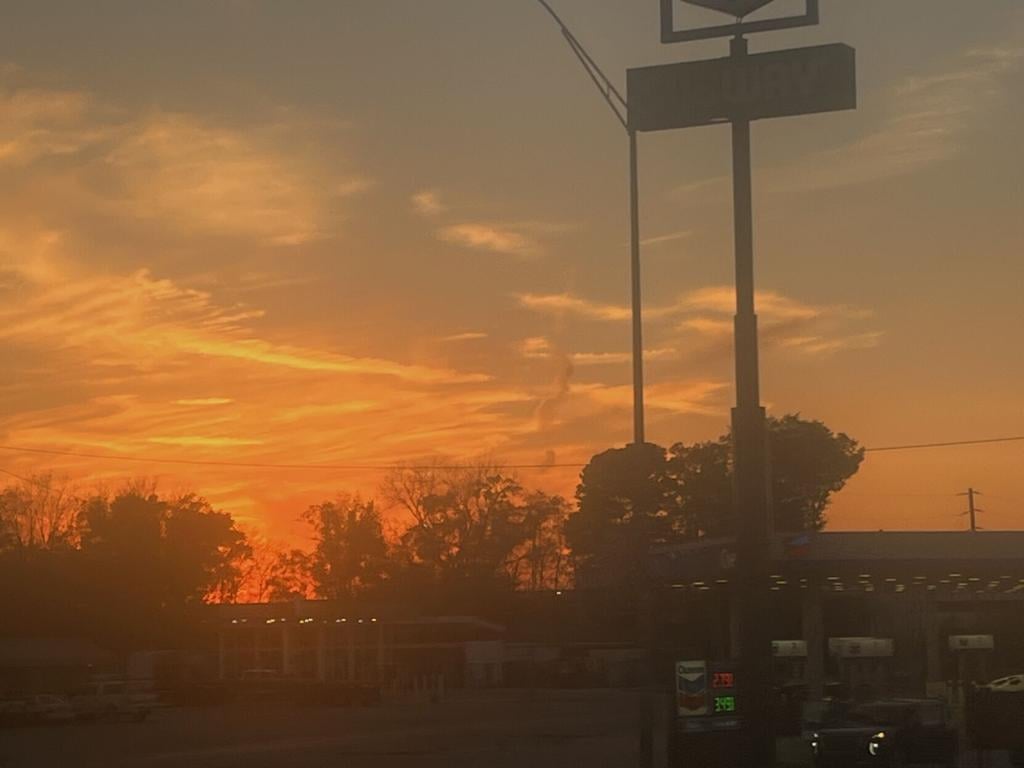
5 min readThe sunset just west of Meridian, Mississippi, glowed fiery-orange, the sky draped with wisps of pink clouds above a silhouette of treetops and geometric rooflines. It was an award-winning photograph, I thought, but couldn’t find the right angle for the shot through the window of my train compartment.
I contented myself with simply enjoying the scene — one among so many as the kinetic panorama of the South passed by. I began to consider it an old lady’s version of video entertainment.
As a child in the 1950s, I often rode the fabled Illinois Central roundtrip between New Orleans and Memphis to visit my grandparents, and on to Chicago in the summers. Since then, however, I’d become a devoted frequent flyer, replacing long overnight train rides with air travel.
When my anxiety about flying home from Washington, D.C., flared during the government shutdown, I wondered if there might be train service home instead.
Which is how I found myself ensconced for 27 hours aboard The Crescent from Union Station in Washington to Union Passenger Terminal in New Orleans, aboard the latest iteration of a passenger rail service that has run the New Orleans-to-New York route since 1925.
Room B, Car 1910
I booked my reservation through the Amtrak website and sought the most comfortable possible accommodation — a “room” rather than a “roomette” or a coach seat. The room was a bit pricier, but I wanted to have a private bathroom. I was also entitled to four meals and a glass of wine with dinners.
The little metal homebase inside of Room B, Car 1910, was mine.
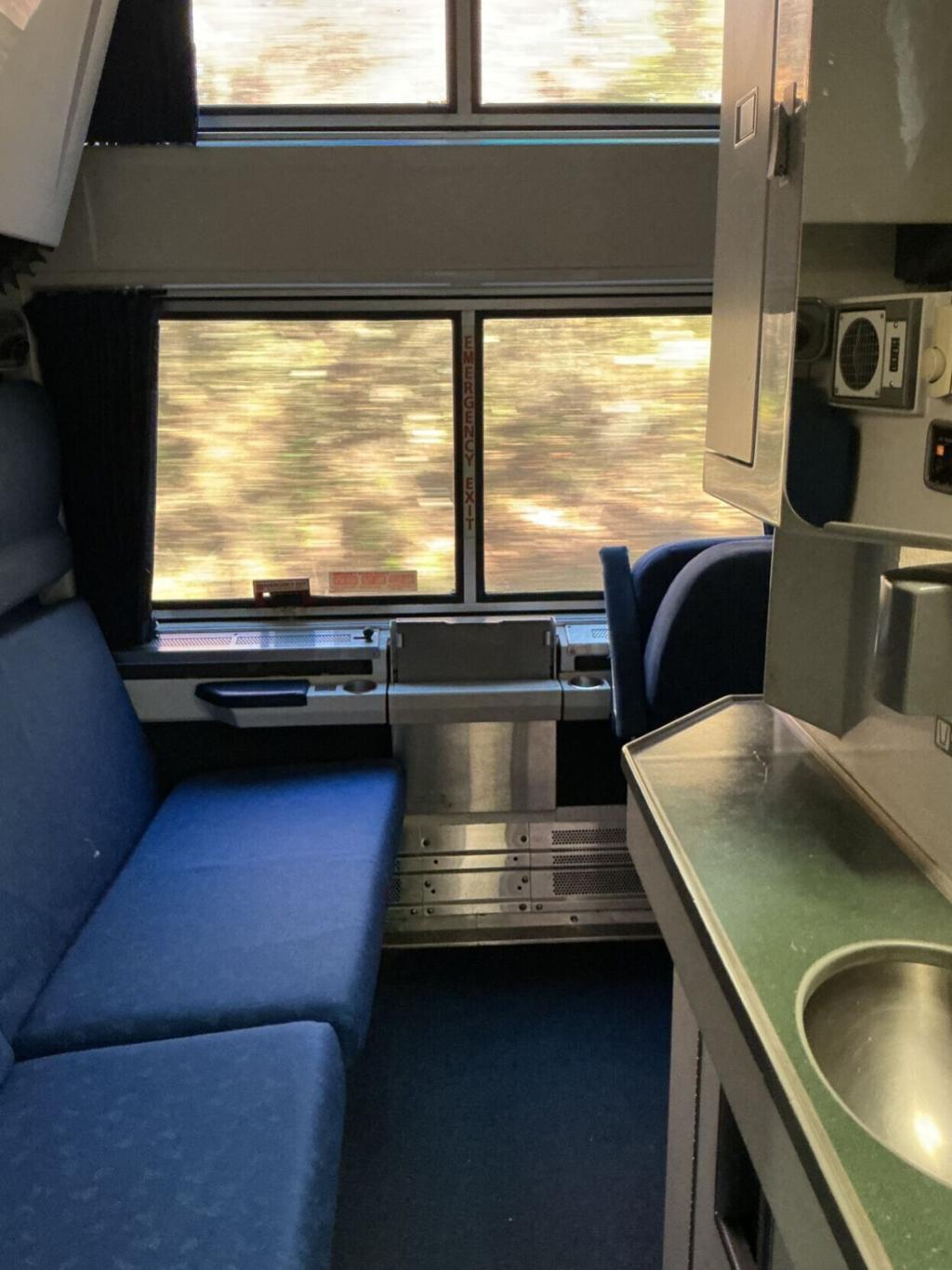
A heavy sliding glass door opened from the hallway into the L-shaped compartment. The door was backed with a navy, pleated curtain that Velcroed to each side for privacy. Seating was on a comfortable blue bench that made up into the bed.
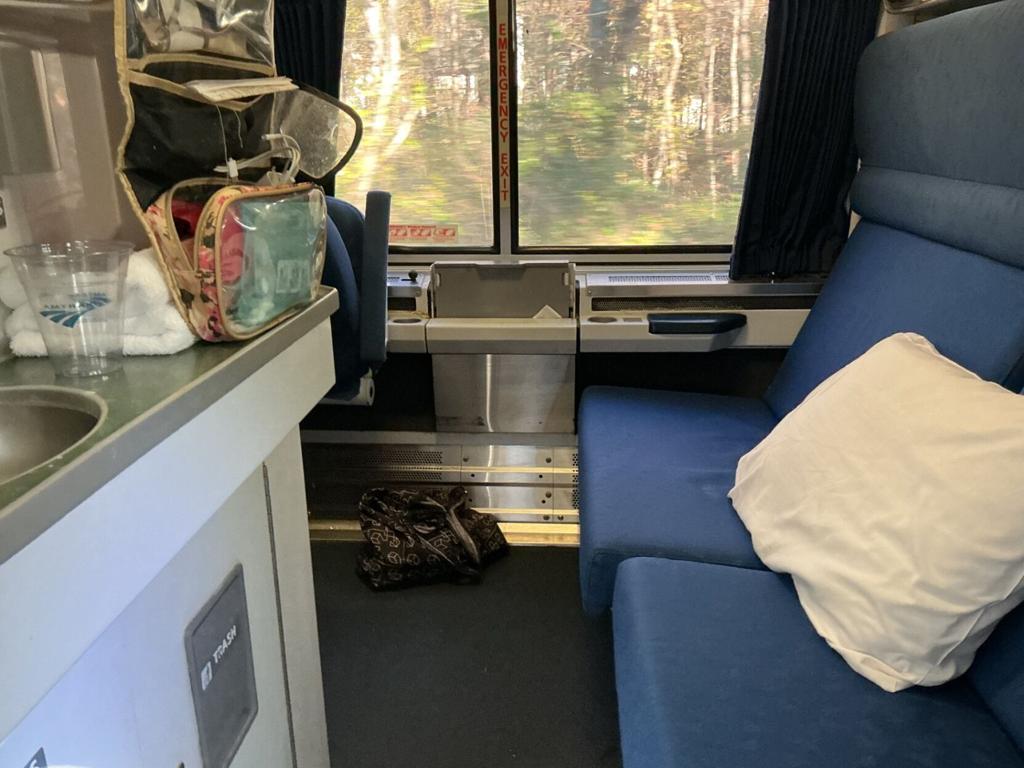
The upper berth included railed spaces for storage, plus small windows for viewing the passing scenery while still under the covers. There were two closets, a small sink and a metal storage cabinet. A sliding door to the next compartment, locked for me, would have offered easy access to the adjoining room if family or friends traveled with me.
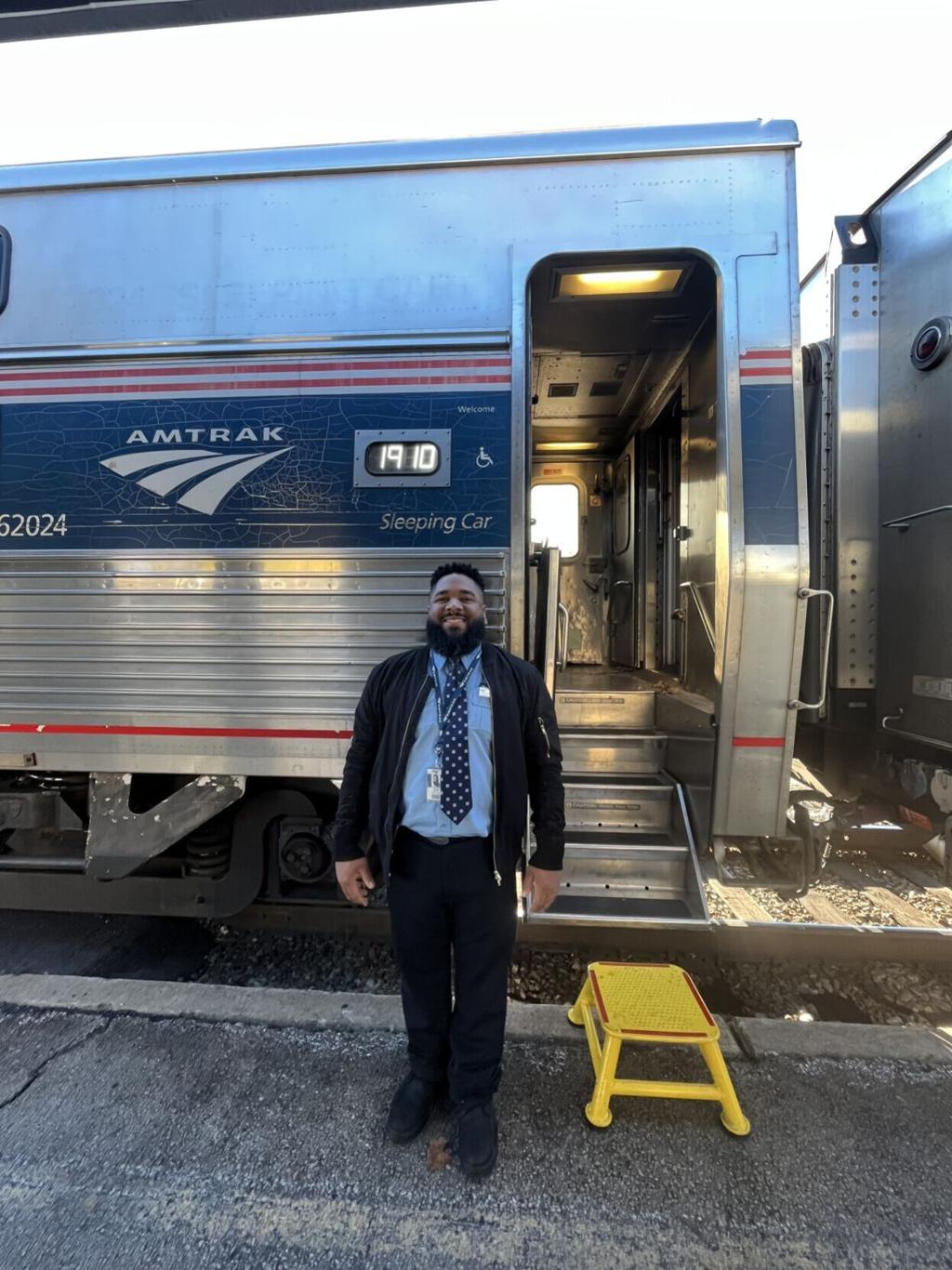
Justin, the attendant assigned to my car, told me that the staff, save conductors and engineers, were based in New Orleans and worked round trips — sometimes back-to-back, other times with several days between runs.
A smooth trip
Not long after we eased out of Washington into the night, Justin presented me with the menu for our trip, including breakfast, lunch and dinner choices. I could eat either in the dining car at a selected time or have meals delivered to my room. I chose the former.
The dining car was contiguous to my car 1910, so I had only swaying gangway connection to pass — that familiar balancing challenge between train cars.
Overall, though, the entire trip was quite smooth — rocking, rather than bumpy, with the occasional lurch that produced metallic-sounding jolts and clacks. Even in my compartment the rattle and clicks of the metal components were not intrusive. Even the frequent blares of our horn came as muted.
The dining car combined the heritage train dining I remembered with a fast food ethos: white tablecloths on the table overlaid white paper place mats, real stainless flatware wrapped in navy cloth napkins and vases of red and white carnations on each table. But the food was prepackaged, served in plastic containers that had been microwaved in the small galley.
For my first dinner, I ordered salmon. It came in a tasty sauce with rice, vegetables and a small salad, along with a warm roll. The entrée was good enough that I ordered it again the next night.
Stopping for air — and to see the engines
When I returned from dinner, Justin had made up my room — the lower berth ready, the upper berth down so I could heave my suitcase upon it, so as not to command too much of the minimal floor space in the dark.
The bed was comfortable so that when Justin knocked at my door at 8 a.m. to ask if I was going to breakfast, he surprised me. I’d just been lolling under the covers, looking out of the windows.
When I sat down in the dining car, I talked across the aisle with Bernard, formerly Navy according to his jacket emblem, who was also dining alone. His wife had remained in D.C. with family, he said, but he was ready to get home to his acreage outside Meridian that his family had proudly owned since the 1890s.
The Crescent stopped in Atlanta long enough for long-distance passengers to step off for fresh air and a short walk. I took advantage of all such stops.
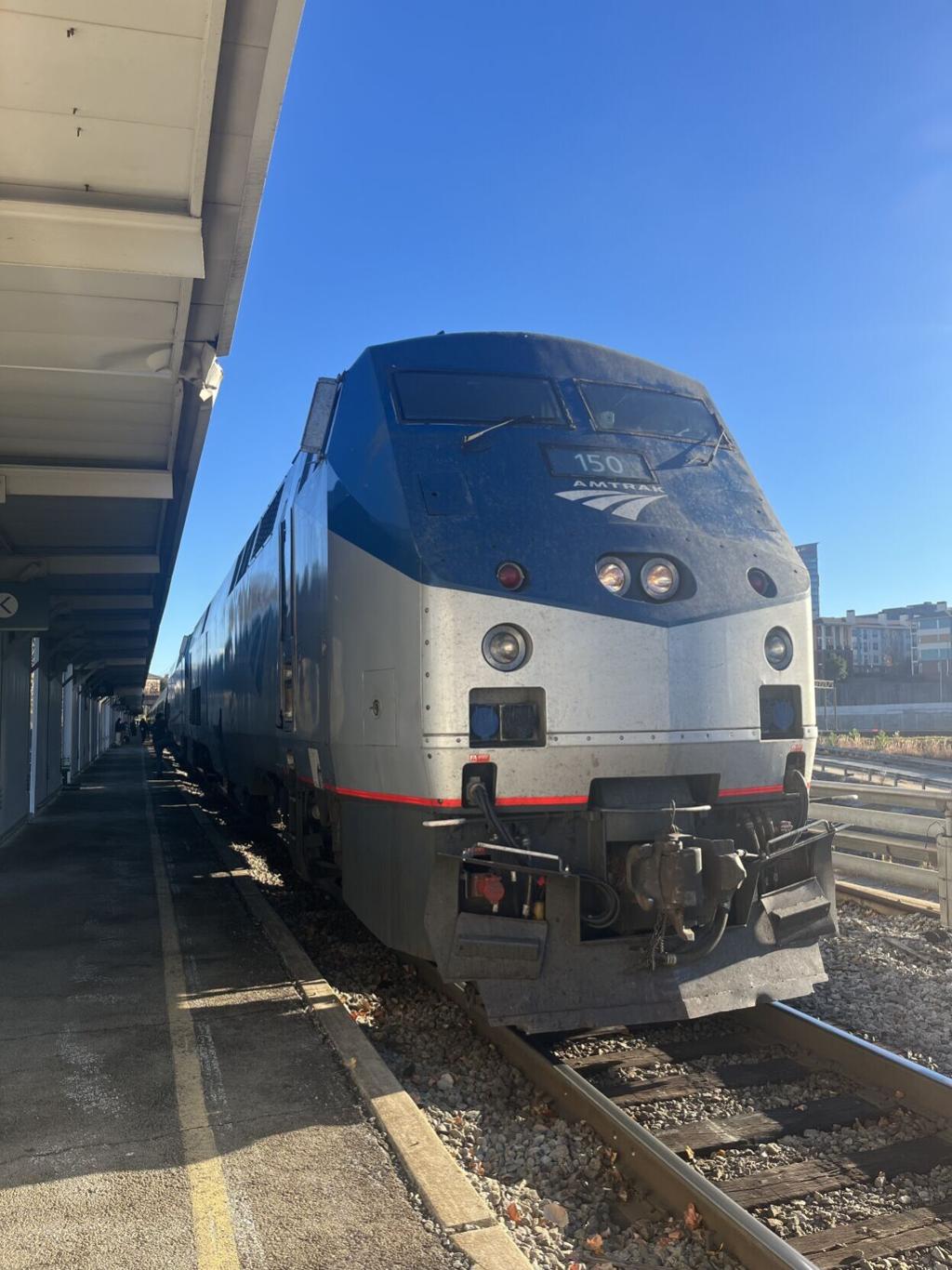
At Birmingham, I strolled to the front of the train to see The Crescent’s two sleek engines, nose to tail, and also found our two engineers. They explained that five, two-person teams divide up the route from New York to New Orleans. They also noted that, while our train can reach a speed of 79 miles per hour on straight track, more often we are slowed by curves and traffic.
Spotting history
The day aboard passed happily. I ate, slept, read, chatted on the phone and spent an inordinate amount of time looking out of the windows.
Fall color splotched the forests all the way into southern Mississippi. We sped through tiny towns with lines of old, redbrick storefronts facing the tracks and past churches, warehouses, industrial sites, fields and ravines.
Twice I spied history trackside. In Birmingham, it was Sloss Furnaces, a rusty old blast furnace that produced pig iron from 1882 to 1971 that became one of the first industrial sites preserved and designated a national historic landmark. In Meridian, it was the mustard-colored passenger cars of the Bigbee Railroad.
Train travel in the United States has increased noticeably, not only in a popular northeastern corridor. I now know why and have joined the ranks of new Amtrak supporters.
I hope to take The Crescent on its reverse route someday, especially to see the scenery I missed that we passed at night or to deboard in one or more interesting stops along the route to stay for a visit.
And next time I ride the rails, I’ll know exactly what to expect.


