Why Women Who Love the Camino Should Walk Japan’s Kumano Kodō
Jennifer Bain recounts her experience walking the Kumano Kodō, a sacred pilgrimage offering a unique blend of nature, spirituality, and cultural heritage.
The post Why Women Who Love the Camino Should Walk Japan’s Kumano Kodō appeared first on JourneyWoman.
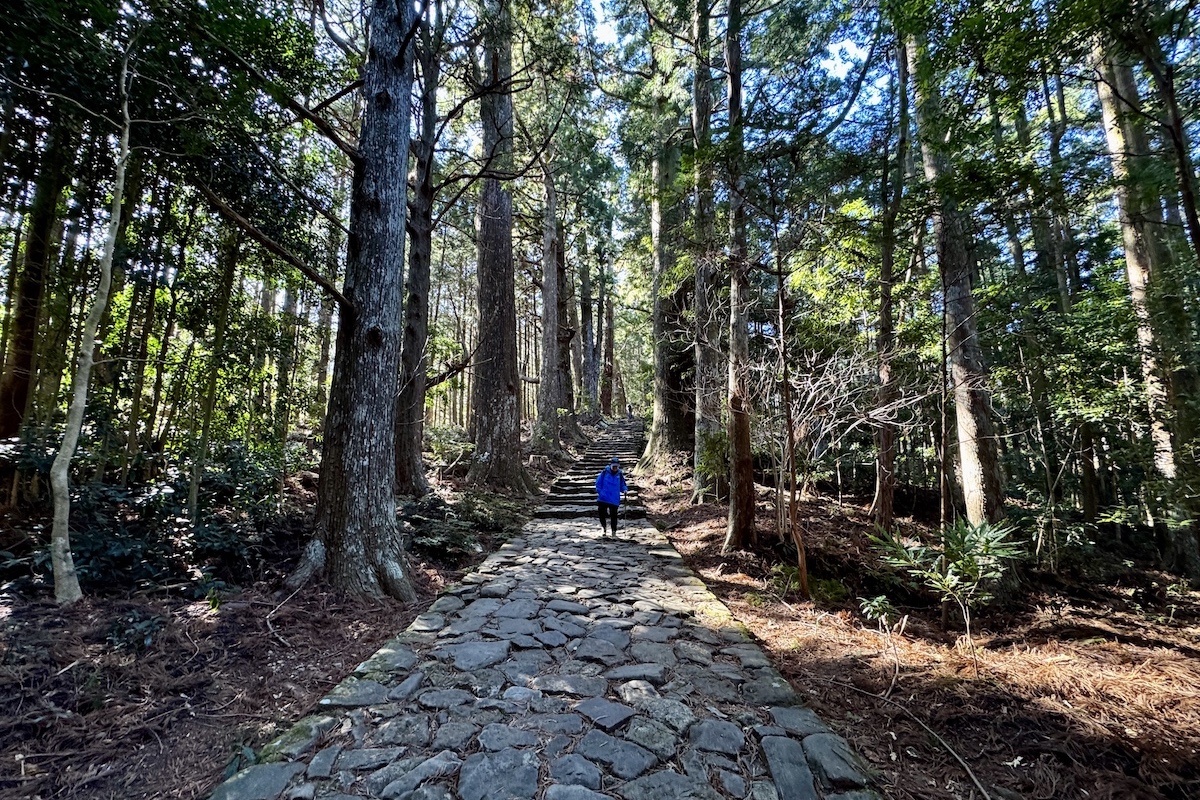
While not yet as globally adored as Spain’s Camino de Santiago, the Kumano Kodō is a network of pilgrimage trails that weaves through the mountains of the Kii Peninsula south of Kyoto and Osaka to the Kumano Sanzan (three Grand Shrines of Kumano). Like the Camino, it’s a UNESCO World Heritage Site. You collect stamps and can even earn Dual Pilgrim status.
Japan’s Nakahechi Route
I had flown to Japan from Canada in late January to walk the Nakahechi route through forested mountains and villages to the Grand Shrine of Hongū before finishing at Nachi Grand Shrine. With my friend and fellow travel writer Pat Lee for company, and with the route and logistics mapped out by Oku Japan, I was well-prepared for a five-day rural journey that would involve 20,000-odd steps a day and help from 10 local buses, two semi-express trains, two taxis and a luggage transfer service.
“We hope you are safety and success of travel,” Chie Yokoya said sweetly one morning.
Her halting English was infinitely better than my abysmal Japanese as she performed a kiribi ceremony, striking a stone with steel to create a spark to bless my journey.
We had spent the night at Sakura-no-Sono (Cherry Garden), the “minshuku” Chie runs with her husband Chin in Chikatsuyu. We slept soundly on futons set on tatami mats in a two-bedroom guesthouse, sharing a bathroom and doing laundry, and enjoying breakfast and dinner feasts before leaving with bento boxes filled with onigiri (rice balls), soft-boiled eggs and local vegetables.
It was in Chikatsuyu that we met Kouki Hasegawa and Mayumi Bamyo at Oku Japan’s branch office, drinking brown rice tea and choosing omamari amulets.
“This three-legged crow symbolizes the region,” said Bamyo.
“It wards off evil spirits,” Hasegawa added.


