Autumn in Georgia: 16 Glorious Things to Do in September, October & November
19 min readAutumn is my favourite season in Georgia, and a golden opportunity to experience the best of the country. Read on for 16 special autumn activities, festivals and events, including the wine vintage, shoulder-season hikes, fall foliage road trips, and more.
While summer is the peak season for tourism, those in the know will tell you that spring and autumn are the nicest times of year to visit Georgia.
→ Also see my complete month-by-month guide to the best time to visit Georgia.
After six years living in Georgia, I can confidently say that mid-September through November is by far my favourite time of year in the country. The weather is lovely in most parts of the country (including Tbilisi), with mild daytime temperatures, bright skies, and brisk nights – and although you might encounter rain and mist, it all adds to the autumn atmosphere.
Conditions are still suitable for hiking in some mountain regions, and once the crowds depart from Batumi, the Black Sea coast has a very different feel.
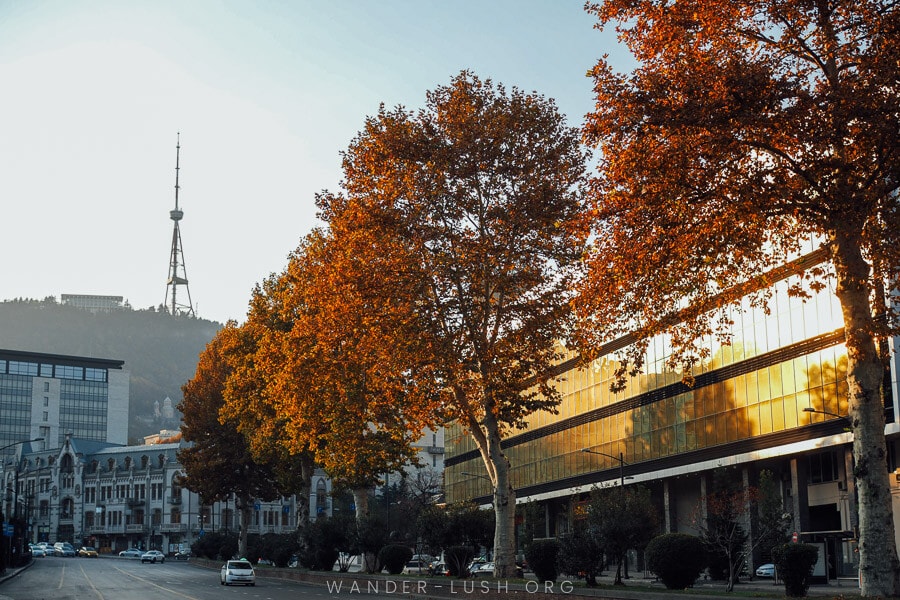
Add to that resplendent autumn foliage, a huge program of cultural events and festivals, and of course the legendary Rtveli wine vintage, and fall in Georgia wins every time!
In this guide, I’ll show you where to go in autumn in Georgia for autumn colours and special happenings. I’ll also share my top tips for fall travel and provide an overview of weather conditions so you know what to expect.
→ Don’t miss my detailed guide to visiting Tbilisi in autumn, which includes more special activities to do in Georgia’s capital city during September, October and November.
Please note: This post contains affiliate links, meaning I may earn a commission if you make a purchase by clicking a link (at no extra cost to you). Learn more.
Things to do in autumn in Georgia
Here are 16 ways to fall in love with autumnal Georgia.
1. Join the Rtveli wine vintage

Autumn in Georgia means one thing: harvest time. The Rtveli – often called Georgia’s ‘fifth season’ – is the most festive and joyous time of year. This is when vintners reap the fruits of their labour and families return to their ancestral vineyards to gather grapes, top up their clay qvevri, feast, toast, and savour the last warm days of sunshine.
The vintage centres on Kakheti, Georgia’s largest wine region, where it’s all hands on deck to pluck and process the year’s grapes.

The exact dates vary each year depending on the weather and are usually confirmed only a week or so in advance. Each vineyard works on its own timetable, influenced by elevation, grape variety, and the winemaker’s preferences.
In Kakheti, early to mid-September is a safe bet. Some estates complete the harvest in a single weekend, while others stretch it out across the entire month.
In Western Georgia, the season starts later: Imereti and Adjara usually harvest in October, while in Guria, late-ripening varieties such as Chkhaveri can hang on the vine until November or even early December.
Even if your trip doesn’t line up exactly with harvest dates, the wine regions have a wonderful atmosphere throughout autumn – the vineyards glow gold and crimson, the air is heady with fermenting grape must, and the pace of rural life shifts with the season.


Not every winery accepts guests during Rtveli (it is their busiest season, after all), but a growing number now offer special packages that allow you to observe – or even join in – grape picking and crushing.
The best way to experience the harvest energy is by joining the Real Rtveli organised by my partners, Eat This! Tours, in cooperation with small family wineries across the country. These excursions are the only authentic Rtveli experience currently available. Small group trips to Kakheti, Kartli and Imereti are typically available between late August and November.


Georgia is blessed with four very distinct seasons. It’s one of the things I love most about living here.
Because the climate and topography is so varied, autumn colours don’t arrive all at once – instead, they sweep gradually across the country, moving from the higher elevations down into the valleys. This makes the leaf-peeping season long and rewarding, stretching over almost four months.
In the highlands, the forests of Kazbegi, Racha (read more in the next section below) and Svaneti begin to show their first golden hues as early as September. Crisp mountain air and the mix of coniferous and deciduous trees create spectacular contrasts of emerald, amber and crimson.
In central Georgia, Borjomi-Kharagauli National Park and Kvemo Kartli typically reach their peak in October. These are excellent places for hikes and scenic drives, where broadleaf forests blaze with colour against limestone cliffs and river gorges.
In the lowlands of Western Georgia, especially Samegrelo and Adjara, the subtropical climate delays the seasonal shift. Here the leaves change colour much later, often lingering until mid-November.
As a general rule, the best time for fall foliage in Georgia is from the last week of September until the second week of November. Exact timing varies from year to year depending on rainfall and temperatures, but this is when you can reliably catch the most vivid colours across different parts of the country.
→ See a full list of the best places in Georgia for autumn colours (published soon)

You can see beautiful fall colours in the centre of Tbilisi, too. My absolute favourite spot in Tbilisi in autumn is the Mtkvari riverside (pictured above). A long footpath takes you all the way along the waterway, with spectacular gold and russet trees reflected in the water.
→ For more inspiration, see my guide to visiting Tbilisi in autumn.
3. Road trip in Racha-Lechkhumi

Ask any Georgian, and they will tell you that Racha-Lechkhumi is the ultimate autumn road trip destination. With quiet, winding roads and breathtaking scenery, this corner of the Greater Caucasus is made for a road trip. Multiple routes connect the region to Tbilisi and Kutaisi, so it’s easy to plan an itinerary that suits your schedule and interests.

Around Shaori Reservoir near Nikortsminda, the glassy water mirrors fiery forests for postcard-perfect views. In Upper Racha, the villages of Chiora and Ghebi see colours change earlier than elsewhere. The road through Shkmeri is particularly stunning, lined with forests that continue into Sachkhere and Chiatura in mountainous Imereti.
Beyond the scenery, Racha is rich in autumn traditions and the perfect time to indulge in regional food and wine. October is grape harvest time, while in late November locals prepare lori – a special cured ham unique to the region (below left). If you’re lucky, guesthouses such as Hotel Gallery in Oni or family-run wineries like Margvelidze Winery may invite you to share in these seasonal rituals.


Overall, autumn is a great time for a road trip in Georgia. Days are still long enough to pack in plenty of sightseeing, and once schools resume in mid-September the roads become noticeably quieter. Rental car prices also dip at this time of year, making it more affordable to hire a vehicle.
The Udabno rainbow hills near David Gareja and Vashlovani National Park are perfect for more adventurous autumn off-roading.
Just be sure to keep on top of changing conditions. Read my tips for driving in Georgia for more.
4. Go off-season hiking in Svaneti

Svaneti is one more destination for an early autumn road trip, especially if you travel the stunning Zagari Pass. But needless to say, the better way to experience this region and its autumn splendour is by hiking up your boots and hitting the trails.
Georgia’s capital of hiking offers some of the country’s most spectacular walks – including the only multi-day village to village hike, the legendary Mestia to Ushguli.


By September, the summer crowds have thinned, leaving quieter paths and more space at guesthouses. Weather permitting, trails remain open through October, giving you a precious extra window to explore before heavy snow seals off the high passes for winter.
Other hiking destinations including the Juta Valley and Truso (both accessible from Kazbegi) are similarly open through October. From November onwards, hiking is only viable at lower elevations. Around Tbilisi, places such as Kojori, Rkoni (see below), Birtvisi Canyon, Borjomi-Kharagauli, and Lagodekhi National Park combine comfortable weather with colourful foliage.
5. Take a day trip from Tbilisi to the Rkoni Valley

For a simple, scenic escape close to the capital, the Rkoni Valley is one of the best places for late-season hiking and autumn colours. Just an hour and a half’s drive from Tbilisi, it offers gentle forest trails, medieval landmarks, and plenty of golden foliage from mid to late October until early November, when the valley is at its peak.
The trail begins in Rkoni village and follows the river through the forest to reach Rkoni Monastery, a small 7th-century complex built on a rocky outcrop. Once an important religious centre on the trade route between Kartli and Javakheti, it was expanded during the Middle Ages and later became a bishop’s residence. The main church is modest but atmospheric, surrounded by woodland.
Nearby stands the Tamar Bridge, a single-span stone arch from the 12th-13th centuries that once carried merchants and pilgrims across the river. It’s one of many bridges across Georgia attributed in folklore to Queen Tamar, though this one is among the finest preserved.


If you want to extend the day, continue along a gentle uphill path through the forest to Ikvi Church, an early medieval basilica distinguished by rare blue-hued frescoes inside. The walk is peaceful, with few visitors, and offers wonderful views of the valley.
Other small churches dot the area, including Chachubeti Church and Ertatsminda Church, both worth a quick stop if you’re exploring by car. And if you decide to stay overnight, Chateau Mephis Kalaki offers incredible accommodation, good food and wine, and more opportunities to enjoy the quiet countryside.
6. Observe winter preparations in the highlands

In Georgia’s remote mountain regions, winter is serious business. As the cold sets in, families devote late summer and autumn to a time-honoured cycle of preparations that ensure survival through the long, snowbound months. Travelling through the highlands at this time of year, you’ll see entire communities at work.
In alpine pastures, the last of the haymaking takes place: grasses are cut, dried, and stacked into neat haystacks to feed livestock. Villagers return from the high yaylas (summer pasture settlements) with their herds, guiding animals down into the valleys where they’ll be sheltered until spring (more on the Transhumance below).


Wood piles grow steadily as men chop and store firewood, often stacking it into tall, sculptural heaps. Women are busy with pickling and preserving, filling jars with cucumbers, cabbage, and peppers. Quinces and apples simmer into jams, while strings of persimmons hang from balconies to dry in the cool, clear air.
In places like Upper Adjara (pictured above), where the landscape is rugged and many villages pride themselves on self-sufficiency, these preparations feel especially evocative. Autumn is a chance to witness the routines that have sustained life in the Caucasus for generations, and to appreciate how closely daily rhythms are tied to the turning of the seasons.
7. Witness the Tusheti sheep drive

For an adventurous and truly special experience, head to Tusheti for the annual sheep drive, or Transhumance. Set in the Greater Caucasus, Tusheti is one of Georgia’s most remote and awe-inspiring mountain regions. Any time of year here feels extraordinary – but this autumn spectacle takes it to another level.
Every summer, Tush shepherds lead their flocks high into the alpine pastures. As the seasons turn, the journey reverses: what goes up must come down. Because Tusheti is cut off by snow in winter, the entire community and their animals migrate back into the valleys of Kakheti, around Dedoplistskaro and Vashlovani, where conditions are more forgiving.
The descent usually begins in early October, when shepherds round up their sheep and horses for a three- to four-day trek down to the lowlands. Travelling on horseback with their dogs, they guide herds a thousand strong along the serpentine mountain roads. It’s an astonishing sight – waves of sheep filling the switchbacks, their bells echoing through the valleys. A winemaker I once met in Kakheti recalled how he had to build a wall around his cellar to keep the dust at bay as flocks passed by his vineyard each autumn!
For the Tush community, this is more than logistics: it’s a time steeped in tradition, storytelling and ritual. To witness the migration is to glimpse a way of life that has changed little in centuries.
Because of the road conditions, it’s best to go with a local guide and experienced driver, or join an organised tour to ensure safety. There are also opportunities to meet the Transhumance in the lowlands.
Similar sheep drives also take place in Upper Adjara in early autumn and in other highland areas across Georgia.
8. Enjoy Velvet Season on the Black Sea Coast

Batumi and the beaches along Georgia’s Black Sea Coast reach their busiest point in July and August. Once school resumes in mid-September, families head back to Tbilisi and the coast suddenly feels calmer.
This short window after the summer rush is known as the ‘Velvet Season’ – a time when the crowds thin out, but conditions remain ideal for sunbathing and swimming. Hotel and resort prices drop, and it’s far easier to claim a patch of sand (or pebbles, I should say!) to pitch your umbrella.
In mid to late September, skies are blue, waters are warm, and the humidity of western Georgia is at its peak, making a dip in the sea feel all the more refreshing. The Black Sea averages 24-26°C (75-79°F) in September, remaining swimmable into early October when it cools to around 20°C (68°F).
By October, temperatures fall sharply, signalling the end of beach season. Still, this can be a lovely time for a city break in Batumi, with cooler weather, fewer visitors, and epic sunsets.

One of my favourite shoulder-season spots on the Black Sea is Tsikhisdziri, where flashes of autumn colour mingle with banana plants and palm trees to create a surreal tropical-fall atmosphere.
The popular Shukura beach bar stays open through September with parties and DJs, while nearby Castello Mare drops its rates – the perfect excuse to indulge in one of Georgia’s most extravagant seaside hotels.


Another reason to visit Batumi in autumn: From August to October, the Batumi Raptor Count takes place – one of the world’s largest bird migration spectacles, when more than a million raptors funnel through the skies above the Black Sea coast. Birdwatchers and nature lovers from around the globe gather here to witness the breathtaking migration.
The increased bird activity makes this a great time to explore the national parks and newly UNESCO-listed Colchic forests and wetlands along the coast, especially Koklheti National Park.
9. Revel in Tbilisi’s cultural calendar
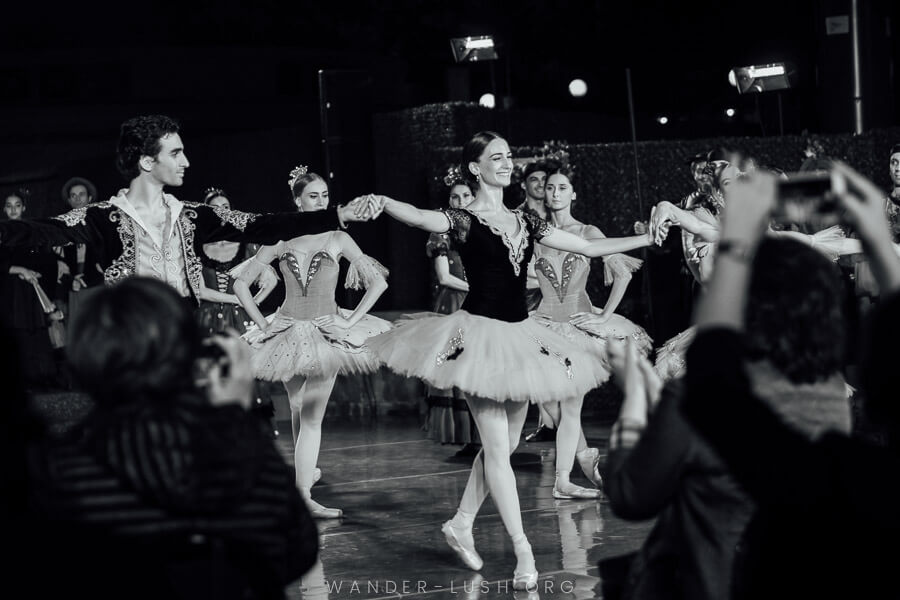
Autumn brings a vibrant, upbeat atmosphere to Tbilisi. Wine bars and cafes are in full swing, weekends are filled with outdoor events, and pop-up maker’s markets and craft fairs often line Rustaveli Avenue.
This is one of the best times of year to catch live music and cultural performances. Tbilisi’s autumn calendar includes ballet and opera at the Rustaveli Theatre, adults-only puppet shows at the iconic Gabriadze Theatre in the Old Town, and in early autumn, performances by Sukhishvili, Georgia’s national ballet.
Sukhishvili normally returns to Tbilisi in September for a limited run at their outdoor stage, Takara – in 2025, they will perform from 11–20 September. It sells out within hours – but if you can get your hands on tickets, it’s an unforgettable experience.
The Autumn Tbilisi International Music Festival, held across September and October at the Jansug Kakhidze Music Centre, blends symphonic, big band and orchestral performances by Georgian and international musicians. The International Festival of Literature (September), Tbilisi Baroque Festival (October), the International Festival of Theatre (September/October), and the Tbilisi International Film Festival (November/December) also take place.
For tickets to concerts, festivals, and even sporting events, I recommend checking TKT.ge, Georgia’s go-to platform for listings and reservations.
→ Also see my mega list of things to do in Tbilisi at any time of year.
10. Savour seasonal produce & special autumn dishes

One of the joys of Georgian cuisine is how closely it follows the seasons. In autumn, you get the best of both worlds: the tail-end of summer’s stone fruit, watermelons and berries (look out for the last of the juicy peaches and nectarines in early September), along with the bounty of spectacular fall produce.
Pumpkins dominate the markets, displayed in a dazzling array of shapes, colours and sizes – especially at Tbilisi’s Dezerter Bazaar. Autumn is also the season for figs, persimmons (hurma) and pomegranates. You know it’s fall when market stalls are draped with garlands of dried persimmons, strings of chillies, and bright marigold flowers.
With the grape harvest in full swing, churchkhela (the classic sweet of walnuts dipped in thickened grape juice) becomes abundant. Families also spend this time preserving fruit and jarring compote, a sweet drink made from boiled fruit.

The undisputed star of Georgia’s autumn food scene is the mushroom. The most prized variety is Amanita Caesarea (Caesar’s mushroom), considered a delicacy since antiquity. Many restaurants in Tbilisi add seasonal specials to their menus just to showcase these earthy beauties.
Mushrooming itself is a beloved autumn pastime (join the group Mushrooms of Georgia for tips and hints, and remember to forage with care!). Head into Sabaduri or along the Gombori Pass and you’ll often see locals scouting the forest floor with baskets in hand.
Autumn festivals & events
→ For a full program of events and festivals, see my Georgia Cultural Calendar.
11. Peristsvaleba (Tusheti)
Although this special cultural festival technically falls in summer, Peristsvaleba is deeply tied to Georgia’s autumn traditions. Celebrated annually on 19 August, it symbolises the transition from summer to autumn and the beginning of harvest preparations. The name literally means ‘changing of the colours’.
If you happen to be in Georgia at this time, consider heading to one of the mountain communities that marks the day. The celebrations feature music, feasting, and merry-making, with the unique custom of smearing faces and painting crosses on one another’s foreheads using berry juice – a playful but meaningful ritual that reflects the changing season.
Peristsvaleba is observed in villages across Tusheti and also in Pankisi Valley, where it is customary to travel to Tbatana Mountain to take part in the festivities.
12. Tsinandali Festival (Kakheti)
Every September, the historic Tsinandali Estate outside Telavi in Kakheti transforms into a stage for the Tsinandali Festival, Georgia’s premier celebration of classical music. This year’s edition runs from 4-14 September, 2025, bringing together the Pan-Caucasian Youth Orchestra with an impressive roster of international soloists and conductors.
The programme features performances led by Gianandrea Noseda, Kent Nagano, and Zubin Mehta, with works ranging from Tchaikovsky and Shostakovich to Beethoven, Brahms, Dvorak and Mahler.
Tickets are available on TKT.GE.
13. Oktoberfest (Asureti)
In September and October, the German-founded village of Asureti celebrates its own take on Oktoberfest. This year’s Golden Fest takes place over several autumn weekends: September 20-21, September 27-28, and October 4-5. The venue is Bahnhof Station, 45 minutes by car from Tbilisi.
The festival atmosphere is lively and family-friendly, with live music, games and competitions, and interactive masterclasses where you can learn to bake pretzels or dip your own churchkhela. Food stalls serve hearty German-inspired dishes to pair with cold draft and craft beer.
Tickets are sold per table per day and must be booked in advance.
14. Tbilisoba (Tbilisi) – the biggest festival in autumn in Georgia
Tbilisoba is the biggest event on Georgia’s cultural calendar. These traditional ‘day of’ festivals are held in villages and mountain regions across the country throughout the summer months. In October, it’s Tbilisi’s turn!
In 2025, the festival will be held earlier than usual from September 20-21.
Tbilisoba is a massive two-day event that celebrates the capital’s diversity and Georgian identity in general. Thousands of people descend on Orbeliani Square and Dedaena Park for a Gastronomic Festival, showcasing their best autumn produce, wine and regional food specialties (including artisanal cheese). Handicrafts such as feltwork and pottery are sold at pop-up markets.
Folk dance, orchestral, big band and theatre performances are held on outdoor stages, turning the Old Town into one big party (peak levels of public cha cha consumption guaranteed).
Tbilisoba usually takes place on the first weekend of October, with dates confirmed about a month out, and a full program released a few days prior. All events are free to attend.
15. Gurjaani Wine Festival (Kakheti)


Kakheti has no shortage of wine festivals, but the Gurjaani Wine Festival is the biggest in the country. Held once a year in October (scheduled for October 11, 2025), it coincides with the end of the harvest season and brings more than a hundred winemakers and tens of thousands of visitors to Akhtala Park in Gurjaani town.
Along with wine, there’s a bustling food market, a big stage with live music, and special events throughout the day. The highlight is the giant outdoor barbecue area, where dozens of grills are fired up, baskets of shoti bread are passed around, and hay bales provide rustic seating.
Unlike other festivals that lean more towards industry networking, Gurjaani has a relaxed, family-friendly feel, with plenty of entertainment and activities for kids.
16. Svetitskhovloba (Mtskheta)
Svetitskhovloba, also known as Mtskhetoba, is one of Georgia’s most significant autumn festivals. Marked annually on 14 October, it is an official national holiday held in honour of the country’s former capital, Mtskheta.
The celebrations centre on the town’s medieval streets and its crowning jewel, the 11th-century Svetitskhoveli Cathedral. While the festival is similar in spirit to Tbilisoba, it carries a more reverent tone. Georgia’s Catholicos-Patriarch leads a special service and mass baptism, while the squares outside the cathedral fill with traditional music, dance performances, and a lively food market.
Because the date is fixed every year, it’s easy to plan your travels around the event. Traffic on the road between Tbilisi and Mtskheta is worse than usual on this day, so I recommend travelling up the night before and spending the evening in Mtskheta to avoid delays. Staying overnight also gives you the chance to enjoy the town at a quieter pace and be right at the heart of the festivities when they begin.
Weather in Georgia in autumn
To help you plan your trip, here’s a quick overview of what you can expect from the weather in Georgia in fall. Conditions can be unpredictable so always double-check the forecast before you go!
Weather in Georgia in September
September is sometimes referred to as ‘the fourth month of summer’ in Georgia. In Tbilisi and Kutaisi, the first weeks of September remain quite warm (around 30 degrees), then temperatures start to drop into the mid-20s from the second week onwards. September brings long days and cooler nights, perfect for sitting outside with a blanket over your knees and a glass of wine in hand.
At higher altitudes, it’s already quite cool. Kazbegi sits at around 15 degrees in the daytime, dropping to the single digits overnight. It’s slightly cooler still in Mestia. September is the tailend of Svaneti’s summer storm season (usually heavy rain isolated to the late afternoons and evenings), which peters out towards the end of the month. Conditions are still good for hiking in most areas, and the majority of mountain roads are still accessible and clear of snow.
In Batumi, September and October are some of the wettest months of the year. Downpours might only last a few hours though, with clear and fresh periods in between. Daytime temperatures sit around 20 degrees and it can feel extremely humid (up to 85% humidity some days), so it’s certainly still warm enough to swim for most of the month.
Weather in Georgia in October
October is one of the nicest periods in Tbilisi and Kutaisi weather-wise, with temperatures around 15-20 degrees during the day, dropping below 10 degrees at night. It’s still quite dry, but slightly more humid in Tbilisi. In Batumi and on the coast, the rain lets up slightly and the mercury and humidity drop too, with average temps of 15 degrees.
In Svaneti, temperatures remain warm for the first half of the month, averaging 10-12 degrees by mid-October. The first signs of snow in Mestia usually appear towards the end of October.
Weather in Georgia in November
Tbilisi is dry in November and the hills around the city start to turn grey. The sky clouds over towards the end of November as winter approaches. Temperatures hover around 8-10 degrees (5 degrees overnight), so it’s still quite pleasant outdoors. November brings some of the shortest days of the year.
In Batumi, the mercury quickly drops from the mid-teens down to 10 degrees during the day towards the end of the month. November nights are cooler too, gradually approaching the single digits. There is slightly less rain again but the humidity remains high.
By November, winter has all but arrived in the mountain regions including in Svaneti, where temperatures are around 5-8 degrees during the day and sub-zero at night.

What to pack for Georgia in autumn
The start of September is still warm enough for summer attire, but by the end of the month, you’ll need a jacket or scarf for the evenings. My jeans usually come out in October, and by November I’m normally wearing at least two layers.
Autumn can be quite windy as the seasons change and depending on where you’re going, heavy rain is not uncommon. Pack a travel umbrella and a rain jacket. If you’re visiting the mountains for hiking, you’ll need proper gear, including waterproof boots and poles for overcoming slippery terrain.
Since autumn is prime wine time, you’ll want to bring your Wine Wings for transporting bottles of Georgian vino home with you. I also recommend carrying silicone bags for packaging any spices/dried fruit/churchkhela you buy at the market.
→ Essential reading: My Georgia packing guide for all seasons.


