The Japanese Region Redefining Slow Travel
6 min readTravelers around the world are increasingly seeking experiences that slow the pace and reconnect them with culture, nature, and a sense of presence.
Responding to the slow travel, Japan’s Setouchi region is drawing attention for its blend of onsen traditions, contemporary art, and restorative landscapes that invite visitors to pause and unwind.
The latest initiative highlighting Setouchi’s wellness appeal centers on the region’s hot springs, world-class art institutions, and expansive outdoor settings. According to the Setouchi Tourism Authority, these elements reflect growing global interest in mindful journeys that go beyond sightseeing to encourage reflection, creativity, and emotional rejuvenation.
Onsen Bathing and Centuries of Hospitality
Onsen culture has long shaped Japan’s approach to wellness, emphasizing natural thermal waters, quiet contemplation, and a rhythm of bathing that encourages calm. Setouchi’s Kinosaki Onsen, situated in Toyooka City in Hyogo Prefecture, represents one of the country’s most notable examples. With more than 1,300 years of history, it continues to attract visitors for its soto-yu meguri tradition, a practice of strolling through the town in yukata and visiting seven distinct public bathhouses.
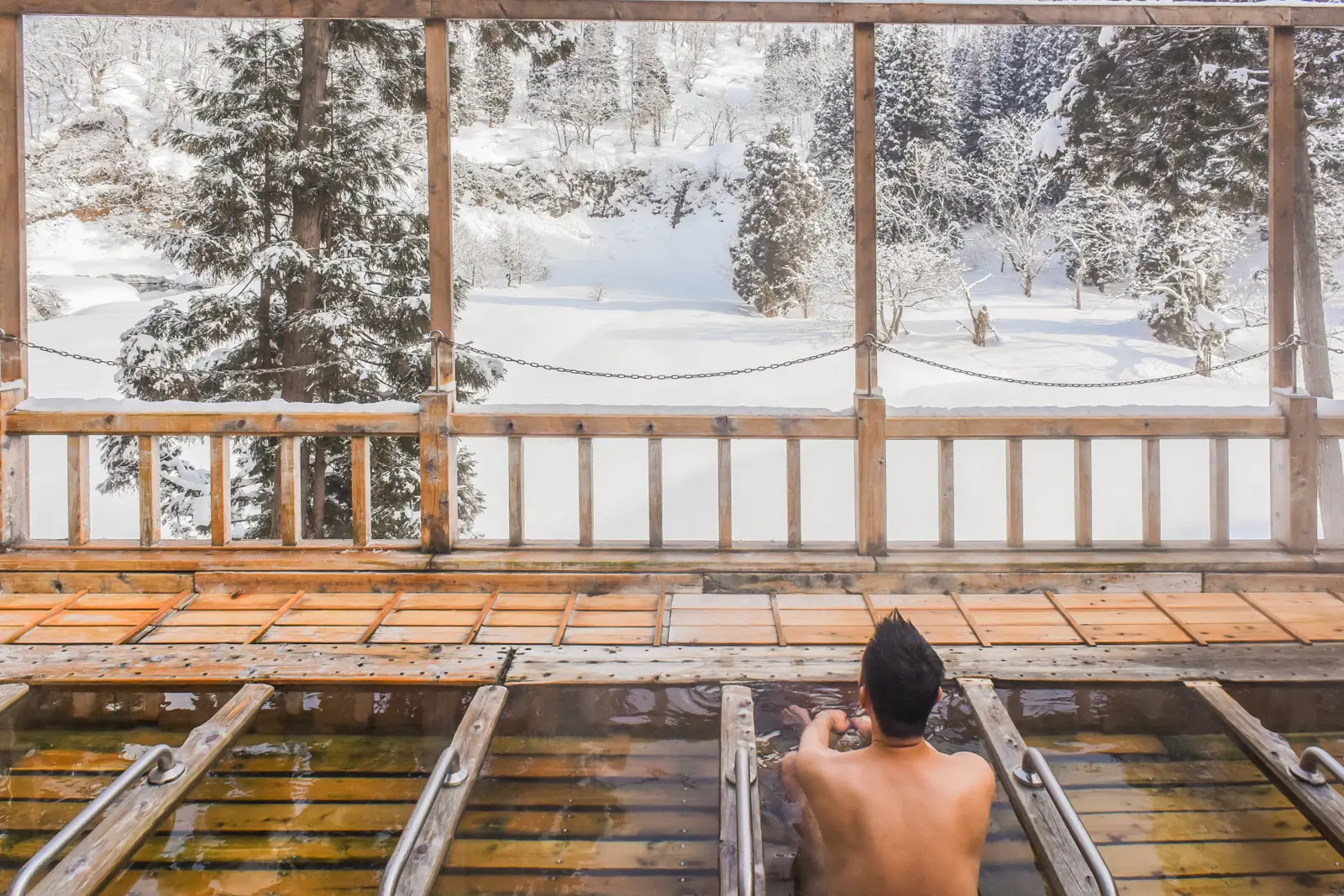
Accommodations throughout Kinosaki maintain a longstanding connection to the town’s heritage. The historic inn KOBAYASHIYA, originally rebuilt in 1925 following the Great Hokutan Earthquake, remains a Registered Tangible Cultural Property. Its 2021 renovation, designed by Suppose Design Office, introduced contemporary elements while preserving traditional details. SANPOU NISHIMURAYA, known for its sukiya-style architecture and serene gardens, offers seasonal kaiseki cuisine and has been part of Relais & Châteaux since 2016, continuing the area’s legacy of refined hospitality.
Art as a Pathway to Well-Being
As travelers increasingly turn to art for emotional respite, Setouchi’s cultural institutions provide a natural complement to its hot springs. The Hyogo Prefectural Museum of Art, located in Kobe City’s HAT district, stands as a landmark of the region’s cultural renewal after the Great Hanshin-Awaji Earthquake. Designed by architect Tadao Ando and opened in 2002, the museum is recognized for its exposed concrete and sweeping glass walls, as well as its Ando Gallery, which displays models of the architect’s work and related materials.
Across the Inland Sea, Benesse Art Site Naoshima continues to build on its late-1980s mission of uniting nature, architecture, and contemporary art. Naoshima, Teshima, and Inujima have become global points of interest for cultural travelers. The newly opened Naoshima New Museum of Art marks Ando’s tenth contribution to the site and the first dedicated directly to the island, broadening opportunities for visitors to immerse themselves in installations and museum spaces that encourage thoughtful engagement.
Nature Immersion Through Forest Bathing
Beyond hot springs and art, Setouchi offers environments well suited to shinrin-yoku, the Japanese practice of forest bathing that emphasizes slow, mindful interaction with nature. Nakazu Banshoen in Kagawa Prefecture offers one of the region’s most serene settings for shinrin-yoku. Built in 1688 as a strolling-style garden for the feudal Kyōgoku family, the site encircles Hakkei Pond, a landscape inspired by the contours of Lake Biwa. Guests can wander past its eight islands, cross arched bridges, and pause at Kanchōrō, the garden’s historic sencha tea house. Nearby galleries displaying Barbizon school paintings and collections of Oriental ceramics further enhance the sense of quiet cultural immersion.
A similar restorative calm can be found at Mount Rokko in Hyogo Prefecture, a long-revered natural sanctuary overlooking Kobe. Once a spiritual training ground for Shugendo practitioners, the mountain grew into a beloved retreat following the Meiji-era expansion of railway access. Today, its network of hiking paths, botanical gardens, art installations, and scenic viewpoints—including the famed “10 Million Dollar Night View”—offers travelers an accessible way to reconnect with nature while enjoying seasonal flowers, fresh mountain air, and uninterrupted coastal panoramas.
Whether soaking in centuries-old hot springs, exploring quiet art islands, or following forest trails above the sea, the Setouchi region encourages a slower rhythm that contrasts with Japan’s major urban centers. Its blend of culture, design, and natural beauty appeals to visitors seeking balance, reflection, and deeper connection. Travel authorities across the region continue to highlight experiences that allow guests to move at their own pace, supporting a growing global interest in wellness-oriented journeys.
How to Travel to Japan’s Setouchi Region
Japan’s Setouchi region is easy to reach and rewarding to explore, whether you are flying in, riding the shinkansen, or island-hopping by ferry. Stretching around the tranquil Seto Inland Sea, it spans parts of Hyogo, Okayama, Hiroshima, Yamaguchi, Kagawa, Tokushima, and Ehime.
Arriving by Air
Several airports bring travelers close to Setouchi’s main hubs. Hiroshima Airport is convenient for Hiroshima City, Miyajima, and Onomichi along the western side of the region.
Takamatsu Airport is the main gateway to Kagawa Prefecture and the art islands such as Naoshima and Teshima. Okayama Airport offers access to Okayama City and nearby Kurashiki.
Kansai International Airport, near Osaka, works well for travelers heading to Kobe, Himeji, and the eastern part of Setouchi, with fast onward rail connections.
Reaching Setouchi by Shinkansen
The Tokaido–Sanyo Shinkansen Line is one of the easiest ways to reach Setouchi from other parts of Japan. Trains connect Tokyo, Nagoya, Kyoto, Osaka, Kobe, Okayama, and Hiroshima.
From Tokyo, the journey to Okayama takes about three hours and twenty minutes. Hiroshima is around four hours away. From Osaka, Hiroshima is roughly ninety minutes by bullet train.
The region is very well suited to rail passes. Many visitors use a nationwide Japan Rail Pass or JR West Regional Passes, which can cover most long-distance shinkansen travel in and around Setouchi.
Regional passes are especially useful for itineraries focused on Hiroshima, Okayama, Kobe, and surrounding cities. Travelers planning to include Shikoku can also look at JR Shikoku passes for added flexibility.
Ferries to the Art Islands
Travelers heading to the famous art islands will need to board short, scenic ferry rides. Services operate frequently and are easy to navigate with clear signage at the ports.
Uno Port in Okayama and Takamatsu Port in Kagawa both offer ferries to Naoshima and Teshima. Saidaiji or Hoden in Okayama provide access to Inujima, home to smaller art projects and quiet village scenery.
Most ferry journeys last less than an hour, making day trips and multi-island routes straightforward to plan.
Local Trains, Buses, and Rental Cars
Within Setouchi, local JR lines and private railways connect major towns, hot spring areas, and coastal cities. Many of these routes are covered by Japan Rail Pass and Regional Passes.
Highway buses supplement the train network, especially for mountain areas and smaller communities. They are useful for reaching trailheads, viewpoints, and rural gardens.
Renting a car is a good option for travelers who want to explore at their own pace. It is particularly helpful for visiting remote onsen villages, coastal viewpoints, and islands connected by bridges such as the Seto Ohashi.
Roads are well maintained, and navigation is made easier with English-capable GPS units. Drivers should remember that traffic in Japan keeps to the left.
Cycling and Scenic Routes
Setouchi is also popular among cyclists. The Shimanami Kaido is a seventy kilometer cycling route linking Onomichi in Hiroshima with Imabari in Ehime via a chain of islands.
Bicycle rentals are available along the route, and riders can choose to complete the full distance or ride only selected sections between bridges and viewpoints.
Top Photo Credit: Musashi2001 / Shutterstock.com
.lwrp.link-whisper-related-posts{
margin-top: 40px;
margin-bottom: 30px;
}
.lwrp .lwrp-title{
}.lwrp .lwrp-description{
}
.lwrp .lwrp-list-container{
}
.lwrp .lwrp-list-multi-container{
display: flex;
}
.lwrp .lwrp-list-double{
width: 48%;
}
.lwrp .lwrp-list-triple{
width: 32%;
}
.lwrp .lwrp-list-row-container{
display: flex;
justify-content: space-between;
}
.lwrp .lwrp-list-row-container .lwrp-list-item{
width: calc(33% – 20px);
}
.lwrp .lwrp-list-item:not(.lwrp-no-posts-message-item){
max-width: 274px;
}
.lwrp .lwrp-list-item img{
max-width: 100%;
height: auto;
object-fit: cover;
aspect-ratio: 1 / 1;
}
.lwrp .lwrp-list-item.lwrp-empty-list-item{
background: initial !important;
}
.lwrp .lwrp-list-item .lwrp-list-link .lwrp-list-link-title-text,
.lwrp .lwrp-list-item .lwrp-list-no-posts-message{
}@media screen and (max-width: 480px) {
.lwrp.link-whisper-related-posts{
}
.lwrp .lwrp-title{
}.lwrp .lwrp-description{
}
.lwrp .lwrp-list-multi-container{
flex-direction: column;
}
.lwrp .lwrp-list-multi-container ul.lwrp-list{
margin-top: 0px;
margin-bottom: 0px;
padding-top: 0px;
padding-bottom: 0px;
}
.lwrp .lwrp-list-double,
.lwrp .lwrp-list-triple{
width: 100%;
}
.lwrp .lwrp-list-row-container{
justify-content: initial;
flex-direction: column;
}
.lwrp .lwrp-list-row-container .lwrp-list-item{
width: 100%;
}
.lwrp .lwrp-list-item:not(.lwrp-no-posts-message-item){
max-width: initial;
}
.lwrp .lwrp-list-item .lwrp-list-link .lwrp-list-link-title-text,
.lwrp .lwrp-list-item .lwrp-list-no-posts-message{
};
}


