The Best Time to Visit Georgia: Seasons, Weather & What Each Month Is Really Like
17 min readGeorgia is a country of real seasons – and when you visit can shape everything, from the landscapes you see to the food you eat and the experiences you have.
Trying to figure out the ideal month (or even just the best season) to visit Georgia can be tricky. For such a tiny country, it has a very diverse geography and climate – the east differs vastly to the west, while the mountain regions and coast have their own microclimates.
This means there’s no definitive ‘best time to visit Georgia’: Every season offers something different.
Having said that, there are months that are better suited to certain types of travel – and a few times of year that I think you should avoid.
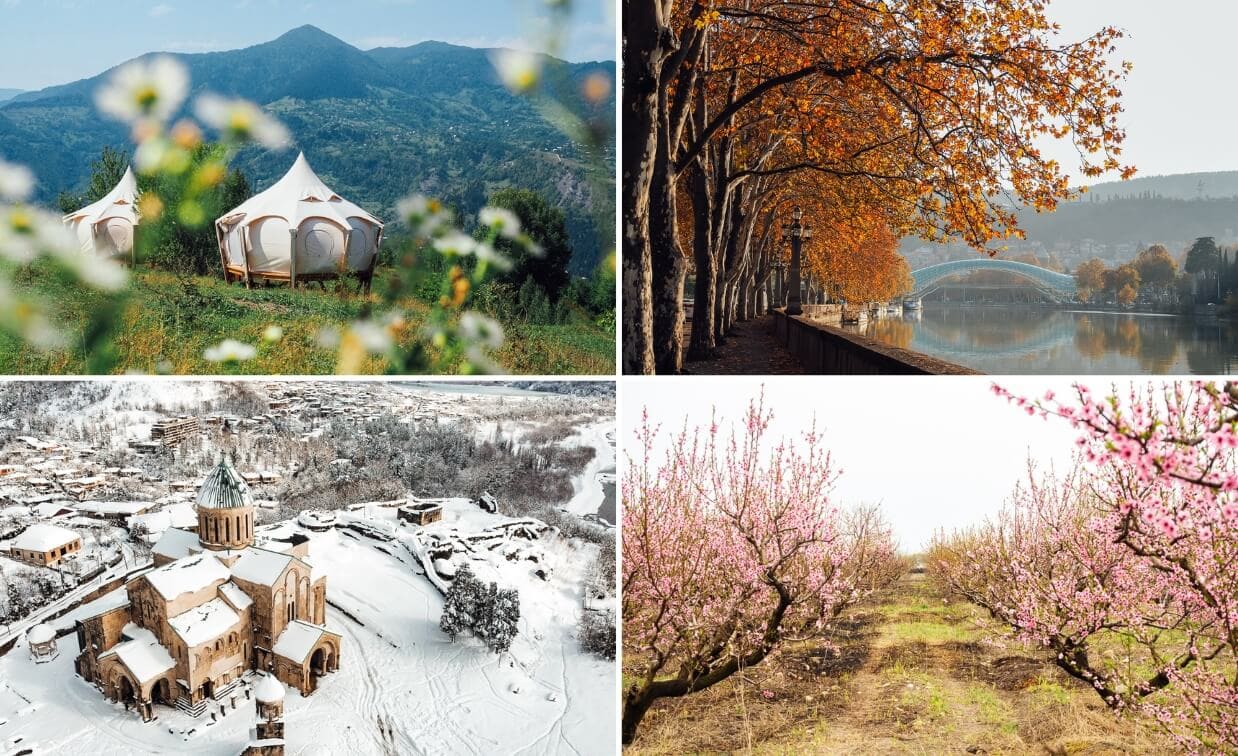
I have lived in Georgia for more than six years now and have experienced every season.
This guide draws on my experience to give you a detailed breakdown of weather conditions, crowds, and other factors to help you choose the best time to travel to Georgia based on your interests.
Also read: My Georgia Packing List, with tips on what to wear & pack for every season.
Please note: This post contains affiliate links, meaning I may earn a commission if you make a purchase by clicking a link (at no extra cost to you). Learn more.
Trusted travel resources for Georgia
Planning a trip to Georgia? Here are 5 essential resources that I recommend you check out.
- For private transfers in Georgia: GoTrip.ge. Find a professional, English-speaking driver. Prices are locked in when you book & you can stop wherever you want.
- For hiring a car in Georgia: Local Rent. Save money when you rent directly from a local agent. Pick-up & drop-off are available from any address in Georgia.
- For finding accommodations: Booking.com. This website has the biggest selection of properties in Georgia, including guesthouses in rural areas.
- For Tbilisi tours & day trips: Friendly.ge. Friendly.ge has knowledgeable guides, safe drivers & creative itineraries. I especially like their off-road tour to David Gareja.
- For tailored advice: Book a call with me! My Georgia Itinerary Planning service is perfect if you need feedback on your plans or personalised travel tips.
Understanding the climate in Georgia
Without getting too technical, having a general understanding of Georgia’s climate can be useful.
Georgia has around 37 microclimates, ranging from humid subtropical conditions along the coast, to continental and steppe climates in the east, semi-desert landscapes in parts of Kakheti and the south, and high-alpine zones in the Lesser and Greater Caucasus.
This diversity exists because of Georgia’s geography – its proximity to the Black Sea, combined with the high mountains, creates sharp contrasts over very short distances. It’s one of the reasons Georgia has such a rich wine culture, with dramatically different styles emerging from different zones!

There are four defined seasons in Georgia, but they express themselves differently depending on where you are.
In eastern Georgia, including Tbilisi and Kakheti, the climate is dry, with biting hot summers and bitter winters. Western Georgia (including Kutaisi) is generally warmer, wetter, and more humid. Spring arrives earlier in the west, and the closer you get to the Black Sea Coast, the rainier it is.
The mountains have their own weather patterns. Winters are obviously deeper and longer, with snow hanging on well into spring. Summer conditions lingers into September in most of the country.
The weather in Georgia be quite temperamental, especially in the transitional seasons of spring and autumn. While I can offer you some general guidance, you should always come prepared for anything!
Yr.no and MeteoBlue are two reliable websites for checking weather forecasts.
Is there a ‘best’ time to visit Georgia?
There is no single ‘best time’ to visit Georgia – it all depends on what you want to do when you’re here.
Having said that: For most travellers, I think late spring and autumn offer the best balance overall.
Late September through to the first weeks of November is by far my favourite time of year in Georgia. Temperatures sit at a comfortable 15-20°C in the cities and lowlands, 5-15°C in the mountains, and up to the mid 20s on the coast, with crisp nights and not too much rain.
Most high roads and hiking trails stay open until October. The autumn light is terrific for photography, and you get amazing autumn colours in the mountains, national parks and cities. The downside of autumn is that there can be sudden cold snaps, and the days are noticeably shorter.


My second choice is spring shoulder season, specifically late April through to the end of May. Temperatures range from around 12-22°C in the cities, while the mountains are still quite chilly. Spring can be rainy, especially at higher elevations, but if you’re organised then you can still structure a well-rounded trip for spring.
Spring is the season for wildflowers and low elevation hiking, Easter traditions, and new season wines.


Accommodation and car rental prices are lower in the shoulder seasons, it’s easier to book intercity transport, and because there is less demand, you get more flexibility in general – which is great for spontaneous travellers or anyone who wants a bit of breathing room in their itinerary.
Seasons in Georgia
Spring shoulder season in Georgia (mid March-early June)
→ Best time for hiking at lower elevations, wildflowers, Orthodox traditions & wine festivals.

Spring is a season of transition and probably the most unpredictable time of year weather-wise. But if you’re flexible with your plans, it is a great time for food, wine, and Easter traditions.
You know it’s spring in Tbilisi when powder-pink cherry, plum and almond blossoms start to appear around the city. In Kakheti, lavender shrubs and sunflowers come into bloom, while wildflowers in the mountains take their turn later in June and July.
‘Moody March’ is unpredictable all across the country, with gusting (pollen-laden) winds and sometimes snow. The start of April can still be quite chilly. By May, spring has sprung, and temperatures start to rise rapidly. Nights remain pleasantly cool until early June, but rain (anything from short afternoon bursts to lingering all-day showers) is common in most parts of the country, and can put a dampener on your plans.


Georgia’s rich Orthodox traditions are on full display in the weeks leading up to Easter, while spring also brings vibrant produce and special foods such as chakapuli (lamb, sour plum and tarragon stew) and paska, a traditional Georgian cake.
Spring is the time when vintners open their clay qvevri for the first taste of last year’s harvest. This is a wonderful tradition to observe if you can organise a cellar visit. The New Wine Festival and Zero Compromise Natural Wine Festival both take place in Tbilisi in May, drawing hundreds of winemakers from around the country.
As temperatures rise, the countryside comes back to life after winter, and hiking conditions gradually improve. Ski season runs until the end of March/start of April, with places like Juta Valley free of snow by mid to late May, signalling the start of the hiking season.


Summer high season in Georgia (mid June–early September)
→ Best time for alpine hiking, remote mountain regions, summer festivals & road trips.
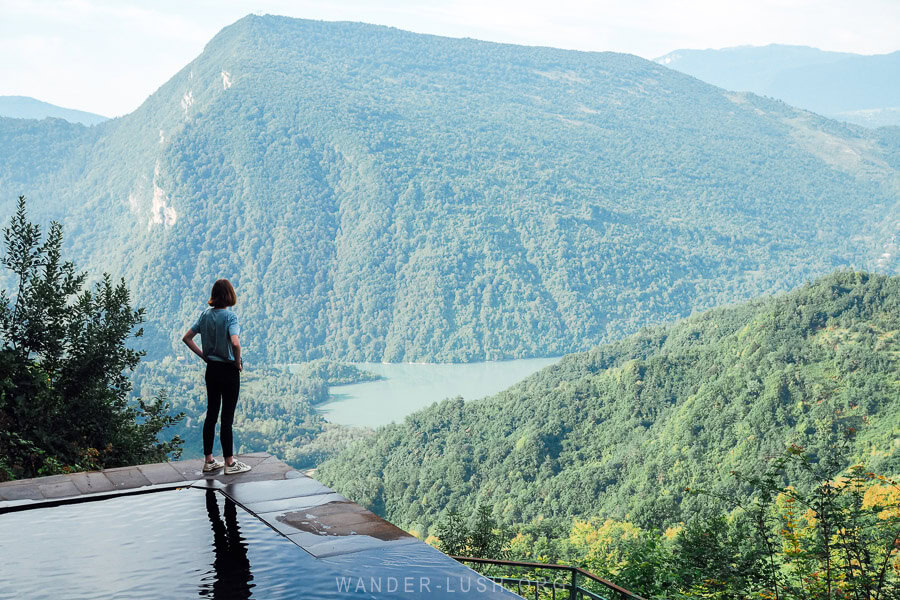
Summer is dependably hot in Georgia. It’s also the peak tourism season, with noticeably heavier crowds in popular destinations such as Sighnaghi and Kazbegi, higher prices on hotels, and booked-out trains.
But summer is the best (and in some cases, the only) time to visit Georgia’s high mountain regions. The Zagari Pass between Ushguli and Kutaisi and the Abano Pass to Tusheti – both snowbound in winter – are normally open by mid June, while the road to Khevsureti opens a touch earlier, and the road through Upper Adjara a few weeks later.


A program of traditional horse races, religious celebrations and folk festivals rolls through mountain communities throughout summer, so there is often something fun to plan your trip around. With relatively stable weather (though short but punishing storms can occur), summer is prime time for trekking in the mountains of Svaneti and around Kazbegi. Popular hikes such as Mestia to Ushguli see up to 100 people on the trail each day.
In Tbilisi and the surrounding lowlands, temperatures regularly reach 40°C, sometimes for several days in a row. Air quality worsens, the landscape dries out, and the unrelenting sunshine makes it difficult to stay outside for long periods. This makes summer a less-than-ideal time for a city-based itinerary.
Most locals promptly leave the cities as soon as school holidays roll around in July, heading to the mountains or the coast for some reprieve. Because of this, popular hotels and resorts are often fully booked, and domestic flights and trains sell out fast. It can be very difficult to get a seat on the Tbilisi Batumi train.

Autumn shoulder season in Georgia (mid September–early November)
→ Best time for the Rtveli grape harvest, fall colours, cultural events & the Black Sea Coast.

Autumn is my favourite season in Georgia – and, in my opinion, it’s the best time to visit overall for a trip that combines both cities and nature. This is a very well-balanced season, ideal for wine and food, culture, late-season hiking, and autumn colours.
September is sometimes called the ‘Fourth Month of Summer’ in Georgia because temperatures remain warm in Tbilisi, Kutaisi, and the lowlands. By mid-September and throughout the month of October, the weather can be near perfect: Warm and breezy days, crisp nights, and clear skies.
Tbilisi has an upbeat atmosphere in autumn, with outdoor markets on Rustaveli Avenue, the annual Tbilisoba festival in October, and plenty of live music, opera, and ballet.


Harvest season brings a festive feel to the entire country – which is why you’ll sometimes hear autumn referred to by another name, the ‘Fifth Season’. Dates for the wine vintage or Rtveli change slightly year to year, but generally it starts in Kakheti from the last week of August through September, and runs until early November in Western Georgia.
Resplendent fall foliage can be found in the highlands of Racha and Samegrelo from October, while Tbilisi’s fall colours come into their own in November. Rust-coloured foliage is visible in areas such as Rkoni until the end of the month.
Autumn also brings a cornucopia of produce, including mushrooms, pomegranates and persimmons. Tbilisi restaurants often put on special menus to showcase fall’s bounty.


As temperatures start to drop in the highlands, the Transhumance begins, with shepherds guiding their flocks down from summer pastures to the lower valleys. You’ll see sheep on the roads, temporary camps along migration routes, and entire communities moving with the seasons. Most mountain areas and trails remain accessible throughout September and into early October, including some hikes in Svaneti and the Kazbegi area.
In mid-September, Velvet Season kicks off in Batumi and along the Black Sea Coast, lasting until early October. This is a short window of time when the crowds disperse, but skies remain clear and the water is still warm enough to swim.
Autumn is also the peak bird migration season in the west. From late August through October, Batumi becomes one of the world’s most important raptor migration bottlenecks, with hundreds of thousands of birds passing overhead.
My autumn guides:
→ The best places to visit in Georgia in autumn
→ The best things to do in Tbilisi in autumn
Winter low season in Georgia (mid November–early March)
→ Best time for winter sports, snow travel, Christmas/New Year traditions & quiet city breaks.

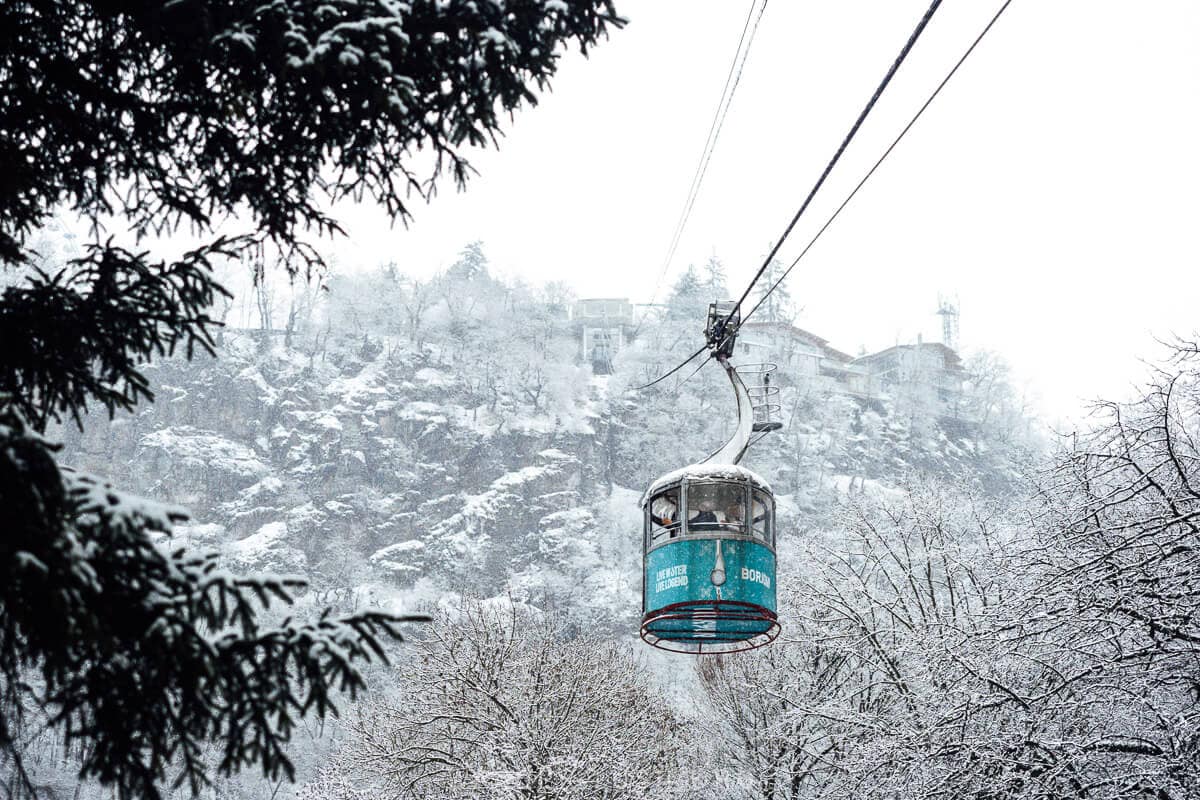
Winter is a wholly underrated time to visit Georgia. With the country’s ski resorts rapidly developing and more people travelling in cooler months in pursuit of snow experiences, winter is fast becoming the second season of choice.
Relatively mild conditions in Tbilisi make the city quite pleasant in December and January, especially when the sun is shining. Snow in Tbilisi is a rarity, but there might be a few flurries right at the end of the season. With quiet streets, snug wine bars, and the thermal baths at your disposal, Tbilisi is a great choice for a winter city break.
Orthodox Christmas – which is celebrated later than in Western Europe – and especially New Year December 31st bring a festive atmosphere to the city. Christmas markets and light displays run between mid December and January.


Conditions are much harsher in the highlands, but many mountain areas remain accessible by road – the Georgian Military Highway to Kazbegi, the road to Mestia, and the long and winding road across the Javakheti Plateau – AKA the Georgian Arctic – all stay open.
Winter sports season in Gudauri, Bakuriani, Goderdzi and Mestia usually starts from late December and runs through until April, with late January and the month of February being the most dependable months for snow coverage.
The best time to visit Georgia for…
If you have a clear idea of your priorities – hiking, cities, wine, skiing, or the coast – use the sections below to find the most practical time to visit for those specific experiences, including what commonly goes wrong if you choose the wrong month.
Best time for the cities
If your trip is city-focused, with only short side excursions, then spring and autumn are the easiest and most enjoyable times to visit Georgia’s cities.
If you can choose your months, April-May and September-October offer the best balance of walkable weather, thinner crowds, and a lively atmosphere and active cultural calendar.
A common mistake is planning a July or August city break. In reality, scorching sunshine (Tbilisi) and high humidity (Kutaisi) make being outdoors for long periods of time exhausting, while popular day trip destinations can be unpleasantly crowded.

- Tbilisi and Kutaisi are walking cities. From July through early September, daytime temperatures regularly sit in the low to mid-30s, occasionally pushing close to 40°C.
- April-May and September-October are far more pleasant for wandering neighbourhoods, lingering in cafe courtyards, urban hikes, and exploring on foot.
- Wisteria vines, plum blossoms and magnolias decorate the city streets throughout the spring months.
- Popular day trips from the cities – such as Sighnaghi and Kazbegi, or the caves and canyons around Kutaisi – are still fully accessible in the shoulder seasons and less crowded.
- Spring is particularly good for offbeat regional side trips, such as Kvemo Kartli, with its poppy fields, German heritage and archaeological sites.


Spring adds a strong cultural layer to city travel, with Orthodox Easter traditions, major wine festivals, and Independence Day celebrations on May 26.
Autumn is Tbilisi’s cultural high season, with events such as Tbilisoba, the wine harvest in nearby Kakheti, and a packed calendar of concerts, opera, and theatre.
Winter works well for the cities, too. Lowland Georgia has relatively mild winters, and you’ll often get crisp, clear days and blue skies rather than persistent grey drizzle. Streets are quieter, accommodation prices are lower, and indoor experiences – museums and galleries, wine bars, and the sulfur baths – really shine.
December and January are particularly appealing if you enjoy atmosphere over activities and don’t mind the shorter days.
Best time for mountains & hiking
If your trip depends on hiking in the high Caucasus, you need to travel between late June and mid September. Outside this window, access is limited or unreliable.
If you can choose your month, early to mid September is my top choice for hiking in Georgia.
A common mistake is planning a May or early June hiking trip for the high mountains. Trails may be open on paper, but conditions are inconsistent year to year, and plans can fast unravel.

- Lower areas (Juta, Truso, some trails in Svaneti) can open as early as late May, but road and weather conditions don’t stabilise until June.
- High mountain regions (Tusheti, Khevsureti, Upper Adjara) only become consistently accessible once the snow has cleared and seasonal infrastructure fully opens – usually from mid to late June.
- Tusheti in particular has a very short and fragile season. The Abano Pass normally opens around mid-June and can close again as early as late September or early October.
- July-August offer the widest access, but also bring the crowds to popular trekking routes such as Mestia-Ushguli, and to easily reached mountain areas such as Kazbegi.
- September combines open passes with cooler temperatures, quieter trails, and slightly more flexibility with accommodation – making it the best all-round month for casual hikers.
In spring and early autumn, the safe zone for snow-free hiking is below 800-1,000 metres. Lower-elevation areas such as Borjomi, Lagodekhi, the forested regions near Kutaisi and valleys/National Parks west of Tbilisi work well for the shoulder months when higher terrain is still inaccessible.
Expect muddy trails, high rivers, and occasional road disruptions in spring, especially after heavy rain or snowmelt.


Best time for the wine regions
Georgian food and wine can be enjoyed year-round – but if vino is a central reason for your trip, then spring and autumn are the standout seasons to visit Kakheti and Georgia’s other wine regions.
Spring is a time to discover new wines and engage directly with winemakers, while autumn is the best time to experience the energy, rituals and spirit of the harvest.


- Spring is when winemakers open their clay qvevri to taste the previous year’s wines for the first time. With some planning, it’s sometimes possible to witness this moment in Kakheti and taste wine drawn directly from the ground – a rare and memorable experience!
- Spring also coincides with major wine festivals in Tbilisi, making it an excellent time to meet producers from across the country without travelling region to region.
- Autumn delivers a completely different experience. From the last week of August through to early November, the Rtveli grape harvest moves across the country from east to west.
- During Rtveli, visitors may be able to observe – and sometimes participate in – harvesting, pressing, and communal celebrations. In Kakheti especially, this period is marked by open-air barbecues, supra feasts, and village gatherings that centre wine as a social ritual rather than a product.
October is peak festival season, with events such as the Gurjaani Wine Festival in Kakheti and Tbilisoba in Tbilisi taking place in early autumn.

Best time for the Black Sea Coast
If your trip revolves around beaches or coastal downtime, timing matters more on the Black Sea Coast than almost anywhere else in Georgia.
For most travellers, late September to early October (Velvet Season) is the best window to visit.
A common mistake is assuming summer will automatically be good. July and August are the peak travel months, bringing crowded beaches, gridlocked traffic around Batumi, and fully booked trains and hotels. While the atmosphere is definitely lively, the traffic and crowds can be frustrating.

- Early autumn offers the best balance: Warm sea temperatures, lighter crowds, and calmer roads once school holidays end.
- Conditions are still good enough for swimming, but without the intensity of peak summer heat and humidity.
- Spring (April-May) can be lovely, but this season is highly variable. Fog, rain, and sudden cold snaps are common.
- Winter suits Batumi and Poti only. The cities remain active year-round, while smaller resort towns such as Kobuleti largely shut down outside summer.
From late August through October, Western Georgia becomes one of the world’s most important raptor migration corridors. For birdwatchers and nature lovers, this is a standout seasonal event. Kolkheti National Park is a terrific place to visit during this period.
If you do go in summer, heading north of Batumi – to places such as Shekvetili, Ureki, or even Anaklia – can offer a quieter, more low-key alternative with better swimming beaches, but fewer amenities.


Best time to visit Georgia for Skiing & snow
If snow or skiing is a priority, winter is now one of the most compelling times to visit Georgia.
For the best balance of reliable snow coverage, accessibility and crowd levels, late January through February is the most reliable window.
A common mistake is planning a ski trip too early in December, when snowfall can be inconsistent and lifts are sometimes late to open, or too late in spring, when conditions may become icy and avalanche risk increases.


- Georgia’s four ski resorts – Gudauri, Bakuriani, Goderdzi, and Mestia (Hatsvali & Tetnuldi) – usually open from late December, depending on snowfall.
- February typically offers the most stable snowpack, better visibility, and more predictable conditions across all resorts.
- In good snow years, the season can extend into March or even April, but conditions vary widely.
- The end of December and first weeks of January can be very busy due to school holidays over the New Year period.
Winter travel isn’t limited to skiing. Lowland regions remain accessible, with Kakheti offering stark vineyard landscapes and clear skies. Tbilisi works exceptionally well as a winter city break, with mild temperatures, quiet streets, and cosy indoor experiences such as wine bars and sulfur baths.
Winter travel in Georgia requires flexibility. Heavy snowfall can lead to last-minute road closures and transport disruptions, especially in the mountains. Building in buffer days (especially around flights) and monitoring forecasts closely is essential.


Month-by-month at a glance
If you’ve already booked your trip, here is a quick reference for how Georgia feels month to month.
January
Quiet cities • Orthodox traditions • Start of the ski season
An introspective month. Best for relaxed city breaks, winter rituals, and early skiing. Streets are calm, and celebrations are cultural rather than touristic.
February
Peak ski season • Snowy landscapes
A subdued month. Reliable snow in the mountains and nice winter scenery elsewhere, but the cities can feel grey and downbeat.
March
Unpredictable weather • End of ski season • Fewer visitors
A transition month. Cities can be pleasant, but conditions change fast. The winter season comes to a close in the mountains, while the coast can be blustery and bleak.
April
Spring blossoms • Orthodox Easter • Fast-changing weather
A month of reawakening. Cities start to bloom, and Easter traditions take over daily life. Expect sunshine mixed with sudden rain and cold snaps.
May
Wine festivals • Mild temperatures • Lush landscapes
A balanced month. Green countryside, cultural events, and comfortable conditions almost everywhere – but rain is common during the wettest month of the year. The first high alpine trails become available.
June
Early summer sweet spot • Wildflowers • Hiking season begins
A preparation month. The days get longer, mountain passes become stable, and people start to get ready for the high season. The second half of the month offers the best of summer conditions without the crowds.
July
Intense heat • Lively cities
The peak month. The lowlands are hot, Tbilisi grows quiet, and the mountains become the natural escape. Popular places book out fast. Avoid the busy Black Sea Coast.
August
Peak summer • Mountain festivals • Stormy afternoons
The hottest month. Cultural life shifts to highland regions, with afternoon storms common in the mountains.
September
Wine harvest • Velvet Season • Ideal hiking weather
A standout month. Harvest energy, stable mountain conditions, and calmer Black Sea beaches. Most hiking trails remain open, and the first autumn colours become visible in Svaneti and the high mountains.
October
Autumn colours • Transhumance traditions • Crisp days
An atmospheric month (my favourite month!). Summer is officially over in the mountains and on the coast. Festivals, fall foliage, and seasonal traditions converge before winter sets in.
November
Late autumn colours • Mild cities • Cultural events
A quieter, culture-focused month. Theatre, opera, and city life take centre stage as nature starts to wind down, while a rich autumn palette is still visible in the lowlands.
December
Quiet streets • Winter light • New Year celebrations
An anticipatory month. Short days and clear skies create pleasant conditions in the cities, while the mountains await the first signs of snow. A slow build toward Georgia’s biggest night of the year on December 31.


