An Honest Guide to Driving in Georgia: Road Conditions, Driving Culture & Car Rental Options
29 min readYour one-stop guide to driving in Georgia – with up-to-date information on road conditions, safety, and realistic options for renting a car in Tbilisi.
When I first travelled to Georgia, I would never have dreamed of putting the words Georgia and road trip in the same sentence. I’m an experienced driver and a big fan of road trips – but the driving style here genuinely intimidated me.
When I finally did get around to renting a car, that first road trip changed my outlook completely. Five years and many thousands of kilometres later, I rented a car in Georgia for the last time… Not because I’d had enough, but because I decided to buy my own wheels!
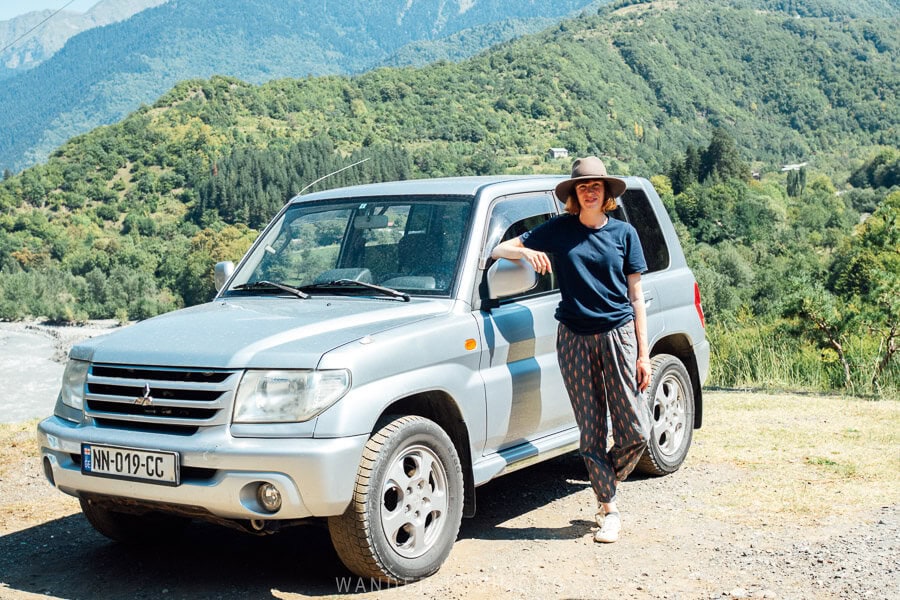
The truth is, driving in Georgia isn’t as bad as it looks. But it is different, and it’s definitely not for everyone.
When done right, it’s easily the best way to see the country. But it can be stressful or even risky if you’re not fully prepared.
In this guide, I’ll walk you through what driving in Georgia is really like: road conditions, driving culture, seasonal closures, and safety. I’ll also explain your different options – renting a car, hiring a driver, or using a specialist off-road service – and when each one makes the most sense.
Please note: This post contains affiliate links, meaning I may earn a commission if you make a purchase by clicking a link (at no extra cost to you). Learn more.
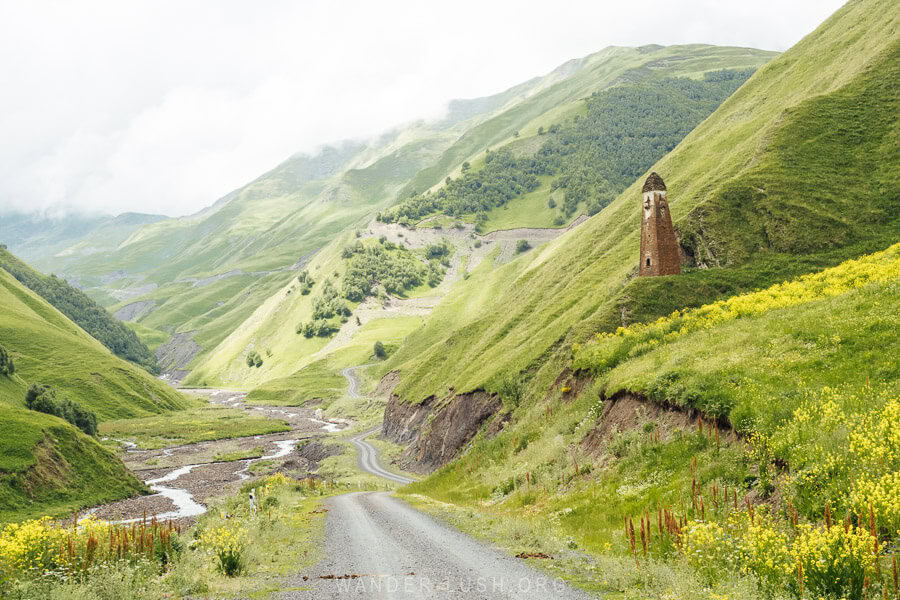
Should you drive in Georgia? The short answer…
First things first: Do you actually need to hire a car in Georgia?
The short answer is no – renting a car is not mandatory. Georgia has a workable shared transport network, and you can cover a lot of ground using marshrutka vans and trains. If it’s your first time visiting Georgia, you can quite easily stick to an itinerary like this one that uses shared transport and the ocassional transfer.
That said, having your own car can be a massive advantage.
Yes, you should drive in Georgia if…
- You want to explore rural areas, villages or mountain regions where public transport is infrequent or non-existent
- You’re visiting Georgia for the second time (or for a longer period) and want to get off the main tourist routes
- You value flexibility and early starts, and want the freedom to stop wherever you like
- You’re confident driving in changeable road and weather conditions
Self-driving opens up a lot more of the country. Before buying my own car, I rented exclusively through Local Rent. It offers better value than international brands, clearer insurance options, and is far better suited to the realities of driving here.
→ Check current prices and availability with Local Rent here.
No, you should not drive in Georgia if…
- You’re only visiting Tbilisi or sticking to major cities and towns
- You’re travelling on a short first-time trip and want to keep logistics simple
- You’re uncomfortable with assertive driving and/or unfamiliar road conditions
In these situations, renting a car can cause unnecessary stress. There are plenty of other options for classic routes such as Tbilisi–Kazbegi, Tbilisi–Sighnaghi and Tbilisi–Batumi.
Consider a driver instead, if…
- You want to cover long distances in a short time
- You’d rather enjoy the scenery than have to focus on the road
- You’re travelling in winter, when roads are unforgiving
- You’re venturing to very remote regions with challenging roads where an experienced driver is needed (more info on specific routes below)
- You’re happy to pay a bit more for a low-stress, door-to-door experience
For this, I recommend GoTrip. It’s not a tour – you set your route and stops, and a local driver takes you where you want to go. Prices are fixed in advance, and it’s often better value than people expect, especially for one-way journeys.

Driving in Georgia: What to expect before you decide
Driving in Georgia can be incredible – or completely unnecessary – depending on your route, the season, and your confidence level.
Before you rent a car, here’s an idea of what driving is actually like on the ground.
Quick facts about driving in Georgia
Here are the key things you need to know about driving in Georgia.
- Drive on the right. Both left- and right-hand-drive cars are present, but you should rent a left-hand-drive vehicle for better visibility and safer overtaking.
- Seat belts are compulsory for the driver and front passenger. There’s no legal requirement for back-seat passengers, but it’s still a good idea to buckle up.
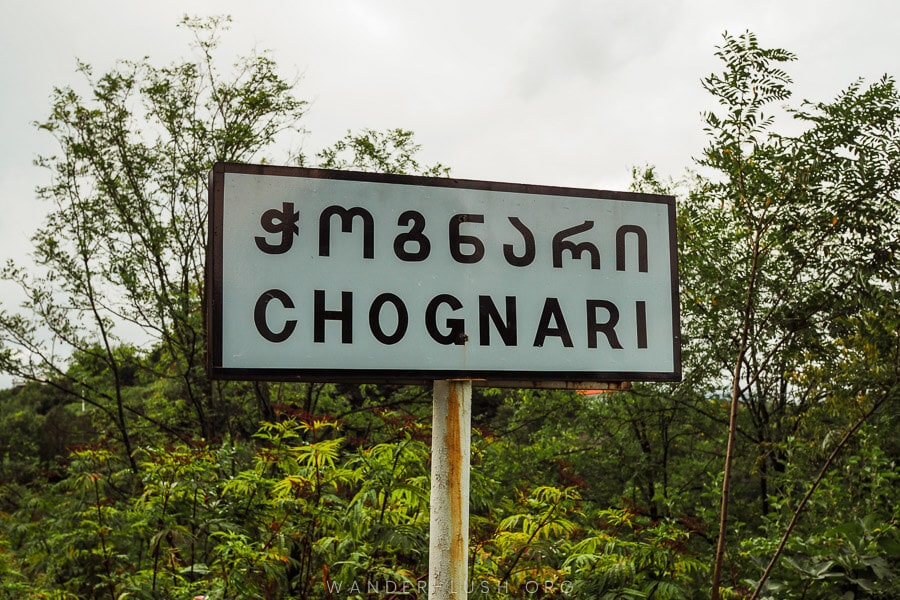
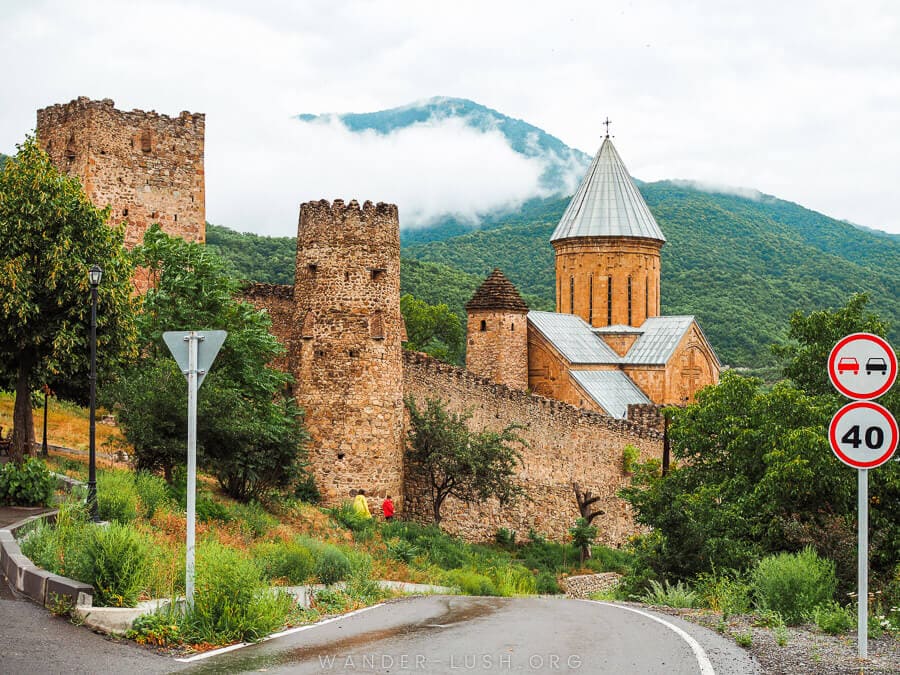
- Speed limits vary by area. The national limits for passenger cars are 60 km/h in towns and villages, 90 km/h on rural roads, and 110 km/h on highways/motorways, unless otherwise indicated. Built-up area boundaries aren’t always obvious – look out for the big white signs (example below) that indicate when you have entered a village and therefore need to slow down.
- Child car seats are required. Children under 7 must use a child safety seat. Request one when booking your rental car.
- Traffic lights in Georgia flash amber before they turn red. There is no right turn on red, and a green arrow means you may only turn in that direction.
- Road signs follow European standards. Georgia is a party to the Vienna Convention on Road Signs and Signals, so traffic lights and signage will feel familiar. Signs are usually bilingual or written in Latin characters.
- Drink driving laws are strict. The legal blood alcohol limit in Georgia is 0.03%.
- Using a mobile phone while driving is illegal. If you rely on your phone for navigation, bring a hands-free dashboard mount with you from home (or buy one when you arrive).
- Police enforcement is widespread. There’s a heavy police presence on Georgian roads, with speed and red-light cameras common nationwide. Fines are issued automatically – see below for how to check and pay one.
- Driving culture can feel aggressive. Driving styles are assertive and road rules aren’t always followed consistently, which is something to factor in when deciding whether you want to drive in Georgia.

- There are no toll roads in Georgia. All roads and tunnels are currently free to use.
- Most roads are sealed, but quality varies. Major highways and many secondary roads are paved, while village roads range from newly sealed to very rough backroads. Use the map below to flag any potentially problematic routes before setting off.
- Some mountain roads close seasonally. Many high-altitude roads are fully closed in winter (typically late October to May), depending on the location.
- Animals on the road are common. Livestock, especially cows, frequently wander onto rural and city roads, and are often reluctant to move. Throw your hazard lights on, and use your horn if needed.
- Use hazard lights proactively. Hazard lights are used to warn other drivers of obstructions (including animals). Keep your finger ready – when I drive, my husband’s unofficial job is hazard-light duty.

The driving culture in Georgia
Road conditions in Georgia are often better than people expect – but the driving style is wilder than most visitors are prepared for.
Georgian drivers tend to be impatient and somewhat aggressive – and while this is a generalisation, it’s based on personal experience, and a feeling that most people I speak to seem to share.
There’s a heavy traffic police presence, but road rules are applied inconsistently in practice, and many drivers simply ignore them.
I could tell you to brush up on Georgian road rules before you get behind the wheel – but there is really no point. The safest approach is defensive driving: Take your time, stay hyper-aware of other vehicles, avoid sudden movements, and keep out of other people’s way whenever possible.
If you can, set out early in the morning (before 9am), when the roads are quieter. Avoid night driving, and try not to drive in major cities like Tbilisi or Batumi, where traffic is densest and most chaotic. Quieter secondary and rural roads are generally far more manageable.
Key quirks to be mindful of
A few lessons I’ve learned the hard way:
- People love overtaking at speed, especially on single-lane roads. This includes crossing solid lines (technically illegal). Often a car will come up the middle or appear on your right, creating a third lane where there isn’t supposed to be one. Cars constantly drift across the road without indicating. Check your mirrors constantly, and be aware of people overtaking you from every angle.
- It is not uncommon to see a car hurtling towards you at high speed. I will never get used to this! If you see a car coming head-on while overtaking, slow down, and move as far right as you safely can to give them space to squeeze back in.
- Right of way (including on roundabouts) goes to the biggest vehicle. Roundabouts in particular have very little logic. Take it slowly, and proceed cautiously.
- No one shoulder-checks. Be extremely careful around slip roads, merges, driveways and curbside pull-outs. Never assume another driver has seen you because they probably haven’t!
- Forget the rule of seconds. Cars drive bumper to bumper. If you leave a safe gap, someone will probably cut in from behind and fill it. Do your best to maintain distance.
- Drivers hate stopping. Slowing down seems to be viewed as a sign of weakness. Drivers will swerve aggressively around parked cars or obstacles rather than brake. Sudden stops are risky – I’ve been rear-ended once because of this.

Road conditions in Georgia
Huge investments have been made in Georgia’s road infrastructure in recent years. Most highways and tourist routes are sealed, smooth, and manageable in a standard sedan.
That said, roads can be narrow, line markings are sometimes faded or missing, and village roads range from newly paved to very rough. Conditions change dramatically by season – especially in the mountains.
For more details about which roads to approach with caution and which routes are best avoided in winter, see the detailed ’Road conditions in Georgia’ section below.
Seasonal considerations
From late spring to autumn (roughly May to October), most major roads and tourist routes are open and in good condition, and self-driving is generally straightforward outside the cities.
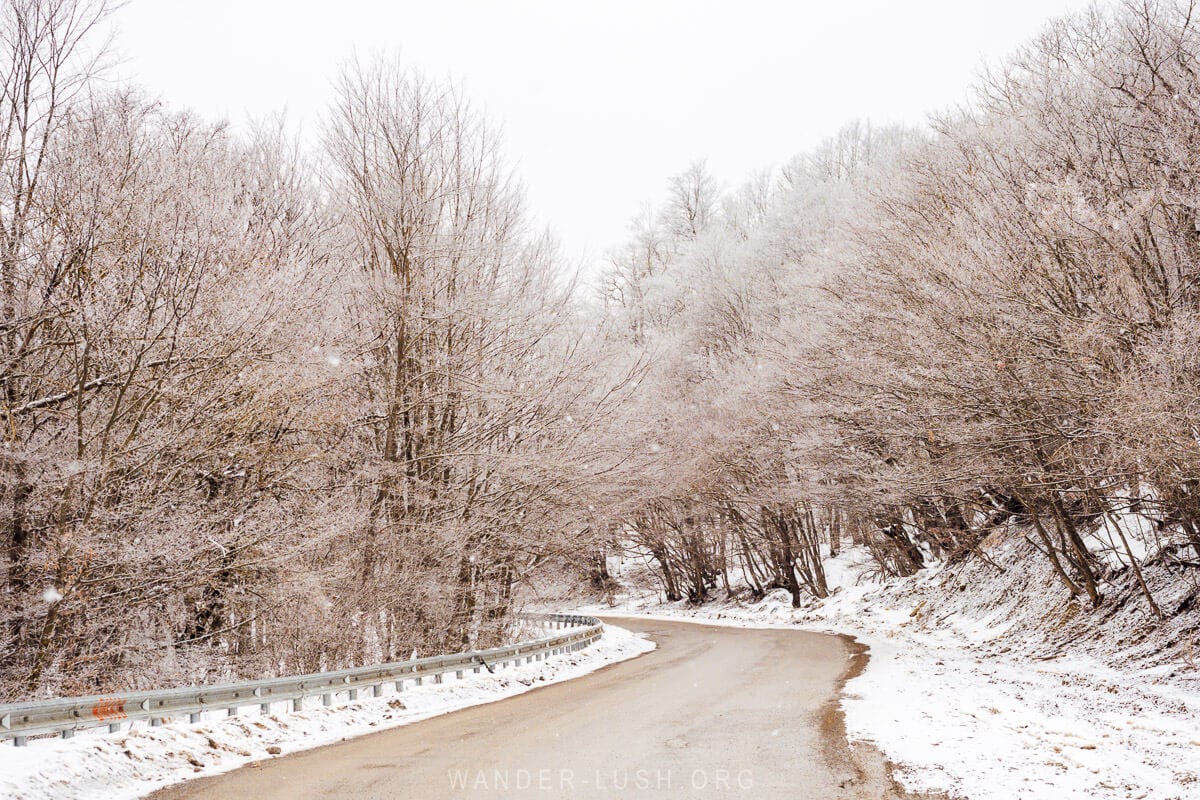
In winter, conditions change significantly. Snow, ice and poor visibility are common in the mountains, and some high-altitude roads are fully closed for months at a time. Even roads that remain open can close temporarily due to rockslides or avalanches, sometimes with little notice.
Spring and early summer bring a different set of challenges. Heavy rain can cause flooding, landslides and washouts, particularly in mountainous and remote regions.
If you’re travelling outside peak summer – or planning to visit high mountain areas – it’s worth factoring seasonality into your decision. In many cases, hiring a local driver who knows the conditions can be the safer and more relaxed option.

Requirements for driving in Georgia
Age limits & rental requirements
Car rental requirements in Georgia vary by company, but most have minimum age and driving experience rules.
In general, you can expect:
- A minimum age of 21-23 years
- 1-3 years of driving experience, depending on the vehicle and insurer
Some rental companies also impose an upper age limit (often around 70), which is linked to insurance policies rather than Georgian law.
Local Rent is more flexible than most platforms and is able to offer cars to younger drivers (18+) and older drivers, with no fixed upper age limit. Insurance conditions can differ, however, so if you’re under 23 or over 70, make sure you use the driver’s age filter to find suitable cars and check the insurance terms carefully.
A valid credit card in the driver’s name is sometimes required for deposits and insurance holds, although requirements vary by provider.
Driving in Georgia with a foreign license – do you need an international Driving Permit?
Most car rental companies in Georgia do not require an International Driving Permit (IDP) if your driving licence is written in Latin characters (for example, EU, UK, US, Australian licences).
However, there are a few important caveats:
- If your licence is not in Latin characters, you’ll need either an IDP or an official translation to rent a car and drive legally.
- In the event of an accident or police check, officers may ask for an IDP or a notarised Georgian translation of your licence, even if the rental company didn’t request one.
Foreign driving licences are generally valid for up to one year from the time of entry for visitors.
If you plan to spend a longer period driving in Georgia, it’s sensible to have your licence translated and notarised. This typically costs around 30-50 GEL.
Documents to carry while driving
When driving in Georgia, you should have the following with you at all times:
- Your driver’s licence
- Your passport
- The vehicle’s car passport (registration document), which is kept in the car
The car passport is a standard document in Georgia and may be requested during police checks. See the FAQ below for more details.

Three ways to travel by car in Georgia
There are three ways to travel by car in Georgia. These are the three services I have personally used and recommend, depending on the type of trip:
- Local Rent – self-drive car rental, best value for most trips
- GoTrip – private car with a driver, no self-drive required
- Martyna z Gruzji – robust vehicles for remote regions and restricted roads
Option 1: Renting a car & driving yourself – best for most trips
If you’re a repeat visitor to Georgia or planning to explore rural areas, valleys and small villages, renting a car can make a huge difference to how much you see and how flexible your trip feels.
If you’re comfortable driving and don’t need serious off-road capability, this is the most economical and versatile option for most itineraries.
When self-drive car rental in Georgia is worth it
Renting a car in Georgia makes the most sense if:
You’re travelling beyond the main cities. So much of what makes Georgia Georgia lies away from highways and hubs. Having a car gives you easy access to villages, rural homestays, monasteries, viewpoints and roadside stops that public transport simply can’t reach.
You’re staying for more than a few days. For longer trips or looping itineraries, self-drive quickly becomes more efficient and better value than stitching together vans, trains and transfers.
You want complete control over your schedule. Marshrutka vans don’t always follow a fixed timetable. Driving yourself isn’t necessarily faster – but it lets you start early, stop often, and make the most of each day.
You’re travelling as a pair or small group. Once you split the cost, car rental is often comparable to (or cheaper than) multiple bus tickets and transfers.
You want a greater sense of control. Road safety is a real issue in Georgia, and I’ve had more than my fair share of white-knuckle marshrutka rides. While you still need to stay alert when driving here, self-driving gives you a welcome sense of control over speed, stops and decision-making.
… And then there are the small things: no anxiety about when (or whether) the driver will stop for a bathroom break, and no regret over missed photo opportunities. For me, those alone often make renting a car in Georgia worthwhile.

Why I use & recommend Local Rent
International rental agencies such as Hertz and Europcar do operate in Georgia (including at Tbilisi Airport), but they’re not always the best option.
For Georgia specifically, Local Rent is the platform I use and recommend.
I’ve rented cars through Local Rent more than a dozen times in Tbilisi and Kutaisi, and I’ve also used the platform for road trips elsewhere in Europe. It’s an aggregator, but instead of global chains, it connects you directly with local agents and small rental companies.
The result is better prices, more flexible terms, and vehicles that are better suited to Georgian roads.
Local Rent currently lists 2,000+ cars in Georgia, with average daily prices around 40-45 USD, and off-season deals closer to 30 USD per day.
Key advantages of using Local Rent include:
- No International Driving Permit required (for Latin-character licences)
- No credit card or cash deposit
- Free cancellation up to 24 hours before pickup
- Comprehensive insurance included on many listings
- Unlimited mileage and no extra driver fees
- Pick-up and drop-off at any address
- Reasonable one-way fees
The trade-off is that cars are usually older models and may show some cosmetic wear. The process can also feel less formal than with international brands – sometimes there isn’t even a paper contract.
That said, Local Rent acts as a middleman, with its own customer support and dispute resolution, which adds an extra layer of security.
One of the biggest bonuses is delivery: having the car brought to you on the outskirts of Tbilisi means you can start your road trip without driving through city traffic – a huge plus.

How the Local Rent process works
To secure the best choice of vehicles and prices, I recommend booking 4-6 weeks in advance. In peak summer season, booking even earlier is wise.
Local Rent offers pick-up and drop-off in 16+ cities across Georgia, with the largest selection of cars in Tbilisi, followed by Kutaisi and Batumi.
The process is straightforward:
- Enter your dates and pick-up location
- Apply filters (full insurance, 4WD, driver’s age, etc.)
- Browse real listings with actual photos of the car
- Add any extras (child seat, ski rack)
Winter tires are mandatory on some mountain roads from 1 December to 1 March, so make sure these are included if you’re travelling in winter.
If you plan to drive on the Mestia-Ushguli-Lentekhi Road in Svaneti, make sure you tick the box – Local Rent lifted its ban on this road in 2025, but not all agents allow you to drive it.
Depending on the agent, you may be asked to pay a small refundable online deposit. The balance is typically paid in cash (GEL) when you collect the car.
→ Search for a rental car in Georgia via Local Rent here.
Costs, deposits & insurance explained
Car insurance is not mandatory in Georgia – but if you’re renting, I strongly recommend choosing a car with full coverage or Super CDW.
This limits your liability and protects you from large out-of-pocket costs in the event of damage. Many Local Rent listings include comprehensive insurance at no extra charge, which is another reason the platform works so well here.
Always read the insurance terms carefully and clarify excess amounts, exclusions, and reporting requirements in case of accident.
What kind of car do you need in Georgia?
For most routes in Georgia, a standard sedan is perfectly adequate. Major roads, highways and routes to popular attractions are sealed and manageable (more info below).
That said, road conditions can be unpredictable. Potholes, rough village roads and roadworks are common, and in those cases a 4WD or higher-clearance vehicle offers more freedom and peace of mind.
During my first four years in Georgia, I almost always rented a Prius – and managed to get a flat tire every single time I drove. When it came time to buy my own car, a 4WD felt essential.
Whatever you choose, look for a car that has good undercarriage clearance, is mid-sized or larger (for safety), and has the driver’s seat on the left-hand side.
The vast majority of rental cars in Georgia are automatic, so if you don’t drive manual, availability isn’t an issue.
Option 2: GoTrip – the zero-stress alternative to driving yourself
A lot of people end up choosing GoTrip after realising they don’t actually want to drive in Georgia. With this service, you still get all the freedom of a car (including unlimited stops), but without the burden of having to navigate the roads yourself.
GoTrip is also a great way to avoid the two big pain points of travelling around Georgia without a car: marshrutkas (cramped, unpredictable), and private taxis (negotiated on the spot, leaving room for travellers to be overcharged).
When hiring a driver makes more sense than renting a car
GoTrip is the better option if you want the flexibility of a road trip, but you’d rather not self-drive – especially if any of the below apply:
- Winter travel (icy roads, short days, and rapidly changing mountain conditions)
- Long distances where you don’t want to be the one doing the driving
- Mountain routes where you’d much rather sit back and enjoy the scenery
- Solo travellers (self-driving is trickier without a navigator/extra pair of eyes)
- Families or larger groups who want comfort, luggage space, and fewer logistics
- Short trips with tight timelines where you can’t afford delays or wrong turns
- Hiking or skiing trips where a parked car would sit unused all day
It’s also a smart workaround if you’re nervous about road safety. GoTrip drivers are professionals and the platform has a zero-tolerance policy to unsafe driving. In my experience, they drive far more calmly than your average driver.
What GoTrip is & how it works
GoTrip is essentially a website for booking private intercity transfers with a driver. Think of it as a long-distance Uber, designed specifically for travellers in Georgia.
Here’s how it works:
- You enter your route online (A → B), or build a multi-stop itinerary
- You see a fixed price upfront for the whole car (not per person)
- You can view driver/car details and choose a driver with strong reviews
- You pay the driver directly in cash at the end of the trip
You can book one-way, round-trip, or multi-day transfer where the same driver stays with you for 2+ days.
As a passenger, you get all the perks of a road trip – photo stops, flexibility, door-to-door convenience – without having to negotiate prices or manage a rental.
→ If you want the full step-by-step process (plus my personal experience using it), read my detailed GoTrip guide here.
Etiquette & tips for using GoTrip
A few quick tips to make things smooth:
- Add all your stops at the time of booking if you can. If something doesn’t appear in the Trip Planner, put it in the notes.
- Choose a driver with lots of positive reviews.
- Share your WhatsApp number at booking so the driver can contact you (especially if you’re arriving late or booking from abroad).
- Stops are flexible. You can pull over for photos, snacks, bathrooms, etc. Just communicate clearly.
- Tipping isn’t mandatory, but it’s appreciated. I usually tip around 10% if I’m happy, and on a long day together I’ll offer to buy lunch.
You don’t need to worry about the driver’s return trip. Their costs (including returning home, and accommodation for multi-day trips) are folded into the quoted price.

Option 3: Off-road car rental for Georgia’s remote regions
This option is for travellers planning to drive beyond Georgia’s main highways and sealed tourist routes into areas where road conditions are variable, and most standard rental contracts no longer apply.
Many of Georgia’s most alluring destinations – Tusheti, Vashlovani, Juta, Shatili, and remote parts of Svaneti – are accessed via unsealed mountain roads. These routes are not only challenging to drive, but are also explicitly banned by most mainstream rental companies, even if you hire an SUV or 4WD.
If your itinerary includes these areas, a specialised off-road vehicle from a provider that allows access to restricted roads is essential. In these cases, local knowledge and the right vehicle matter far more than comfort or price.
When you genuinely need a 4WD in Georgia
It’s important to separate wanting a tougher car from needing a vehicle that’s legally and practically allowed on certain roads.
A higher-clearance car is always a good idea in Georgia, and a standard SUV or ‘soft’ 4WD can make driving more comfortable on rough roads or after heavy rain. But for most itineraries, this is still a preference, not a requirement.
For the majority of travellers, a sedan or standard SUV is perfectly adequate.
Where a specialist 4WD is genuinely required is when your route includes roads that are both challenging and contractually restricted. Most mainstream rental companies – including those listed on aggregators – explicitly prohibit driving in the following regions, regardless of vehicle type:
- Tusheti
- Shatili (and Khevsureti)
- Truso Valley
- Juta
- Vashlovani Protected Areas
- Goderdzi Pass (Akhaltsikhe-Batumi)
- Zekari Pass (Sairme-Abastumani)
Driving on any of these roads with a standard rental – even a 4WD – can void your insurance. Many companies use GPS trackers to check your movements.
If your itinerary includes any of the above, a specialised off-road vehicle from a provider that explicitly allows access is essential.

Why I recommend Martyna z Gruzji
Martyna z Gruzji is a Kutaisi-based car rental company that specialises in adventurous, off-road travel in Georgia, with a fleet that’s set up specifically for mountain regions and restricted routes.
They offer purpose-built vehicles, and have no blanket bans on any roads – meaning you can take their cars (when chosen from the correct category) literally anywhere.
The Georgian-Polish company is professionally run, offering 24-hour support and roadside assistance. You can rent from their office near Kutaisi Airport or organise vehicle delivery to Tbilisi or another location in Georgia.
→ Browse rentals here, and use the promocode wanderlush for 10% off.
Road conditions in Georgia: A detailed breakdown
Georgia’s infrastructure is still developing, but road conditions have improved dramatically in recent years. Since my first visit in 2017, I’ve seen huge upgrades – particularly on major highways and tourist routes.
Overall, roads in Georgia are much better than most people expect. I’ve covered every major highway, every mountain pass and most rural roads in Georgia – and I’ve only encountered a handful of genuinely bad stretches.
99% of the roads most visitors use are sealed, and the majority are smooth and pothole-free. The main things to be aware of are that roads can be narrow (even some major routes are single-track), and line markings are sometimes faded or missing.
Village and rural roads are more likely to be unpaved, usually compacted rubble or loose rock. Road quality can also vary by location – some cities have noticeably worse roads than others.

Roads to popular attractions
Roads to Georgia’s major sights are generally very manageable.
The roads to David Gareja Cave Monastery, Vardzia and Katskhi Column, for example, are all sealed and suitable for a standard sedan.
Some people might find the drive from Tbilisi to Kazbegi via the Georgian Military Highway too stressful. This road always has heavy traffic due to the large number of trucks crossing the border. For many people, this is one journey that is better done with GoTrip.
The road to Gergeti Trinity Church from Kazbegi is also paved and easy to drive outside of peak winter.
Since Georgia has strict rules around drink driving, Kakheti wine region does not lend itself particularly well to a road trip, either. (Consider that the legal limit in Georgia is BAC 0.03 compared to 0.08 for the US and 0.05 for Australia.) For visiting vineyards and doing wine tastings, I recommend booking a dedicated wine tour from Tbilisi.
The new Rikoti Expressway
In December 2025, the new east-west highway linking Tbilisi with the Black Sea Coast was officially completed. The highway includes 97 new bridges and 51 tunnels, plus several bypass sections. It has cut travel time between Tbilisi and Kutaisi down to 2.5-3 hours, and Tbilisi and Batumi down to 4.5-5 hours.
The new highway is fantastic for getting from A to B – but there are other ways to travel across Georgia that are more atmospheric. See my Georgia Road Trip Itinerary for a scenic alternative.

Roads with a bad reputation – but much improved
Some roads in Georgia still have a bad reputation, largely based on outdated or inaccurate information. In reality, many of these roads have been sealed or significantly upgraded in the past 1-3 years.
Notable examples include:
- Mestia to Ushguli in Svaneti – fully concreted as of 2024
- Ushguli to Kutaisi via Lentekhi (the Zagari Pass) – fully sealed as of 2024
- Gomismta and Bakhmaro mountain roads in Guria – fully sealed as of 2024
These routes are manageable in a standard car during the warmer months, provided you drive cautiously and check conditions in advance.
Even the most notorious road in Georgia, the road to Tusheti (the Abano Pass), has been transformed in the past two years, and is now wider, smoother and faster than before. But it is still a challenging road that is best done with an experienced local driver in my opinion.

Roads that are still problematic
There are a few roads that require extra care either due to ongoing roadworks or poor conditions, particularly outside peak summer or after heavy rain.
These include:
- Zugdidi to Mestia – damaged in sections and vulnerable to landslides, with repairs ongoing
- The road into Juta Valley near Kazbegi – badly damaged by landslides
- Khulo to Akhaltsikhe (the Goderdzi Pass) – partially unsealed, with work in progress
- Sairme to Abastumani (the Zekari Pass) – partially unsealed, with work in progress
- Tskhratskaro Pass (Borjomi to Akhalkalaki) – unsealed
- Korsha to Shatili (the Datvisjvari Pass) – partially unsealed
- Tracks inside the Vashlovani Protected Areas – unsealed offroading
Most car rental companies in Georgia prohibit you from driving on some or all of these roads, so be sure to read the fine-print when planning your route.

Seasonal road closures
Some mountain roads in Georgia are closed during winter and only passable during the warmer months, from late May until October approximately (depending on weather conditions and snowfall). While many major roads are cleared in winter, some high mountain passes are not.
This includes the road to Tusheti, which is reliably open between mid-June and late September, the roads to Khevsureti and Juta Valley, which open in May and close in October, and the Goderdzi Pass, Zagari Pass and Zekari Pass, which open in May/June. These roads are safest between July and early September, when the weather is drier and more stable.
Winter travel can be tricky, even on major highways. The road between Gudauri and Kazbegi, for example, often closes temporarily for periods of a few hours to a few days when there are big winter storms. A new tunnel is now being built to alleviate this issue.
Floods and landslides are common in spring and early summer. Upper Racha region is particularly prone to landslides.
For real-time updates about temporary road closures, you can visit the GeoRoad Facebook Page or call the Roads Department Hotline on +995 322 313 076.
There isn’t one definitive map of Georgia’s roads that reflects conditions, so I made my own.
Map of roads in Georgia
Below is a map I created showing notable roads in Georgia, including popular sealed, gravel and unpaved routes you might encounter on your travels.
I keep it updated as conditions change – click through to open the latest version in Google Maps.

Driving in Georgia practical tips & FAQ
Do you need a GPS for Georgia?
No, you don’t need a GPS unit for Georgia.
Google Maps is more than sufficient for navigating. Just note that some brand new roads might be temporarily unmapped, and sometimes locations don’t precisely match up with reality.
When planning your trip, I recommend you add about 20-30% extra onto the time estimate that Google Maps gives you. The app tends to underestimate conditions.
To make navigation easier and to ensure you can reach help in case of an emergency, I highly recommend you buy a local SIM card or an eSIM when you arrive in Georgia. Magti has the best coverage in remote areas and is my top choice.
How do gas stations work in Georgia?
Gas (petrol) stations in Georgia work the old-school way: Pull in, and an attendant will fill up the tank for you. Then you can pay with card/mobile wallet using their hand-held terminal. No need to get out of the car.
When you pick a hire car up, be sure to ask what fuel to use. Normally you will need benzine Premium 95 octane or higher. Just say ‘Premium’ to the petrol station attendant – they will understand.
Petrol prices in Georgia change regularly, but as of early 2026, most stations charge around 2.70-3.60 GEL (1.00-1.30 USD) per litre. Check current prices on this website.
Wissol, Gulf and SOCAR are three big gas station brands that are always reliable. We normally use the brand Connect (Konekti).
Gas stations are ubiquitous around the country, even in small villages. To avoid getting caught out in the high mountains or in very remote communities, it’s best to go into rural areas with a full tank. Prices do go up the more remote you get.
Most gas stations have other amenities too, including free restrooms and a shop where you can buy snacks and cold drinks.
Unlike in some countries, you cannot pump up your tires at a gas station – for that, you will need a garage that does vulcanisation. A quick pressure check and pump will cost you 1-2 GEL, while repairing a punctured tire in Georgia costs 10-30 GEL depending on the location.

What if I damage the car or get into an accident?
If you damage the car or run into any kind of trouble, contact your rental agent immediately. Most insurance policies in Georgia require all incidents to be reported to the police at the time they occur, even for minor damage and single-car accidents – so don’t wait until you return the car.
If you’re involved in an accident, stop the car immediately and do not move it. Moving the vehicle – even slightly – can invalidate the insurance.
Call your rental agent straight away and follow their instructions. Only move the car if you’re explicitly told to do so by the police. Take photos of the scene and any damage while waiting for the police to arrive.
In case of emergency, Georgia’s emergency number is 112.
A note on accidents and insurance in Georgia
One thing that might surprise you is that most private vehicles in Georgia are not comprehensively insured. Insurance is not mandatory. Because of this, minor accidents are normally resolved informally on the spot rather than through an insurance claim.
In these situations, drivers may agree on a cash payment to cover the damage and then go their separate ways.
However, if you’re driving a rental car, you should not handle things informally. Always call the police and your rental company, even for minor damage. Settling privately or moving the vehicle without police instruction can invalidate your insurance and leave you personally liable for the full cost.
If there is any disagreement, injury, or uncertainty, calling the police is always the safest option.
If police determine that you’re at fault, a fine is usually issued. From my experience, this is typically around 250 GEL, but amounts can vary.
What if I get a speeding fine or other traffic violation?
You wouldn’t think it from the way people drive, but traffic cameras are very common in Georgia.
The penalty for speeding is a 50-200+ GEL fine, depending on the area. ‘Smart cameras’ can also pick-up other violations, including crossing a solid white line (50 GEL fine), driving without a seatbelt (40 GEL fine), and using a mobile phone while driving (30 GEL fine).
Fines are drawn up automatically and issued to the owner of the car via SMS, usually within four hours. You then have 30 days to clear the fine or 10 days to appeal it.
If your agent notifies you about a fine, I highly recommend double-checking it before you pay. All violations are recorded on the Administrative Penalties website – search (in English) using the car’s technical passport number and licence plate number.
If you get issued a ticket by a police officer in person, you absolutely cannot pay on the spot. Georgia has a strict stance on anti-corruption, and flashing cash in this situation could get you into trouble (or at least lead to a very awkward situation). Trust me, it happened to me once.
You can also settle fines yourself at a bank branch or using a self-service paybox. If you have a local bank account, you can search and pay fines via your mobile banking app.

Is it easy to find a car park in Georgia?
Parking in Georgia is generally straightforward outside the major cities, but it can be challenging in urban centres – particularly in Tbilisi. This is just one more reason to avoid driving in the capital.
The three main cities each have their own municipal parking systems, which operate separately:
- Tbilisi – paid on-street and zone-based parking
- Batumi – city-managed paid parking
- Kutaisi – local paid parking system
Parking passes can be purchased online or via banking apps, and payment is enforced by cameras and inspectors. If you’re driving in any of these cities, check with the rental agent whether they hold a pass.
Outside Tbilisi, Kutaisi and Batumi, parking is generally free and easy. In towns, villages and at most attractions, you can usually park on the street or in informal parking areas without issue.
In many places, parking lots and even free parking bays are informally managed by a parking attendant, usually an older guy dressed in a brightly coloured vest. Their role is to help guide cars into spaces and keep an eye on vehicles. It’s polite – and expected – to give them a small tip when you drive off. A couple of coins is sufficient.
What is a Georgian car passport, and do I need one?
Every car in Georgia is required to carry a vehicle ‘technical passport’ – an ID card that proves the car is registered. If you’re driving a rental car, this is not something you need to arrange yourself.
The document should already be in the car. It’s usually kept in the glovebox or in the overhead sunglasses compartment above the centre console. It’s only needed if you’re stopped by the police, so it’s worth knowing where it’s stored – but beyond that, it’s nothing to worry about.

Can I drive from Georgia into a neighbouring country?
If you’re travelling around the Caucasus, it’s simpler and cheaper to rent separate cars in each country rather than trying to take one vehicle across borders. Local Rent also operates in Armenia and in Azerbaijan, but does not support cross-border rentals.
It is possible to drive from Georgia into Armenia, and I’ve done this myself. If you’re planning this route, I recommend using the Ninotsminda–Bavra border crossing rather than the busier Sadakhlo–Bagratashen border crossing. It’s usually quieter and faster. Compulsory Armenian car insurance can be purchased easily at the border.
Under normal circumstances, it’s also possible to drive from Georgia into Azerbaijan. However, with Azerbaijan’s land borders still closed to inbound travellers, this option isn’t currently available.
It is not possible to take a Georgian rental car into Turkiye or Russia.
If you do plan to cross the Armenian land border in a rental car, you’ll need a notarised power of attorney from the vehicle’s owner. This typically costs around 150 GEL and takes at least two weeks to arrange. Most rental companies allow cross-border travel with advance notice.

Where to go on a Georgia road trip
If you do decide to drive in Georgia, the possibilities are endless! Here few of my favourite places to drive in Georgia – where having your own car genuinely enhances the experience.
- Svaneti – specifically the loop from Zugdidi to Mestia to Ushguli to Kutaisi. Get the full route in my new Svaneti Road Trip Itinerary.
- Kutaisi to Zugdidi – AKA the Monument Route, a drive filled with mosaics, memorials and monuments that photographers and urbexers will love.
- The Javakheti Plateau – an incredibly scenic, quiet road through Georgia’s volcanic lake district (a great alternative to the main east-west highway).
- Upper Adjara – the mountain road between Akhaltsikhe and Batumi, through Alpine villages and over the Goderdzi Pass. See my Upper Adjara Itinerary for full details.
- Racha-Lechkhumi – a lesser-visited mountain region that requires a car to explore (and can easily be linked with Svaneti). See my Racha-Lechkhumi Guide for a suggested route.
→ For an easy, all-seasons driving route in Georgia, see my Georgia Road Trip Itinerary: Tbilisi to Batumi in 10 Days.
Scenic roads in Georgia
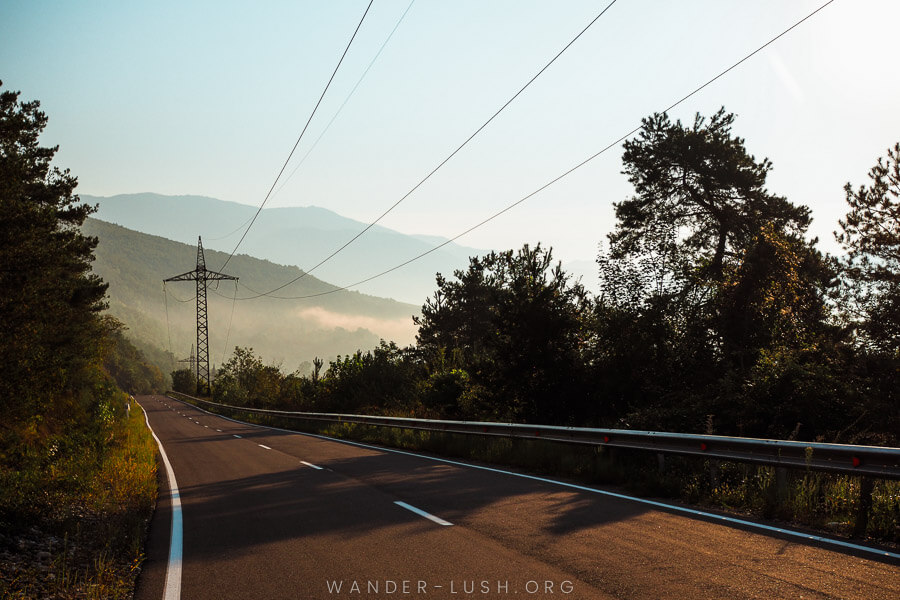
In addition to the above, here are a few of my favourite short drives for breathtaking scenery. All of these roads are sealed and suitable for a sedan.
- Sachkhere to Oni – the new-ish pass connecting Imereti and Racha is terrific for mountain scenery. You can use this road to travel from Kutaisi or Chiatura to Oni.
- Kutaisi to Ambrolauri – also connecting Kutaisi with Racha, this road travels over the Nakerala Pass via Shaori Lake. Like the Sachkhere-Oni Road, it is particularly pretty in autumn.
- Alpana-Tsageri – a loop road through Lechkhumi region fringed by vineyards and limestone rock formations.
- Tianeti-Ninigori – a handy way to travel from Kakheti Wine Region to Kazbegi without having to go through Tbilisi, this road is newly sealed and has a few points of interest along the way, including Kvetera Fortress Church.
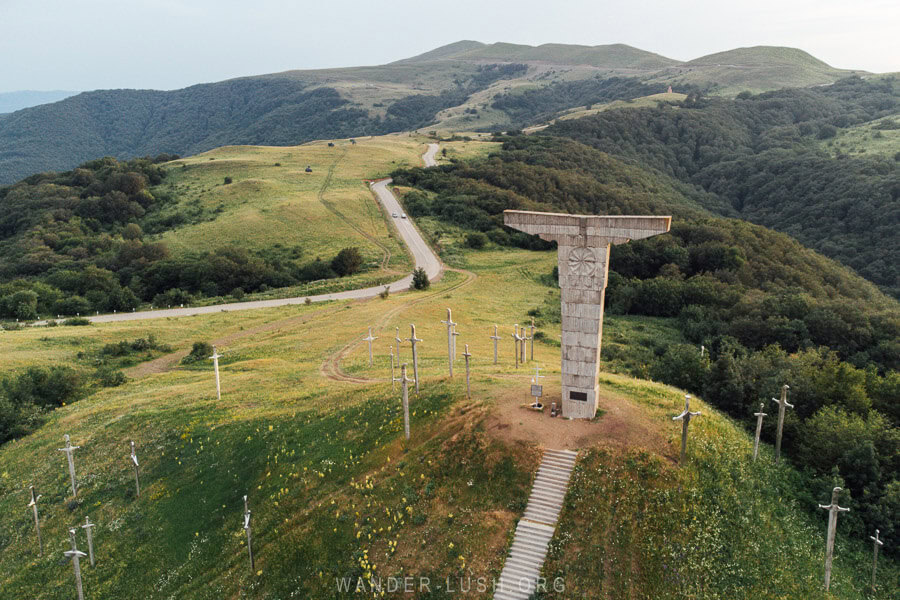
- Didgori Valley Road – the road to the Didgori Battle Memorial is like a ribbon draped over undulating hills. It is incredibly beautiful and almost always quiet!
So, would you drive in Georgia? Anything else you’d like to know about renting a car in Tbilisi or driving in Georgia? Let me know in the comments below and I’ll do my best to help.


