Tourism Minister Encourages Bali Digital Nomads To Use Socio-Cultural Visa
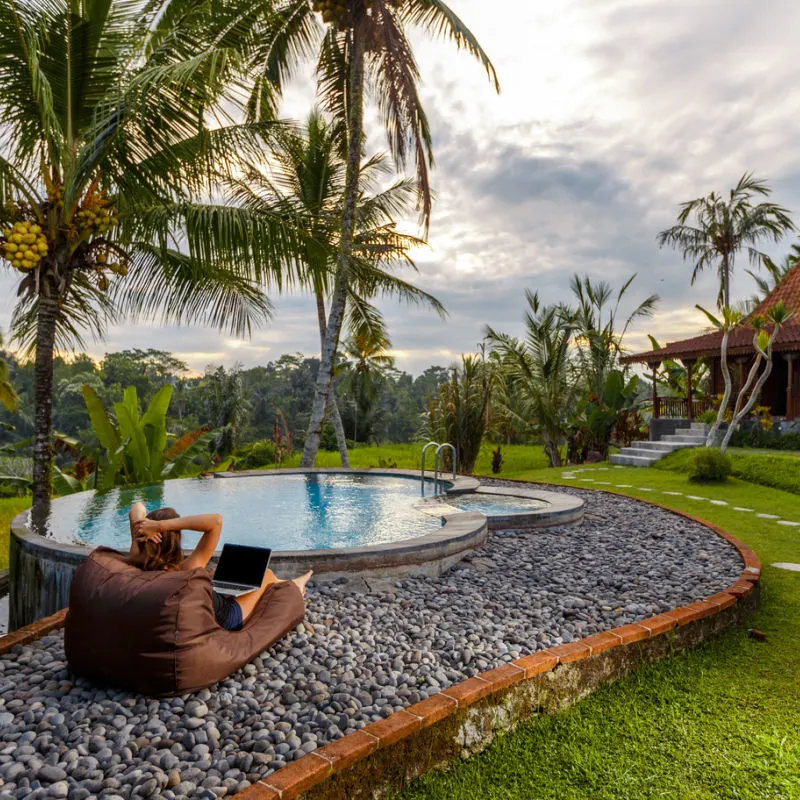
3 min readIndonesia’s Minister for Tourism and Creative Economies, Sandiaga Uno, has confirmed that digital nomads can reside in Bali using the B211a Social-Cultural Visa for up to 6-months at a time. While there has been much speculation about the introduction of Indonesia’s digital nomad visa, Minister Uno this week confirmed that the B211a Visa is the most appropriate option for digital nomads entering Bali.
The B211a visa allows digital nomads to conduct tourism, social, business, government, sports, and transit-related activities. Minister Uno suggests that it is more appropriate for digital nomads than the visa on arrival. While visitors can conduct limited and short-term business-related activities on the visa on arrival, the B211a has been referenced by the highest authority as the most appropriate option for digital nomads moving forward.
At his weekly press conference, Minister Uno said 3,017 people had entered Indonesia on the B211a socio-cultural visa from January to August 2022. He said, ‘the top three nationalities are Russia, the United States, and England…[the] top three digital markets to Bali are Russia, Britain, and Germany as well as countries from the former Soviet Union such as Ukraine, Kazakhstan, and Uzbekistan’. That noted, Kazakhstan and Uzbekistan are not currently included on the list of 75 counties eligible for the visa on arrival.


Travelers from all countries are eligible to apply for the socio-cultural B221a visa. The visa is valid for 60-days and can be extended up to 180-days. The visa is a single entry, and no single stay can be longer than 180-days. It is believed that digital nomads can enter Indonesia, complete their 180-days and exit the country, returning again as soon as their next B211a visa is approved; known as a ‘visa-run’.
The processing time is four working days once the application and payment are complete. The visa costs IDR 2,000,000 (USD 135) for 60-days or IDR 6,000,000 (USD 400) if applying for the full 180-days before arrival. Each extension costs IDR 1,500,000 (USD 100) if choosing to add 60-days at a time.


Applicants require a sponsor, either an individual or a company. Many digital nomads gain the support of a visa agent who can provide sponsorship. The process is completed entirely online, meaning no visits to the embassy in the digital nomad’s home country. Travelers are reminded to do their due diligence before working with a visa agent. It is advised to work with a visa agent that comes from a personal recommendation.


To apply, digital nomads must show that their passport is valid for 12 months if applying for the 180-day visa, and for 6-months if they are applying for the 60-day visa. They must have a sponsorship letter, generally provided by a visa agent or an Indonesia-based company. They must provide proof of at least USD 2,000 or equivalent in their home currency to support their living costs while in Indonesia. Finally, they must provide color passport photographs and proof of a return or onward bound ticket dated before the prospective end date of the visa.

Anticipation remains over the creation of a specific digital nomad visa. Earlier in the year, rumors resurfaced of a dedicated digital nomad visa. It was speculated that this visa would be valid for 5-years and allow multiple entries, enabling digital nomads to live tax-free in Indonesia. Minister Uno said that President Joko Widodo will visit Singapore, Malaysia, and parts of Europe later this year to talk with prospective candidates about creating the specific digital nomad, or ‘second home’ type visas.
Minister Uno said, ‘Mr. President Joko Widodo has just invited us to change our mindset. Our goal is not only to regulate and control but must serve so that tourist visits are of higher quality, which has the potential to invest, open up business and employment opportunities, and bring the latest technology in the form of technology transfer’.
Noting that most digital nomads in Bali reside in Canggu, Minister Uno said that remote workers are beginning to set up bases in Jimbaran and Uluwatu. There is a strong digital nomad community in Ubud too. Minster Uno confirmed that he will be visiting Canggu this week to follow up on a petition submitted to the government by local people regarding noise issues in the area.
Discover more from The Bali Sun
Subscribe to get the latest posts sent to your email.


